
Ayatollah Ali Khamenei Admired Indonesia's First President, Calling Him a Unifier of the Nation
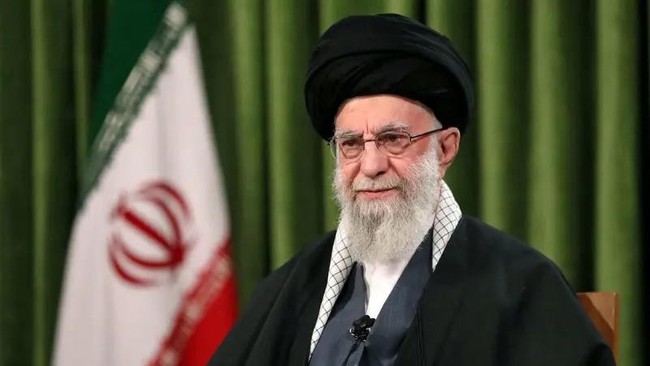
Before his death, Iran’s Supreme Leader Ali Khamenei once admired Indonesia’s first President, Soekarno. This admiration was revealed in a memoir recounting his prison experience during Iran’s monarchical regime.
The account appears in Khamenei’s memoir titled “Cell No. 14” (2021), which describes his detention in the 1970s for his activities against the government of Shah Mohammad Reza Pahlavi of Iran.
While imprisoned, Khamenei shared a cell with several other prisoners, including a communist youth who was very withdrawn. According to Khamenei, the young man rarely spoke and consistently avoided questions about himself.
“I asked about him, but he never answered clearly and preferred to discuss trivial matters,” Khamenei recalled.
Eventually, the man born on 19 April 1939 discovered that the youth was a journalist with connections to the Tudeh Communist Party. However, their relationship was not particularly close as the young man tended to isolate himself and rarely interacted.
Khamenei also observed the youth in a mentally distressed condition following his arrest. He rarely ate. Seeing this, Khamenei tried to help by offering him food, even feeding him to encourage him to eat.
However, the reason for the young man’s cold behaviour soon emerged. He was apparently concerned that Khamenei, a cleric and Islamic activist, would invite him to join a Muslim organisation. If the movement to establish an Islamic republic succeeded, the unnamed youth feared he would face a different fate.
His concern arose because he claimed not to trust any religion.
“Let me be honest, I do not believe in any religion,” the youth said.
Upon hearing this confession, Khamenei attempted to ease the prisoner’s concerns. He emphasised that differences in belief should not be a barrier between people facing similar hardships.
To explain his position, Ali Khamenei even referenced the thinking of Indonesia’s first President, Soekarno, whom he considered an example of building unity amid differences. He referred to Soekarno’s speech at the 1955 Bandung Asian-African Conference.
“Do you know that President Sukarno of Indonesia once said at the Bandung Conference that the basis for unity among developing nations is not shared religion, history, or culture, but rather ‘unity of needs’,” he said.
By citing this statement, Khamenei demonstrated his admiration for Soekarno’s vision of solidarity across ideologies and beliefs. He then explained that the conditions of the prisoners in the jail at that time reflected the same idea.
“Such unity is what connects us now. The problems we face are the same, and our fate is uncertain. Religion should not be a factor that divides us.”
According to Khamenei, the communist youth did not expect such an answer from him. From this point, the young man’s attitude changed and he became closer to Khamenei. After his release from prison, Khamenei’s activism proved successful. In 1979, Iran’s monarchy collapsed and transformed into the Islamic Republic of Iran.