
Awarding the Liberty Medal to Pope Leo XIV and Religious Freedom
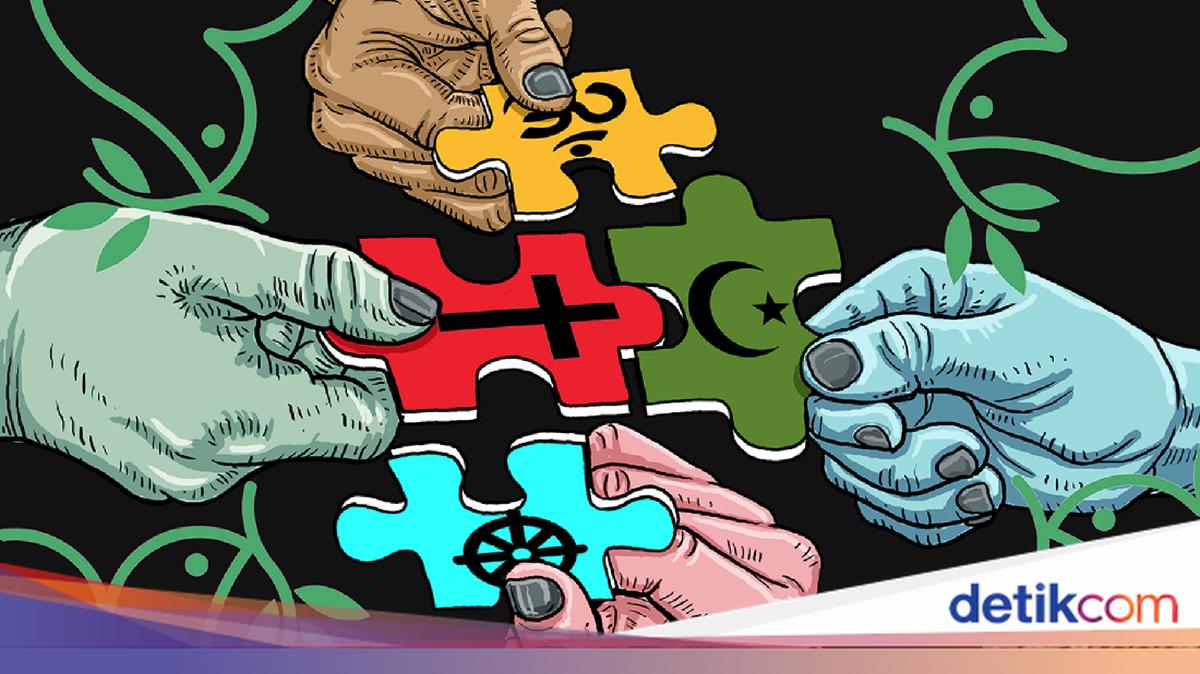
The 38th Liberty Medal will be awarded to Pope Leo XIV in Philadelphia on 3 July 2026, coinciding with the 250th anniversary of the founding of the United States. This award is given because Pope Leo XIV promotes religious freedom, freedom of conscience, and freedom of expression worldwide—as reported by Vatican News on 17 March 2027.
Pope Leo XIV, born as Robert F. Prevost in Chicago, becomes the second religious leader to receive this honour, following the 14th Dalai Lama in 2015. Previous recipients also include figures such as Malala Yousafzai, Ruth Bader Ginsburg, Volodymyr Zelenskyy, and John Lewis, names synonymous with the struggle for human rights (Cathstan.org, 17 March 2026).
The medal is awarded by the National Constitution Center (NCC), a nonpartisan organisation based in Philadelphia, United States. Since 1988, the NCC has been the main organiser of the Liberty Medal since 2006, which is given to global figures who champion freedom.
Amid a world plagued by geopolitical conflicts and identity polarisation, this award serves as a moral affirmation that religious freedom is an essential foundation for global peace. NCC leader Vince Stango stated that Pope Leo XIV has affirmed in various official statements that peace cannot exist without religious freedom, freedom of thought, and freedom of expression.
Religious freedom is often understood as a private right: an individual’s right to believe or not to believe. However, in reality, this freedom has broad social and political dimensions. It determines whether societies can coexist peacefully or become trapped in identity conflicts.
Global Trends in Religious Freedom
Global data shows that this issue is more than just normative discourse. A Pew Research Center report (5 March 2024) indicates that over the past decade, the number of countries with high restrictions on religion has increased significantly, from 40 to more than 50 countries. Even in 2022, 59 countries were recorded as having high or very high levels of restrictions—the highest number since measurements began. This fact demonstrates that religious freedom is not only threatened but is experiencing a global decline.
It is in this context that the award to Pope Leo XIV gains deeper meaning. It sends a firm message: there is no peace without religious freedom, and no freedom without respect for differences. This principle aligns with the spirit of Dignitatis Humanae, a document from the Second Vatican Council that affirms that human dignity implies freedom in seeking and living the truth.
Furthermore, this award highlights the importance of interfaith moral diplomacy. In an increasingly fragmented world, interreligious dialogue is an urgent need. The Pope, as a global spiritual leader, plays a crucial role in building bridges between faiths. Efforts in dialogue with Muslim, Jewish, and other religious leaders show that differences do not have to be a source of conflict but can form the basis for cooperation.
However, this award can also be read as a subtle critique of rising global intolerance. Phenomena such as Islamophobia, antisemitism, and discrimination against religious minority groups indicate that the world has not fully learned to live with differences. Even in democratic societies, religion is often politicised for short-term interests.
Indonesian Context
Indonesia, as a nation founded on the Pancasila, is not immune to these challenges. Constitutionally, religious freedom is guaranteed. However, in practice, the reality is not always ideal.
The Setara Institute report notes that cases of violations of religious freedom and belief continue to occur every year. The forms vary, from rejections of places of worship, restrictions on religious activities, to intimidation of minority groups. This data shows that tolerance in Indonesia still faces serious tests.
It is here that the relevance of the award to Pope Leo XIV becomes highly contextual. It serves as a mirror for Indonesia: have we truly lived out the values of religious freedom, or do we still stop at the formal level?
From the perspective of Zygmunt Bauman, the modern world is marked by what he calls liquid modernity—a condition in which social relations become fluid, fragile, and easily fragmented. In such a situation, fear of the “other” is easily mobilised, while identities become increasingly exclusive.
Religion, in this context, has two faces. It can be a source of conflict when exploited for narrow identity interests. However, it can also be a source of solidarity when experienced as a call to respect human dignity.
The Liberty Medal award to Pope Leo XIV affirms the second choice. It presents religion as an ethical force that encourages dialogue, not confrontation; cooperation, not domination.
Moreover, this award reminds us that religious freedom is not only the responsibility of the state but also of society. The state can guarantee freedom legally, but it is society that determines whether that freedom truly lives in everyday practice.
In the Indonesian context, this means that tolerance is not enough to be taught as a value; it must be lived as a social practice. It must be evident in how we accept differences, in how we speak about other groups, and in how we treat those with different beliefs.
Deepest Meaning
The deepest meaning of this award does not lie in the figure receiving it, but in the value it upholds. First, religious freedom is a right for all and the foundation for sustainable peace. It is not just about worship rituals, but the right to live (one’s identity as a human) according to one’s convictions.