
Awaiting Yaqut Cholil Qoumas' Pretrial Ruling: How Likely Is the Former Minister of Religious Affairs to Win Against the KPK?
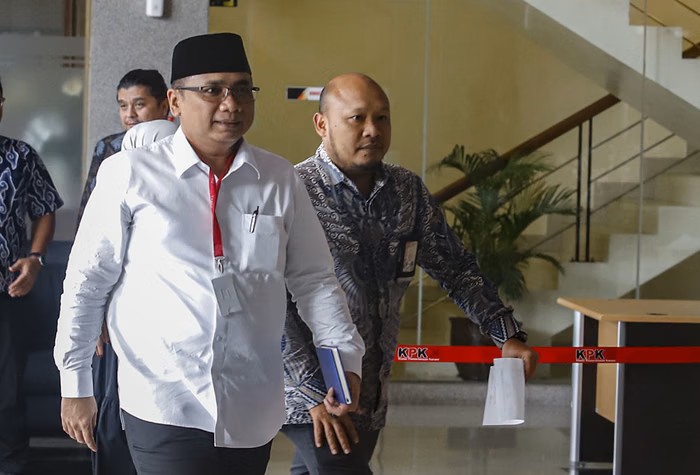
The South Jakarta District Court is scheduled to hold a ruling on the pretrial challenge filed by former Minister of Religious Affairs Yaqut Cholil Qoumas against the Corruption Eradication Commission (KPK) on Wednesday, 11 March. The petition could determine whether Yaqut’s status as a suspect in the alleged corruption surrounding haj quota for 2023-2024 will continue or be dismissed. Yaqut registered the petition on 10 February 2026 under case number 19/Pid.Pra/2026/PN JKT.SEL. Throughout the proceedings, Yaqut’s legal team has submitted substantial arguments to overturn the suspect designation by the anti-graft agency. One key point in Yaqut’s petition concerns alleged procedural violations under the new KUHAP (Law No. 20 of 2025). Yaqut says he only received a notification letter, not an official warrant of arrest. In their argument, the legal team contends that Articles 90(2) and (3) of the new KUHAP require that a suspect designation be documented in an official letter and notified no later than one day after issuance. Moreover, the timing of the state loss audit is a contentious issue. Forensic criminal law expert Mahrus Ali, brought by Yaqut, emphasised that in a substantive corruption offence, investigative audits must be completed before a suspect is designated. “So if we refer to the new criminal code, it states that for there to be a loss… for proving the corruption offence of state losses, the offence is voltooid (completed) when there is an investigative audit confirming that there has been state financial loss. If that is not yet available, the offence has not voltooid (completed),” Mahrus said in court. Mahrus explained that the Yaqut case is a substantive offence. Investigation occurred because there are consequences, namely the state loss. During the hearing, BPK’s report on state losses was said to be complete on 20 February 2026, more than a month after Yaqut was designated a suspect on 8 January 2026. Yaqut’s side also questioned the authority of KPK leadership to sign the indictment. Referring to Law No. 19 of 2019 on the KPK, KPK leadership are no longer investigators or prosecutors. Constitutional law expert Oce Madril of UGM described this as a legal defect. “I don’t think so, because Article 21 of Law No. 19 of 2019, the new KPK Act, since the leadership does not have attributive authority as investigators, then they do not have the authority to do so. So there is nothing to be delegated,” said the lecturer from Gadjah Mada University. During the proceedings, it was also asserted that the Minister of Religious Affairs’ authority to determine haj quotas is set by ministerial regulation. KPK’s administrative law expert Emanuel Sujatmoko explained that if such regulation allows increasing quotas—for example from 100 to 125—this is governed by the ministerial regulation; thus, the ministerial regulation is interpreted as secondary legislation under Article 8 of Law 12 of 2011. “That means the ministerial regulation is acting as part of the regulation, because it is issued by a higher authority,” Emanuel said in the hearing. This is in line with Yaqut’s lawyers’ argument that the Ministerial Decree (KMA) 130/2024 does not meet the sufficiency of evidence for the charges relating to unlawful acts/abuse of authority. Amid the pretrial proceedings, scrutiny of the haj quota case has drawn commentary from several quarters. A former KPK investigator, Yudi, said the designation of Yaqut as a suspect is weak and that the KPK should have had a suspect from the outset, given that the agency ultimately designated one. Another point of contention concerns the state losses and the haj quota as a state privilege, with Yudi noting the state loss figure appears reduced in BPK’s audit. The Yaqut Cholil Qoumas legal team presented five points in the pretrial challenge, including the audit process by BPK and the legality of the designation. A former KPK investigator offered critical notes on the procedure for appointing the former Minister of Religious Affairs. A summary of facts and expert testimony from both sides in the Yaqut Cholil Qoumas pretrial hearing on the procedures for designation as a suspect and state losses is available. KPK expert witnesses in the Yaqut cholil Qoumas pretrial hearing emphasised that under the Corruption Eradication Law, the designation of a suspect must be based on an audit of state losses that is real and definite. Yaqut Cholil Qoumas’s lawyers argued that the designation is invalid because the BPK audit of state losses had not yet been completed.