
Awaiting US-Iran Peace, Oil Prices Stabilise at US$98 per Barrel
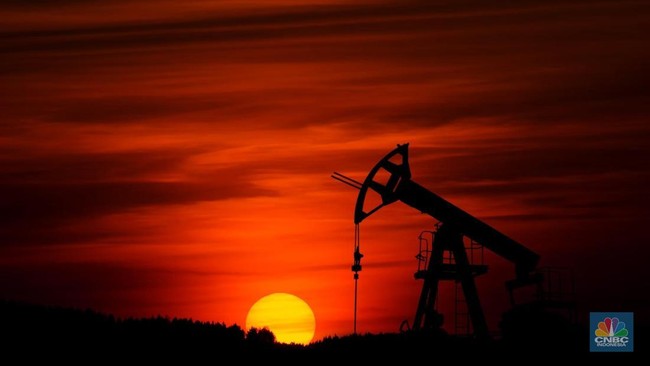
Global oil prices moved lower in trading on Friday (17/4/2026) at 10:00 WIB, after the market began to read the prospects of easing geopolitical tensions in the Middle East. Hopes for negotiations between the United States and Iran have become the main catalyst pressuring the sharp rally of recent weeks.
According to Refinitiv data, Brent was at US$98.19 per barrel, down 1.21% from the previous close of US$99.39 per barrel. Meanwhile, West Texas Intermediate (WTI) was recorded at US$93.30 per barrel, weakening 1.47% from US$94.69 per barrel. Although down today, the price levels are still holding high and far above the early April position.
The market is responding to statements from US President Donald Trump, who said Washington and Tehran have a chance to meet this weekend. Trump stated that an agreement with Iran is very close, including a proposal that Tehran will not possess nuclear weapons for more than 20 years. This statement provides room for market players to begin calculating the possibility of oil supplies returning to normal.
Over the past seven weeks, the closure of the Strait of Hormuz has been the biggest shock to the global energy market. This route carries about one-fifth of the world’s oil supply. ING analysts estimate that around 13 million barrels per day of oil flow have been disrupted due to the closure. With disruptions of that magnitude, the 50% surge in oil prices in March is easily understandable.
However, the market is now shifting from panic mode to diplomatic anticipation mode. A 10-day ceasefire between Lebanon and Israel is also helping to ease the risk premium in the region. The Israel-Lebanon conflict has so far been a key obstacle to efforts to resolve the Iran war that began at the end of February.
In simple technical terms, Brent is now moving below the psychological threshold of US$100 per barrel after briefly breaking through that area. In the past week, Brent has been in the range of US$94.79 to US$99.39, while WTI touched US$99.08 on 13 April before a sharp correction to around US$93. The market remains highly sensitive to every political headline.
Although prices are down today, risks have not disappeared. If negotiations fail or the Strait of Hormuz remains closed longer, the market could quickly push prices back up. Conversely, if the path to peace opens and oil distribution recovers, Brent has the potential to move deeper below US$95 per barrel.