
Awaiting Eid Certainty: The Process of Determining the Date Through the Isbat Session
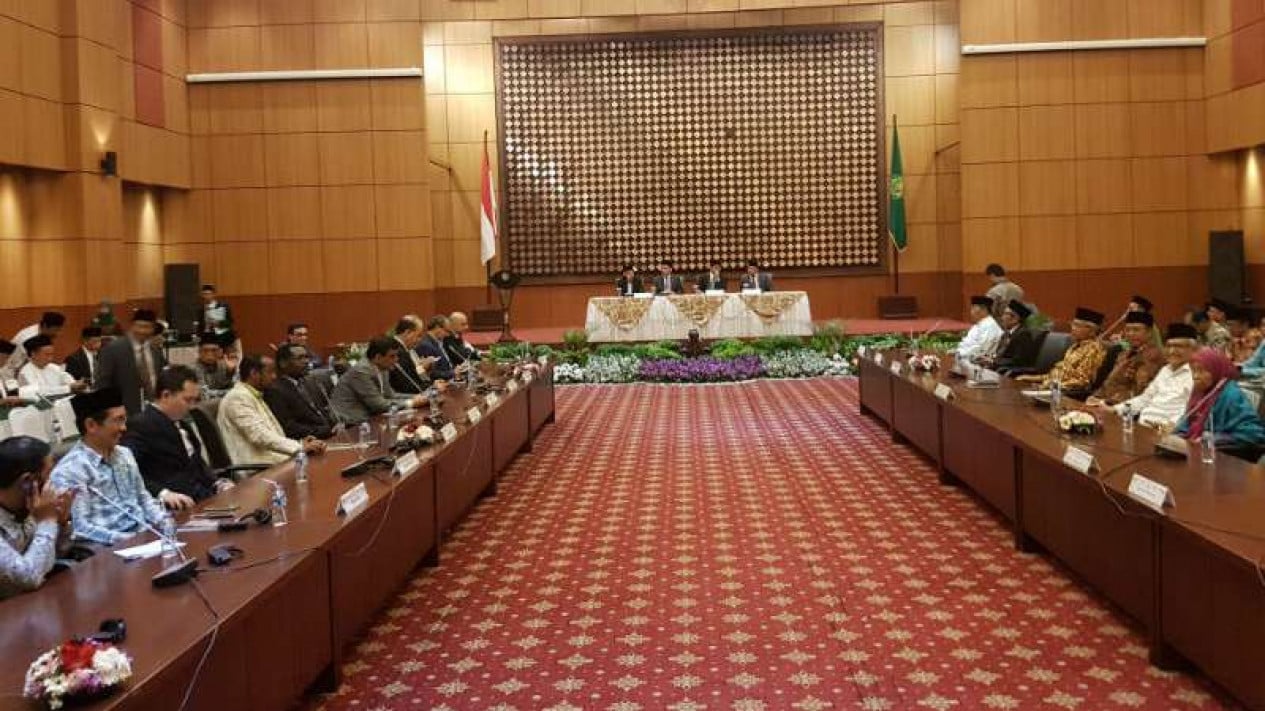
As Ramadan draws to a close, the attention of Muslims in Indonesia typically turns to one key event: the Sidang Isbat. This forum officially determines when Eid al-Fitr will be celebrated, following a month of fasting observance. Although it lasts only a few hours, the decision from this session has a significant impact on millions of people.
The Sidang Isbat is not merely an ordinary meeting but an official forum held by the government through the Ministry of Religious Affairs to establish the start of months in the Hijri calendar. This determination covers important moments such as the beginning of Ramadan, Eid al-Fitr, and Eid al-Adha. The aim is to provide certainty in the timing of worship so that Muslims can perform it in an orderly and uniform manner.
In practice, the Sidang Isbat combines two main approaches: hisab and rukyat. Hisab is the method of astronomical calculation to determine the moon’s position mathematically. Meanwhile, rukyat is the process of directly observing the hilal or the first crescent moon after sunset. These two methods complement each other and have long been used in Islamic tradition.
Looking back, the existence of the Sidang Isbat has quite a long historical root. Since the early days of independence, the Indonesian government has paid attention to determining major religious holidays. In 1946, President Soekarno established regulations regarding holidays through Government Regulation Number 2/Um. Since then, the determination of Islamic holidays has been the authority of the Minister of Religious Affairs.
Over time, the Sidang Isbat has been strengthened as an official mechanism. During the era of Minister of Religious Affairs Saifuddin Zuhri, this forum was institutionalised through Ministerial Decree Number 47 of 1963. The purpose was to accommodate various views from scholars and Islamic community organisations, while maintaining the unity of the ummah in performing worship.
The Sidang Isbat process itself begins with the presentation of hisab data by the Ministry of Religious Affairs’ Hijri Calendar Unification Team. This data includes the hilal’s position based on astronomical calculations. At the same time, hilal observations are conducted at various points in Indonesia by experts and field officers.
The results of these observations are then reported and become material for consideration in a closed session led by the Minister of Religious Affairs. This session is also attended by representatives of Islamic mass organisations, government institutions such as the BMKG and BRIN, as well as astronomy experts. After discussion, the final decision will be announced to the public through a press conference.