
Avoid Congestion, Mengwi Bus Terminal Departure Schedules Shifted to Midday
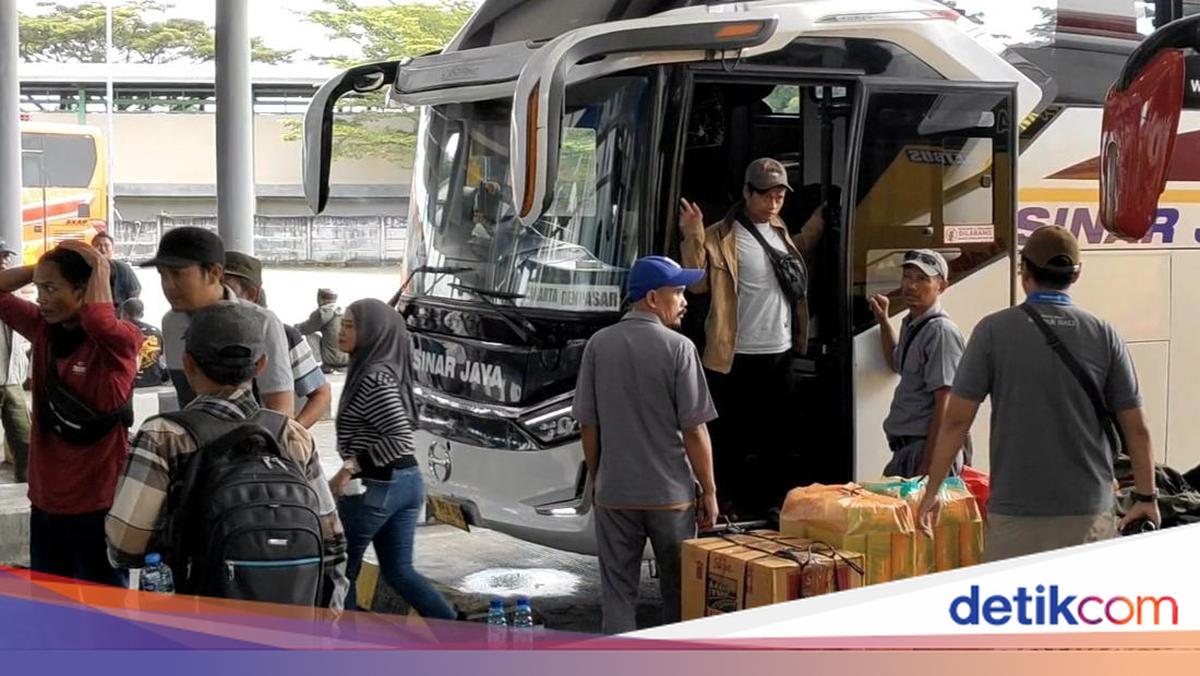
The management of Mengwi Type A Terminal in Badung Regency, Bali, has requested that bus operators shift their departure times from morning to midday and evening hours effective immediately. This policy has been implemented whilst awaiting the clearance of traffic congestion on the Denpasar-Gilimanuk road.
I Dewa Gede Tantara Tesa Putra, Head of the Mengwi Type A Terminal Service Unit, explained that conditions at Gilimanuk Port were also considered to prevent buses from being held up excessively on the main thoroughfare. The terminal management is currently discussing plans for operational schedules and bus departure times for three days before Lebaran, which falls on Wednesday 18 March.
“We are holding a meeting today regarding scenarios for tomorrow approaching Nyepi. We are observing passenger numbers and departure conditions today,” Tantara said on Tuesday, 17 March 2026.
According to Tantara, the number of passengers conducting the homebound exodus through Mengwi Terminal today began to decline compared to the previous three days. “That is why the terminal was still quiet this morning. We have already advised through the Transport Operators Forum group to shift schedules to midday and evening hours,” he added.
Tantara explained that lengthy queues heading to Gilimanuk Port have significantly impacted the pickup process for buses arriving from Java heading to Bali. This condition has triggered passenger accumulation at the terminal. Some passengers have been forced to sleep at the terminal as their pickup buses were delayed.
“The impact of this traffic causes some passengers to overnight because their buses arrive late. We have already advised bus operators not to depart in the morning so as not to add to the queue at Gilimanuk,” said Dewa Tantara.
The duration of bus delays caused by this congestion varies and is difficult to predict with certainty. Based on field observations, the time delay differential is approximately 6-10 hours. As a solution to these delays, several bus operators have taken the initiative to hire tourist buses to transport homebound travellers.
The peak exodus flow occurred on Sunday 15 March and Monday 16 March. Residents intending to conduct the homebound exodus through Mengwi Terminal are predicted to continue through Tuesday today.
Mengwi Terminal recorded data on the latest departure of AKAP bus passengers heading to Java island at 2,835 people on Monday 16 March using 129 bus fleets. The movement of homebound travellers appears to be declining, although still heavy when viewed from passenger numbers on Sunday 15 March, which reached 3,923 passengers.
Restrictions on Three-Axle Vehicle Operations
The Directorate General of Land Transport, Directorate General of Maritime Transport, Directorate General of Highways, and the National Police Traffic Corps have implemented restrictions on the operation of commercial goods vehicles during the 2026 Lebaran exodus from 13-29 March 2026.
Despite this, three-axle or heavier vehicles continue to be found traversing the route to Gilimanuk Port. The road sections that are the focus of restrictions include the Denpasar-Gilimanuk and Denpasar-Nusa Dua routes, which are the main thoroughfares for vehicle movement during the exodus period.
Types of vehicles prohibited from traversing include freight vehicles or trucks with three or more axles, vehicles with trailers or semi-trailers, and vehicles transporting mining products and building materials.
Nevertheless, this restriction does not apply to vehicles transporting vital goods. For example, vehicles transporting fuel or gas, money, livestock, animal feed, and certain essential commodities.
Bali Police Public Relations Head Kombes Ariasandy urged the public to comply with this policy for the smooth flow of the exodus. “Officers in the field will conduct crackdowns on three-axle vehicles that continue to traverse, and meanwhile will be pulled over,” he said on Tuesday 17 March.
Ariasandy also requested that transportation business operators, particularly three-axle vehicle operators, play an active role in reminding their drivers regarding the established regulations. He emphasised that compliance with this restriction is very important for reducing traffic congestion on the exodus routes.