
Averting Energy Crisis: Iraq Prepares Secret Energy Export Route via Turkey to Bypass Strait of Hormuz
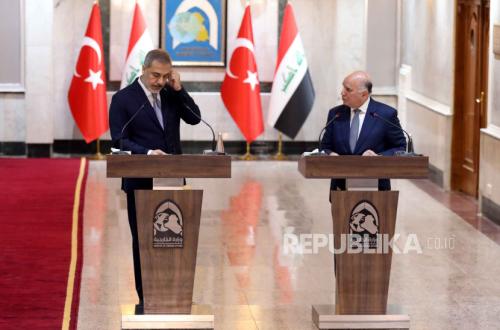
Geopolitical tensions in the Gulf region have rocked global energy markets following the closure of the Strait of Hormuz, which has halted oil shipments from several major producer nations. The situation has forced Iraq to cut production and accelerate efforts to secure alternative export routes to maintain energy supplies to international markets.
Iraqi Deputy Prime Minister and Minister of Oil Hayyan Abdul Ghani stated that the government in Baghdad is working intensively to restore crude oil export capacity following disruptions triggered by regional conflict.
In his statement, Abdul Ghani explained that Iraq previously produced approximately 4.4 million barrels of oil per day in line with OPEC quota, with exports reaching around 3.4 million barrels per day. The vast majority of these exports have been channelled through facilities in the southern region, particularly the Basra Oil Terminal.
However, the closure of the Strait of Hormuz, the world’s primary maritime energy transportation route, has forced Iraq to halt exports and drastically reduce production. Oil production has now been cut to approximately 1.5–1.6 million barrels per day to meet domestic demand. The government is also ensuring that refineries continue operating at maximum capacity to supply petrol, diesel, liquefied petroleum gas, and various other national energy requirements.
The Kirkuk–Ceyhan Pipeline
As an emergency measure, Baghdad is accelerating the restart of the Kirkuk–Ceyhan oil pipeline, a strategic energy infrastructure that connects oil fields in northern Iraq to export facilities in Turkey. The pipeline spans approximately 970 kilometres, stretching from the Kirkuk region to Ceyhan on the Mediterranean coast. This infrastructure enables Iraqi crude to reach global markets directly via the Mediterranean Sea without having to navigate the Persian Gulf maritime route.
Development of the Kirkuk–Ceyhan pipeline began in the early 1970s as an energy cooperation project between Iraq and Turkey. The first section began operations in 1977 and was subsequently expanded with additional lines to increase transport capacity. Since then, the pipeline has become one of the most critical energy infrastructures in the Middle East region, connecting Iraq’s vast oil reserves to export facilities on the Mediterranean.
According to Abdul Ghani, crude oil can be quickly channelled through the Ceyhan port with initial capacity of approximately 200,000 to 250,000 barrels per day. Currently, testing and maintenance procedures are nearly complete, including hydrostatic testing of a pipeline segment spanning approximately 100 kilometres, which is expected to be finished within one week.
Once this route becomes operational again, crude oil from the Kirkuk fields can be directly transported to Turkey without passing through areas controlled by the Kurdistan Regional Government, thus accelerating the distribution process and strengthening central government control over oil exports from the northern region.