
Automotive Investment Reaches Rp 157 Trillion, Rosan Pledges Additional Incentives if Local Content Increases
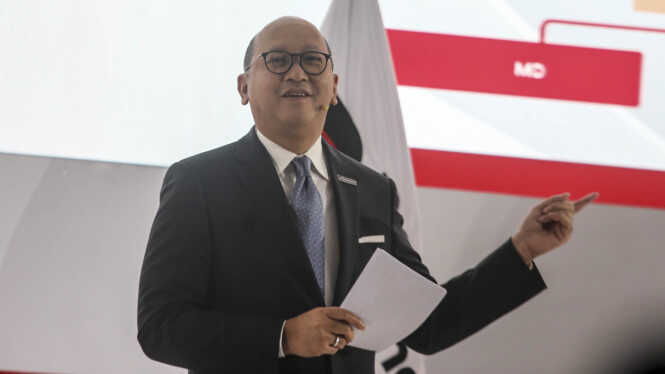
Jakarta, VIVA – Investment Minister and Head of BKPM, Rosan Roeslani, reported that realised investment in the national automotive sector has exceeded Rp 157 trillion during the 2020–2024 period.
“This is a major achievement demonstrating how strategic Indonesia’s position is within the global automotive supply chain, particularly for electric vehicles,” said Rosan when met in the SCBD area of South Jakarta on Tuesday, 6 May 2025.
He added that the automotive industry over the past five years has contributed an average of 7.6 per cent to the manufacturing sector’s Gross Domestic Product (GDP), whilst the manufacturing sector’s overall contribution to national GDP stood at 18.9 per cent.
“This means the automotive sector is not merely important, but a key driver of our economy. Even more so when linked to downstream processing and EV battery development, which is currently the focus of investment,” he said.
According to Rosan, Indonesia also holds a highly advantageous position within the electric vehicle battery industry ecosystem. The country possesses resources spanning the entire value chain, from upstream nickel mining, processing into nickel matte and nickel sulphate, through to downstream activities including precursor, cathode, anode, cell battery, battery pack production, and even battery recycling — all of which are already available domestically.
“Our EV battery ecosystem is the most complete, and that is not an empty claim. Investment from various countries such as China, South Korea and France has already flowed in to build the supply chain from upstream to downstream in Indonesia,” said Rosan.
Beyond this, Rosan also stated that seven automobile manufacturers have entered Indonesia between 2024 and March 2025, with a combined investment value reaching Rp 15.4 trillion.
The seven manufacturers include BYD, Citroën, Maxus, Geely, VinFast and Volkswagen (VW). He also reported that the combined production plans targeted by all these manufacturers amount to 281,000 electric vehicle units per year.
“This is a concrete step towards the target of producing 2.5 million electric vehicles per year by 2030. We will also provide greater incentives if investors increase their local content levels (TKDN),” he said.