
Australian ambassador explores fertiliser imports from Indonesia: government
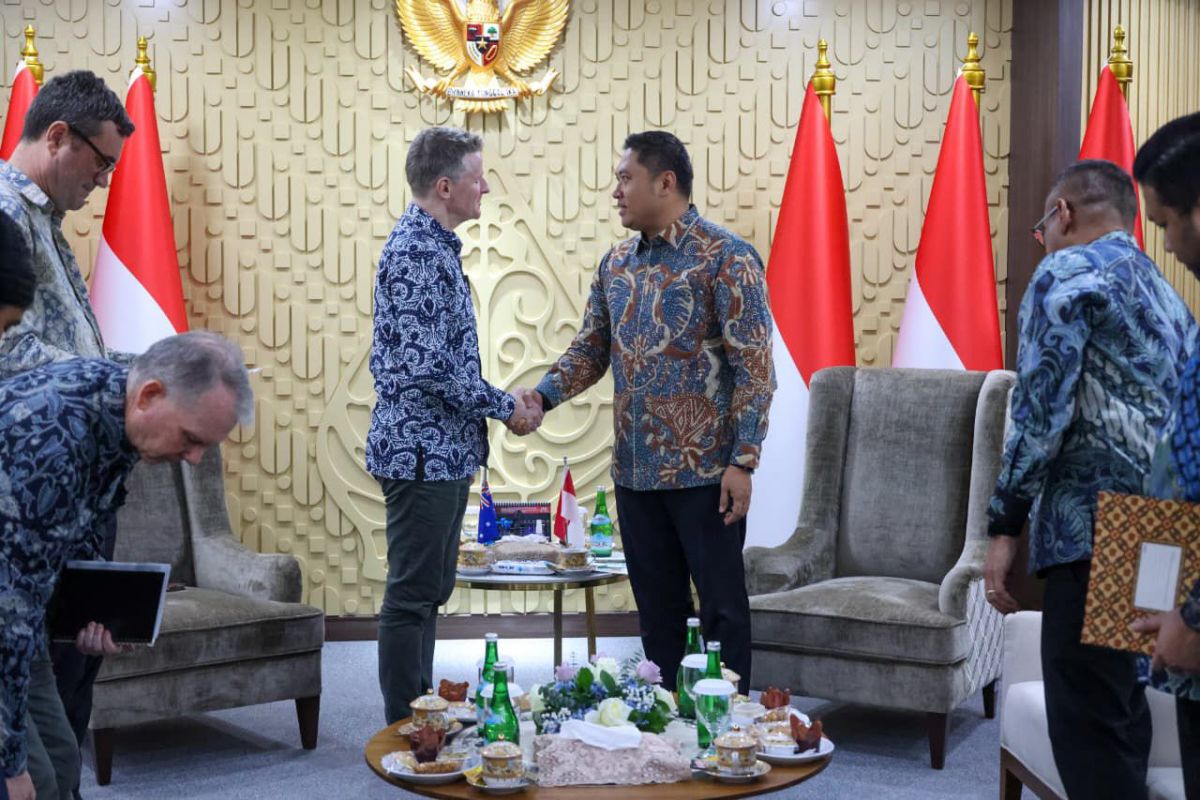
“We discussed many issues, particularly agricultural matters, and specifically fertilizer,” Sudaryono remarked in a statement on Thursday.
The two met in Jakarta on Wednesday (April 15) to discuss opportunities for cooperation in the agricultural sector, specifically regarding urea fertilizer imports from Indonesia.
Sudaryono explained that global geopolitical conditions, including the impact of the closure of the Strait of Hormuz, have affected global fertilizer distribution.
About one-third of global fertilizer supplies pass through this route; thus, the disruption has brought a significant impact on international fertilizer availability.
“With this disruption, many countries need urea. Indonesia has an advantage due to our capability in producing urea from domestic natural gas; we do not have to rely on imports for this commodity,” he stated.
According to him, the national urea fertilizer production capacity, managed by PT Pupuk Indonesia, reaches around 9.36 million tons to 9.4 million tons per year.
By 2026, urea production is targeted to reach 7.8 million tons, with a subsidy requirement of 6.3 million tons and the potential for export of 1.5 million tons to secure domestic stocks.
Therefore, this surplus opens up export opportunities to various countries, including Australia.
However, Sudaryono emphasized that fulfilling domestic needs remains the top priority.
He said demand for Indonesian urea is not limited to Australia but also comes from countries such as India, the Philippines, and Brazil. However, the government remains cautious about committing to supplies beyond national production capacity.
Sudaryono further noted that the fertilizer trade relationship between Indonesia and Australia is reciprocal. While Indonesia supplies urea, it also relies on imports of raw materials such as phosphate, including Diammonium Phosphate (DAP) from Australia.
Furthermore, he ensured the sufficient stock of domestic fertilizer, especially subsidized fertilizer. He considered high fertilizer uptake by farmers as an indicator of increased planting activity in various regions.
In the future, the government also plans to rejuvenate aging fertilizer factories to increase efficiency and national production capacity while maximizing export opportunities amid high global demand.
With this in place, Indonesia will not only maintain national fertilizer security but also strengthen its position as a fertilizer supplier in the global market.
Related news: Indonesia secures fertilizer stocks despite supply chain disruptions
Related news: Indonesia eyes urea fertilizer exports to four countries
Related news: Indonesia to export urea to 3 nations amid Strait of Hormuz closure
Translator: Muhammad Harianto, Resinta Sulistiyandari