
Australia Advances Jakarta Treaty, Strengthens Defence Cooperation
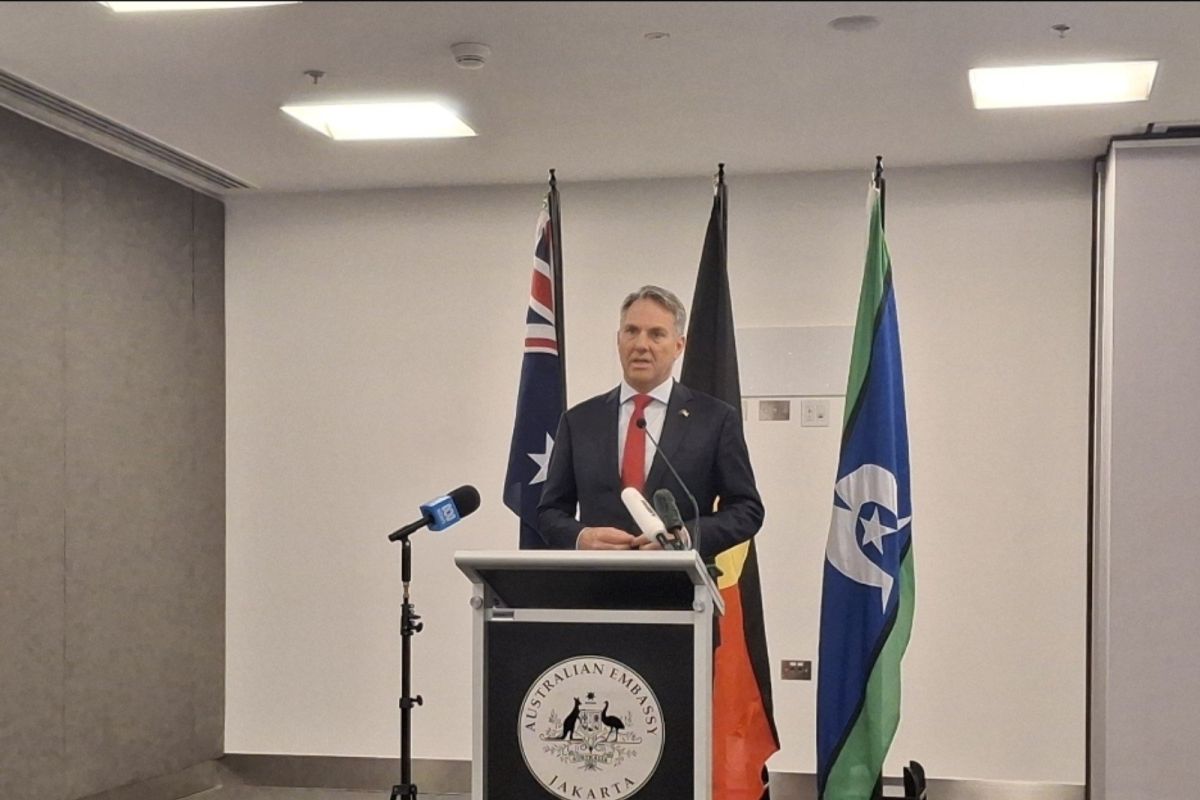
Jakarta — Australia’s Deputy Prime Minister and Defence Minister Richard Marles has emphasised his country’s efforts to advance implementation of the Jakarta Treaty signed in February 2026, aimed at strengthening defence cooperation with Indonesia.
“Specifically regarding the Jakarta Treaty, the majority of its substance lies in the defence sector. We are genuinely working to advance this since the treaty came into force through today’s visit,” Marles said during a press conference at the Australian Embassy in Jakarta on Thursday.
Marles stated that Indonesia and Australia have reached the highest point in their bilateral relationship. For Australia, national security is understood to rest upon collective security across ASEAN and Southeast Asia, where Indonesia sits at the heart of the region. Australia likewise offers strategic value to Indonesia, with both countries understanding each other’s national interests.
During meetings with Indonesian Defence Minister Sjafrie Sjamsoeddin, the two countries discussed specific defence announcements, including implementation measures for the Jakarta Treaty signed in February 2026.
Marles announced that an Indonesian TNI officer at colonel rank will be institutionally positioned as deputy commander of a brigade at Australia’s primary military base in Darwin from early next year. The officer will remain under TNI command but will serve daily as deputy commander of the 1st Brigade, one of three Australian infantry brigades based in Darwin and the one that most frequently interacts with rotating US Marine deployments.
“This represents a very significant step forward in institutional relations between our two defence forces. At the highest level, this is an integrated position that creates opportunities for TNI personnel to engage in Australian Defence Force operations,” Marles said.
Australia will also dispatch a military survey team to Morotai island by year’s end to assess potential infrastructure development for training facilities, with hopes that both TNI and Australian forces will use the site for training in the future. Marles described this as an important initiative, with work expected to commence by late this year or early next year.
The Young Leaders Forum, scheduled for October, will be expanded to double its duration, with components now held in both Australia and Indonesia, providing opportunities for junior officers at captain and lieutenant rank to build relationships across both nations.
These initiatives support a busy year of defence exercises between Indonesia and Australia. An Indonesian frigate will participate in the Kakadu Exercise at month’s end, one of Australia’s major maritime exercises. In July, Indonesian Air Force personnel will join the Pitch Black Exercise, Australia’s major biennial air exercise. October will see the Chriswamara exercise, a bilateral military exercise involving over 2,000 personnel and held in Indonesia. In December, Australia will host the second annual trilateral defence ministers meeting with Indonesia and Papua New Guinea, following the inaugural gathering last December.
“These meetings contribute to an important architecture for building stability and trust in the surrounding region,” Marles said.