
Attorney General's Office Praised as Progressive in Anti-Corruption Efforts
Ray Rangkuti, Director of Lingkar Madani (LIMA), has stated that Indonesia’s anti-corruption efforts require a progressive approach similar to that employed by the Attorney General’s Office (Kejagung). According to Rangkuti, unless corrupt officials are financially ruined, neither they nor prospective offenders will fear committing corruption.
In combating corruption, Rangkuti argues that Kejagung’s progressive approach is appropriate. The Attorney General’s Office has adopted this strategy based on the principle that corrupt officials must be impoverished, with the expectation that they will repay substantial sums to the state based on the assumption that their corruption has caused significant state losses.
“Unfortunately, our judges have not reached that point. Judges should be driving a more progressive approach in anti-corruption efforts,” Rangkuti stated.
Furthermore, Rangkuti noted that current anti-corruption laws remain favourable to corrupt officials. “Sentences are only 6 to 7 years (light sentences), there is no Asset Forfeiture Law, and there is no tracing of state officials’ wealth. This is where law enforcement needs to innovate to deter corruption,” said Rangkuti.
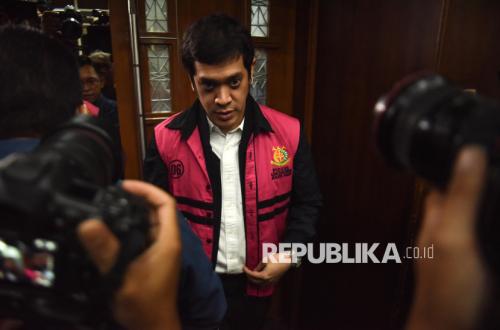
Previously, the Attorney General’s Office officially appealed a court decision in an alleged crude oil management corruption case involving nine defendants, including Muhammad Kerry Adrianto and others. Prosecutors demanded compensation of Rp13.4 trillion, covering state financial losses of Rp2.9 trillion and economic losses of Rp10.5 trillion. Of this demand, the judge only awarded Rp2.9 trillion (state financial losses), whilst the Rp10.5 trillion in economic losses was rejected as the judge considered it merely an assumption.
According to Rangkuti, the judge’s rejection of the prosecution’s demand occurred because the bench applied a textualist approach. Meanwhile, prosecutors employed a progressive approach in pursuing state losses.
“Judges only look at what can be directly observed. So if state loss is mentioned, they ask where the actual money is. If it cannot be seen in tangible form, they consider it non-existent. It is called potential loss. So judges dismiss it as mere assumption. But logically, the loss is real,” Rangkuti explained.
In contrast, prosecutors using a progressive approach view potential losses as actual state losses. For example, consider a worker earning Rp300,000 daily. If prevented from working for 3 days, the worker clearly loses Rp900,000. “This worker has suffered a tangible and real income loss,” he noted.
Rangkuti found the judges’ approach to potential economic losses to the state peculiar. Typically in legal methodology, judges employ a more progressive approach, whilst the prosecution, police, and the Corruption Eradication Commission (KPK) tend towards textualism.
“Prosecutors base their decisions on evidence to designate individuals as suspects. Judges, meanwhile, usually employ a more progressive approach—for example, when deciding whether to strip someone of political rights. That depends on the judge; they can revoke political rights or not, as there is no binding rule,” explained the senior activist.