
Attorney General's Office hands over 11 suspects in CPO export corruption case to prosecutors
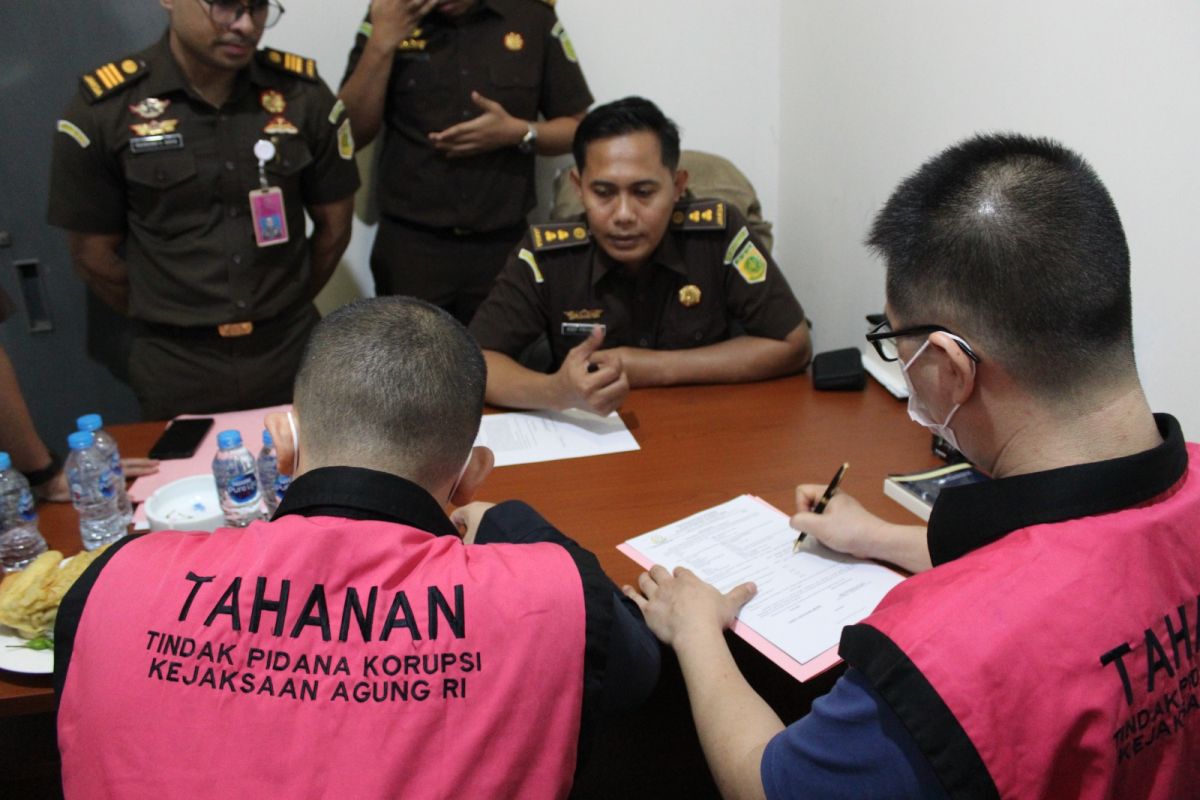
Jakarta (ANTARA) - The Attorney General’s Office has handed over 11 suspects involved in the alleged corruption of crude palm oil (CPO) exports and its derivatives for the 2022–2024 period to the Public Prosecutor of the East Jakarta District Attorney’s Office on Monday. The scheme involved disguising CPO as palm oil mill effluent (POME).
“The investigators from the Junior Attorney General for Special Crimes (Jampisus) carried out the handover of suspects and evidence (Phase II) to the Public Prosecutor Team of the East Jakarta District Attorney’s Office on Monday, 8 June 2026,” said the Acting Head of the Attorney General’s Office Legal Information Centre, Mochammad Jeffry, in a statement in Jakarta.
Jeffry stated that the eleven suspects consist of three civil servants (ASN) and eight individuals from the private sector. The civil servants include LBH, an official at the Ministry of Industry; FJR, an official at the Directorate General of Customs and Excise (DJBC); and MZ, an official at the Pekanbaru Customs Office.
The eight private sector suspects include directors and executives from various companies, including PT SMP, PT SMA, PT SMS, PT BMM, PT AP, PT TAJ, PT TEO, PT Green Product International, PT Surya Inti Primakarya, PT CKK, PT MAS, and PT SBP.
The case occurred between 2020 and 2024, during a period when the government implemented CPO export restrictions and controls to maintain domestic cooking oil availability and price stability. These policies were enforced through the Domestic Market Obligation (DMO) mechanism, export permit requirements, and the imposition of export duties and palm oil levies.
Under this policy framework, CPO is classified as a strategic national commodity under HS Code 1511, regardless of Free Fatty Acid (FFA) levels. Consequently, all forms of CPO, including high-acid CPO, are subject to export restrictions and national obligations. However, investigators discovered deviations in the form of manipulated export commodity classifications. High-acid CPO was intentionally claimed and treated as Palm Oil Mill Effluent (POME) or Palm Acid Oil (PAO) using HS Code 2306, which is intended for residues or solid waste.
The suspects are alleged to have not only been aware of the applicable laws but also actively participated in creating and maintaining this fraudulent mechanism. Based on the Financial Loss Calculation Report by the Audit Board of Indonesia (BPKP), the case has resulted in significant state financial losses.
In this case, investigators have seized Rp40 billion in cash, as well as assets including land, buildings, palm oil plantations, and vehicles valued at approximately Rp696.5 billion. The suspects are charged with violating various articles of the Criminal Code and the Law on the Eradication of Corruption Crimes.
“Moving forward, the public prosecutor will refer the case to the Corruption Crimes Court at the Central Jakarta District Court,” said Jeffry.