
Attorney General's Office: BPKP Still Calculating State Financial Losses in Petral Corruption Case
The Attorney General’s Office (AGO) has designated seven suspects in the alleged corruption case concerning Pertamina Energy Trading Limited (Petral) from 2008 to 2015. The fraudulent practices carried out by these seven suspects resulted in state financial losses.
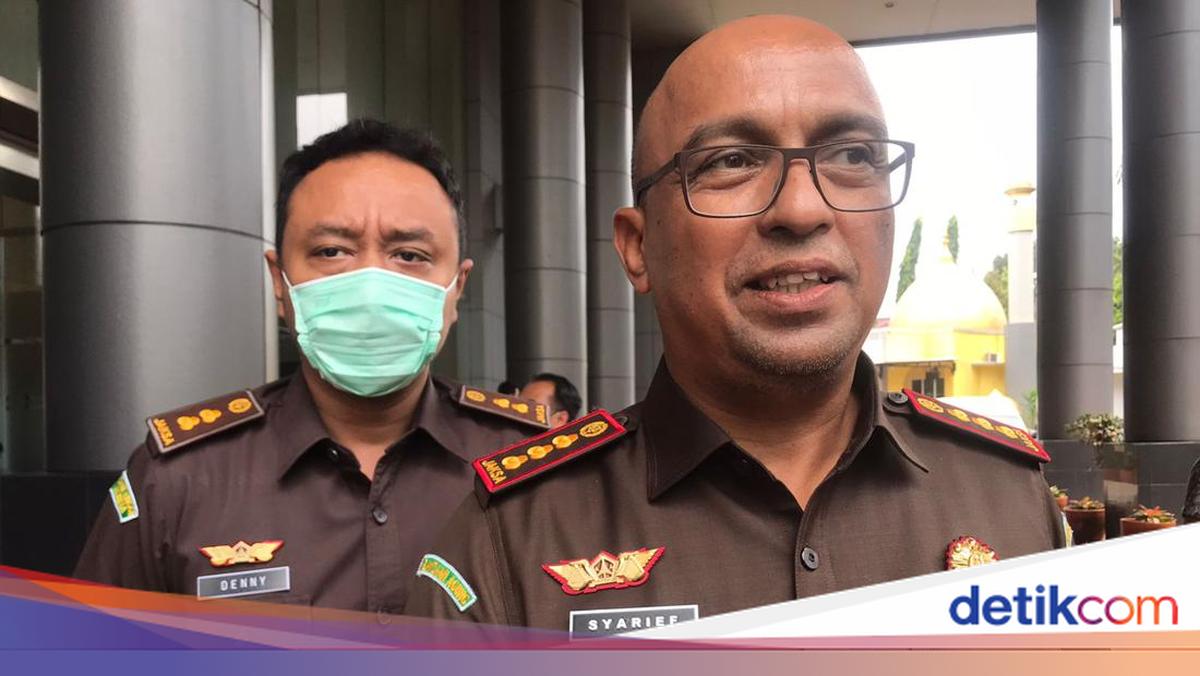
The Director of Special Criminal Investigation at the AGO, Syarief Sulaeman Nahdi, has not yet disclosed the amount of state financial losses in this case. This is because the calculation process is currently being conducted by his team in collaboration with the Financial and Development Supervisory Agency (BPKP).
“The amount of state financial losses is currently being calculated by us together with our colleagues at BPKP,” said Syarief during a press conference at the AGO in South Jakarta on Thursday (8/4/2026).
This case originated from procurement activities for crude oil and refined products between 2008 and 2015. Through this procurement, one of the suspects leaked internal confidential information from Petral Energy Services (PES) to Muhammad Riza Chalid.
“The investigative team found facts of actions involving the leakage of internal confidential information from PES or Petral Energy Services regarding crude oil needs, gasoline, and other information, carried out by one of the suspects,” revealed Syarief.
Syarief stated that Riza Chalid, along with IRW, influenced the Petral procurement process by lobbying Petral and Pertamina officials. Syarief explained that in this procurement, there was collusion involving mark-ups on crude oil and Petral prices.
“So, essentially, Mr. MRC through Mr. IRW communicated with procurement officials both at Petral and Pertamina. This included suspects BBG, IRW, MLY, and TFK. The communication involved conditioning the tender, providing HPS (Estimated Own Price) values, resulting in mark-ups or overpriced costs because the procurement became non-competitive,” he explained.
Due to the lobbying by Riza Chalid and IRW, Pertamina officials issued guidelines deemed by the AGO to contradict the minutes of the Pertamina board of directors’ meeting.
“To accommodate the interests of Mr. MRC and Mr. IRW, in July 2012, Mr. BBG, Mr. AGS, NRD, and MLY issued guidelines that contradicted the minutes of the PT Pertamina board of directors’ meeting,” he said.
“After the tender was conducted in such a manner, PES, assisted by company YR, signed an MOU related to the supply of refined products for 2012-2014,” he added.
Following the tender conducted in such a way, an agreement was reached between Petral and Riza Chalid’s company to supply refined oil products for 2012-2014.
Syarief revealed that the tender process for crude oil and refined product procurement caused prices to soar. According to him, the actions of the suspects caused state losses. Currently, the AGO is still calculating the amount of state losses.
“The tender or procurement process for crude oil and refined products resulted in a longer supply chain and higher prices, especially for Gasoline 88 or what we know as Premium 88 and Gasoline 92, thus causing losses to PT Pertamina,” he stated.
The AGO has designated seven individuals as suspects in this case; here is the list:
BBG, as Manager of Marketing and Trading in the Marketing and Trading Directorate at PT Pertamina;
AGS, as Head of Trading at Pertamina Energy Services or PES from 2012-2014;
MLY, as Senior Trader at Petral from 2009-2015;
NRD, as Crude Trading Manager at PES;
TFK, as VP ISC at PT Pertamina;
MRC, Beneficial Owner of several companies participating in the tender;
IRW, as Director of companies owned by MRC.
For their actions, the suspects are charged under Article 603 of the National Criminal Code or Article 3 of Law No. 31 of 1999 on the Eradication of Criminal Acts of Corruption.