
Attorney General Summons Bali Regional Officials Over Foreign Tourist Levy
Indonesia’s Attorney General’s office (Kejagung) has summoned several leaders of regional government agencies in Bali to request information regarding the Foreign Tourist Levy (PWA).
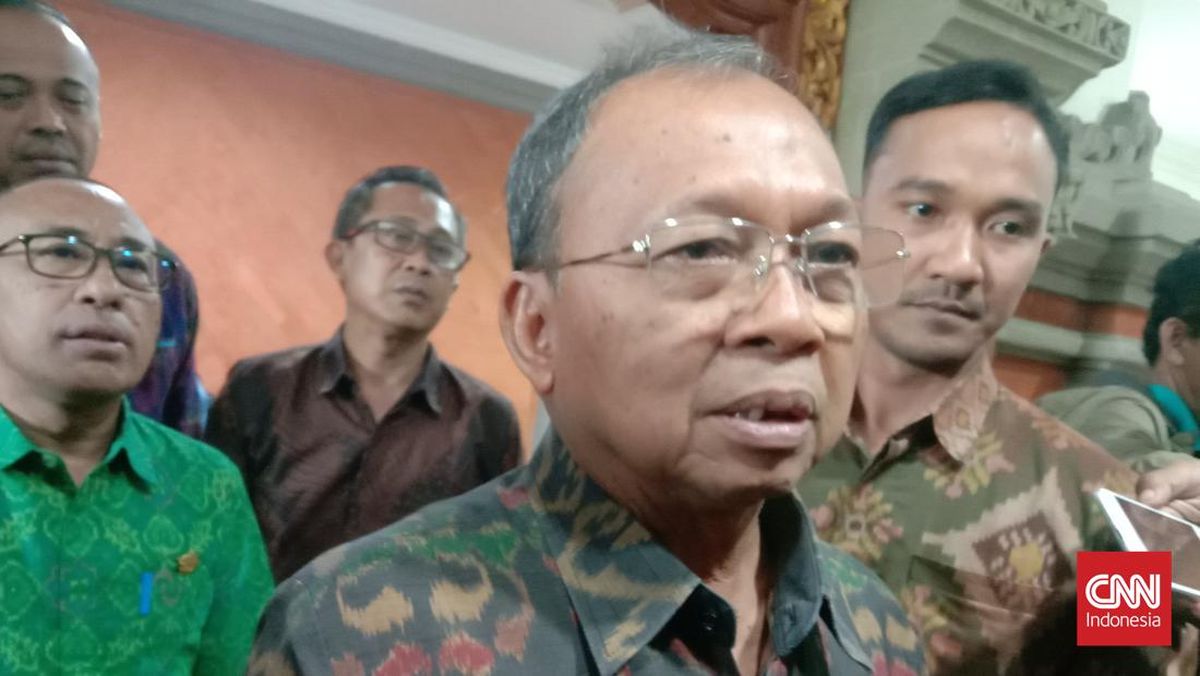
The summons of the agency leaders was confirmed by Bali Governor Wayan Koster. “It is true (there was a summons), but it is not about taking statements but requesting information and data. I received a call from the Attorney General’s office, and in fact the Attorney General is helping,” said Koster in Denpasar on Monday, 16 March.
Koster stated that seven regional agency leaders were requested to provide information and data, including several from the Bali Civil Police Satpol PP, the Regional Financial Management Agency (BPKAD), the Legal Bureau, the Regional Tax Service (Bapenda), and the Tourism Office.
All have attended the prosecutor’s office, and the Bali Governor ensured that everything proceeded smoothly as the summons was actually intended to help optimise the PWA collection.
The Governor explained that the Attorney General’s office provided recommendations to make PWA collection more optimal, as since the levy of Rp150,000 (£7) per tourist was implemented in 2024, the revenue collected in one year amounted to only Rp318 billion, equivalent to 32 per cent of the total 6.3 million tourists who entered Bali.
Continuing into 2025, Bali’s regional government collected PWA revenues reaching Rp368 billion, or 34 per cent of the 7 million tourist visits. “So it has increased, but it remains suboptimal, yet there is no corruption involved. This is a digital payment system with no cash component; it goes directly to the Bali regional bank account,” said Koster.
After tourists pay, the levy goes directly into the Bali regional bank account and automatically enters regional coffers, according to Koster, ensuring there are no opportunities for misappropriation. However, he acknowledged that the collection results remain far below target.
“It is transparent; whatever is received at the regional bank is what enters the regional treasury. Now its usage is for cultural and environmental protection, all in line with these two elements, including traditional villages, tourism, infrastructure, and environmental concerns including waste management,” said Governor Koster.
From his assessment, the Attorney General’s office only questioned why the PWA programme was underperforming compared to the potential funds that should have been collected from the millions of tourists entering Bali.
The Bali regional government attributed the suboptimal collection to the lack of involvement of immigration authorities as a supporting institution. The local government also cannot compel cooperation as the regional regulation governing PWA does not provide for collaboration with immigration, whilst involving them would require legal authority from above, whether in the form of government regulations, presidential regulations, or ministerial regulations.
“The reason for the suboptimal collection is the immigration issue, so that is what needs to be addressed rather than focusing on unrelated matters. What we need to resolve is how to involve immigration in the levy collection process,” said Koster.