
Attending President's Briefing, Minister of PANRB Ensures Acceleration of Bureaucratic Reform Continues to be Strengthened
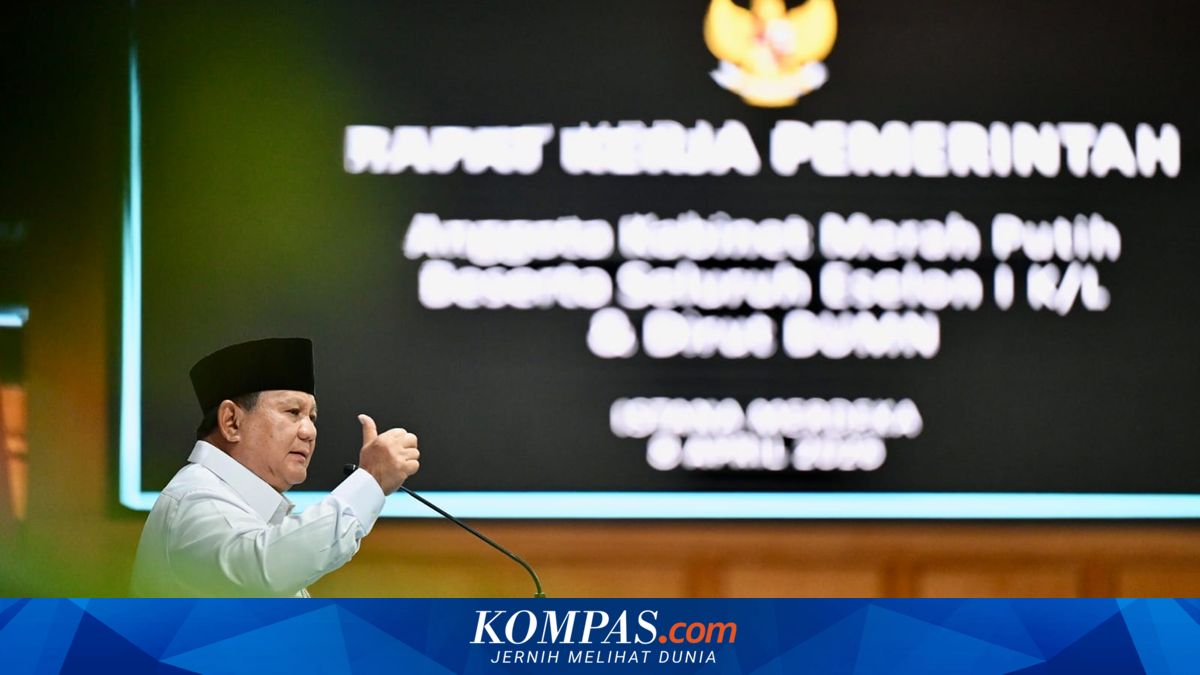
President of the Republic of Indonesia Prabowo Subianto gave a briefing to all members of the Merah Putih Cabinet ministers, agency heads, and high-ranking mid-level officials in the central government at the Presidential Palace in Jakarta on Wednesday (8/4/2026). The briefing served as a strategic forum to evaluate government performance while formulating forward steps amid continuously evolving global dynamics. In his remarks, President Prabowo conveyed various directions for national strategic programmes, government policies, and current situations to be implemented down to echelon I level. He assessed that, amid global uncertainties, Indonesia possesses great potential that must be optimised. According to Prabowo, these challenges present an opportunity to work harder and more meticulously. “There must be no sectoral thinking; no longer should one institution think only of itself. We must collaborate seamlessly; the government must work quickly, not by maintaining sectoral thinking,” Prabowo stated in a written statement received by Kompas.com on Thursday (9/4/2026). On that occasion, he also instilled optimism in the bureaucracy that has been carrying out its mandate for about one and a half years since October 2024. Prabowo appreciated the performance of state apparatus, deemed capable of maintaining the direction of development amid global geopolitical dynamics. He also emphasised the importance of responding to criticism calmly and wisely, without ignoring the principles of statehood. Responding to the president’s directions, Minister of State Apparatus Utilization and Bureaucratic Reform (PANRB) Rini Widyantini expressed her ministry’s readiness to follow up through measured, performance-based implementative steps. She affirmed that the Ministry of PANRB will accelerate thematic bureaucratic reforms in line with presidential priorities, including strengthening governance and institutions, improving the quality of human resources (HR), government digital transformation, and enhancements to public services. Additionally, they will strengthen cross-ministerial and agency coordination to ensure policies run effectively and are oriented towards public interests.