
Attack on UNIFIL Must Serve as Evaluation for Indonesia
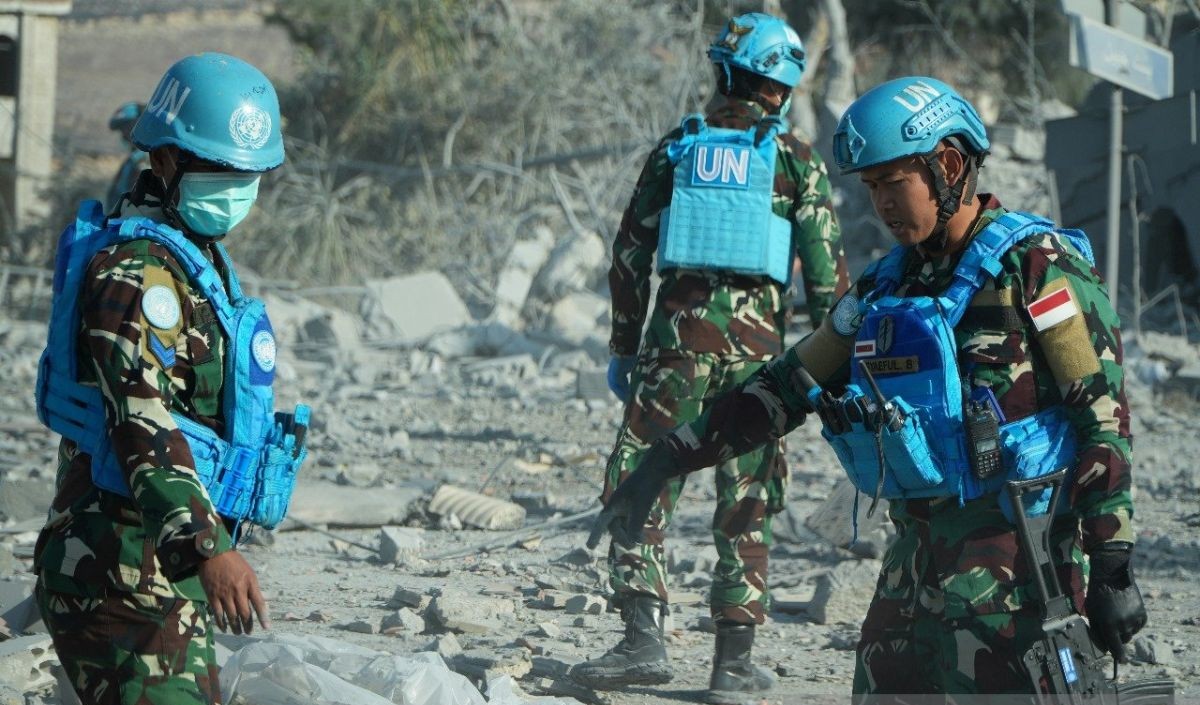
The attack on peacekeeping forces in Lebanon that killed TNI soldiers is considered a critical point for Indonesia to review its involvement in international missions. International relations observer from Padjadjaran University, Teuku Rezasyah, views the incident as more than an ordinary risk in peacekeeping operations.
According to him, the death of Indonesian soldiers in this barbaric Israeli action, known to the United States, should awaken the Indonesian government, people, and House of Representatives (DPR RI) to seriously evaluate all aspects of peacekeeping involvement under the United Nations Interim Force in Lebanon (UNIFIL).
‘The passing of TNI members in this barbaric Israeli action, with the knowledge of the United States, should make the government and Indonesian people, as well as DPR RI, earnestly evaluate all aspects of peacekeeping involvement in the UNIFIL framework,’ he stated when contacted on Tuesday (7/4).
Teuku also assessed the attack on the UNIFIL post as a serious violation of international law and a weakening of the UN’s credibility. ‘Israel’s attack on the UNIFIL post is an action that greatly undermines international law and the UN’s credibility,’ he said.
Technically, he continued, the Zionist Israeli military, supported by advanced communication and sensing systems from the United States, should be able to accurately identify the positions of peacekeeping forces. Therefore, the attack is not considered merely a mistake.
‘In truth, Israel, supported by the United States with advanced communication and remote sensing devices, must have a very detailed picture. Thus, it is not easy to target UNIFIL positions,’ he said.
He also highlighted internal factors in the Zionist Israeli military, which now relies heavily on young personnel from Generation Alpha. This condition is seen as potentially triggering procedural deviations in the field, especially amid prolonged conflict pressures in the Middle East.
Teuku assessed that the longer the conflict persists, particularly with Iran, the greater the psychological pressure on Zionist Israeli soldiers, which could lead to reckless actions and military procedure violations.
In that context, Indonesia is seen as needing to strengthen coordination with the UN and UNIFIL to evaluate security systems and mission management, both in the short and long term. Teuku stated that risk tolerance limits cannot be decided unilaterally but must go through political decisions between the government and DPR.
‘Risk tolerance can only be decided based on DPR meetings with the government. At least, this experience with UNIFIL can force Indonesia to review its participation in peacekeeping operations, including the involvement of TNI soldiers in all International Stabilization Force frameworks,’ he concluded. (E-3)