
Attack on Andrie Yunus Assessed as Genuine Assault on Democracy
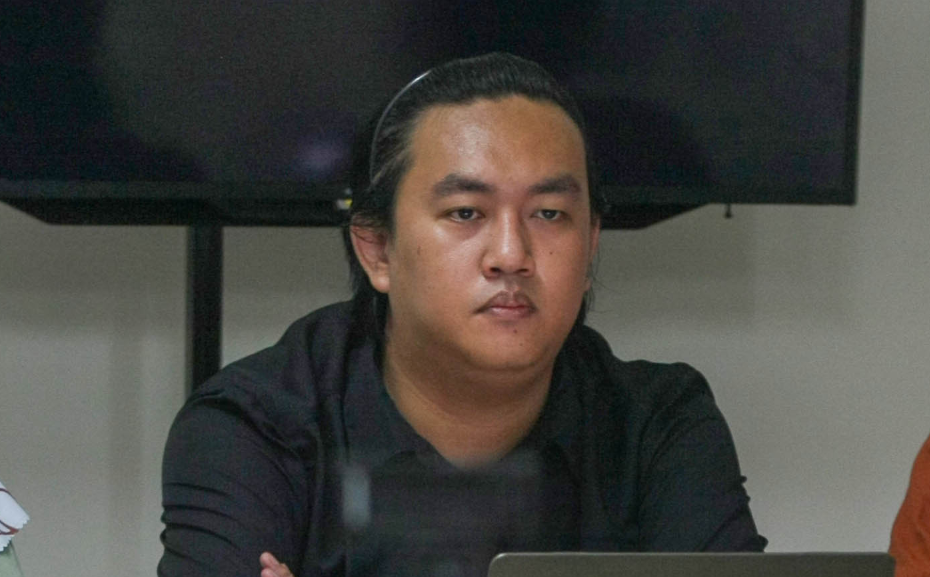
The attack involving caustic soda splashed against Andrie Yunus, Vice Coordinator of the Commission for the Disappeared and Victims of Violence (Kontras), is assessed not merely as violence against an individual but as a direct threat to the space of civil freedoms and democracy.
The Setara Institute evaluated the attack as containing an intimidating message capable of spreading widespread fear amongst the public to discourage them from voicing criticism against those in power.
Ikhsan Yosarie, researcher on human rights and the security sector at Setara Institute, affirmed that the attack on Andrie constituted serious violence that cannot be tolerated in a democratic state that upholds human rights.
According to him, the incident targeted more than a single activist, as it also threatened the safety of human rights defenders who have been performing the function of monitoring those in power and advocating against constitutional rights violations affecting citizens.
“This incident does not only attack an individual, but also threatens the safety of human rights defenders who have been working to ensure there is checks and balances on those in power,” Ikhsan stated in a written statement quoted on Monday (16 March).
Setara assessed the most dangerous impact of the attack lay in the effect of fear that could spread across public spaces. In this context, the violence against Andrie was seen as having potential to produce silencing far greater than the physical wounds inflicted, because the public could interpret the incident as a warning that criticism of the state or those in power carries serious risk.
According to Ikhsan, if such cases are left without firm, swift, and transparent legal response, then the state is allowing the emergence of a damaging precedent for democracy.
The deterrent effect produced would not only affect activists but could also spread to academics, journalists, civil society organisations, and ordinary citizens who have been actively expressing critical views.
“If left without firm and transparent legal response, this incident becomes a damaging precedent that harms the space of civil freedoms,” he stated.
Setara viewed the incident as a loud alarm for the state to promptly strengthen protection mechanisms for human rights defenders in Indonesia.
In the view of the institute, guarantees over freedom of expression are not sufficient to remain merely as constitutional norms but must manifest in the form of actual protection of the security and sense of safety of civil society actors performing advocacy functions.
Ikhsan emphasised that the work of human rights defenders actually constitutes a form of genuine patriotism. He assessed their commitment to the people, particularly when those in power deviate from principles of justice, democracy, and human rights, as an important part of efforts to keep the state on its constitutional path.
Within this framework, Setara affirmed that protection of human rights defenders cannot be separated from protection of democracy itself. When fear begins to restrict citizen participation in public spaces, democracy gradually loses its principal foundation, namely the freedom of citizens to participate equally in overseeing the conduct of government.
Setara assessed the state’s inability to protect human rights defenders as not merely an issue of individual security. Beyond that, such conditions reflect an allowance for the damage to democratic space, because intimidation and violence are allowed to erode public courage to speak up.
For this reason, the institute urged law enforcement officials, particularly the National Police, to immediately conduct investigation that is swift, independent, and transparent. Handling of the case, according to Setara, must not stop at the field perpetrators but must also trace the possibility of intellectual actors behind the attack.
“The National Police must uncover all perpetrators and intellectual actors behind the attack,” Ikhsan stated.
Setara also emphasised the importance of openness in the legal process to the public. Transparency was assessed as a critical requirement to maintain accountability whilst also restoring public trust in law enforcement, particularly in cases involving the safety of human rights defenders and civil freedoms.
In addition to urging law enforcement, Setara called for broad solidarity from civil society, academics, media, and the public to oversee this case to its conclusion.