
At SPIEF 2026, AHY Affirms Indonesia's Readiness to Become an ASEAN-Eurasia Bridge
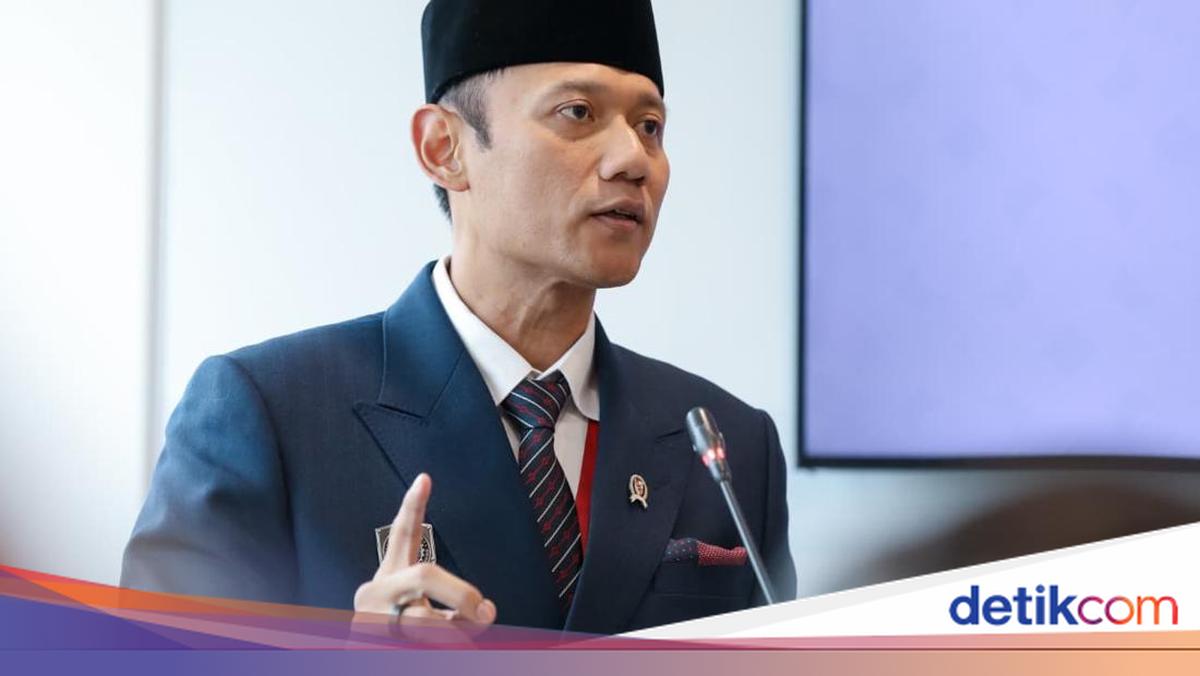
The statement was made by Coordinating Minister AHY whilst speaking at the EAEU-ASEAN session at the St. Petersburg International Economic Forum (SPIEF) 2026 in St. Petersburg, Russia, on Thursday (4/6/2026). The forum brought together government leaders, business players, academics, and stakeholders from various countries to discuss global economic challenges and opportunities. During the forum, AHY highlighted the increasingly complex world dynamics, ranging from global economic uncertainty and supply chain disruptions to pressures on energy, food, and water security, alongside rising geopolitical fragmentation affecting global economic stability and growth. According to him, these challenges cannot be faced partially or by a single country alone. Closer partnerships that are mutually respectful and oriented towards real solutions are required. ‘Indonesia is striving to be a bridge, a balancer, and a constructive partner in strengthening international cooperation,’ AHY said in a written statement on Friday (5/6/2026). He affirmed that in line with the direction of President Prabowo Subianto, Indonesia continues to pursue a free and active foreign policy that is open, inclusive, and oriented towards collaboration. ‘We seek friendship with all nations. We believe in dialogue over confrontation, and cooperation over rivalry,’ he said. In his presentation, AHY explained that infrastructure development for Indonesia is not solely focused on physical construction such as roads, ports, airports, or transport networks. Infrastructure is positioned as the main foundation to strengthen food, energy, and water security. It is also to expand access to economic opportunities and improve the quality of life. ‘For Indonesia, infrastructure development is not just about building roads, ports, or transport networks. Infrastructure is the foundation for strengthening food, energy, and water security; expanding opportunities; and improving people’s quality of life,’ he said. As the world’s largest archipelagic nation and the biggest economy in Southeast Asia, Indonesia holds a unique and strategic position in strengthening regional and global connectivity. He stated that with a geographical location on international trade routes and its role as a key driver of the ASEAN economy, Indonesia has great potential to become a hub that strengthens cooperation between Southeast Asia and the Eurasian region. At the forum, AHY also encouraged more concrete cooperation between ASEAN countries and the Eurasian Economic Union (EAEU), particularly in sectors that represent shared future needs. ‘This cooperation includes the development of low-carbon transport, strategic connectivity building, climate-resilient infrastructure, clean energy, technology-based logistics systems, and a sustainable maritime economy,’ he said. AHY assessed that EAEU countries possess various advantages in energy, manufacturing, technology, logistics, and infrastructure engineering that can form the basis of a mutually beneficial collaboration with Indonesia and other ASEAN nations. Furthermore, AHY asserted that green infrastructure development is one of Indonesia’s top priorities in facing future challenges. The transformation towards cleaner transport systems, the development of renewable energy, and climate-adaptive development are part of the long-term strategy to maintain national competitiveness as well as development sustainability. On the occasion, AHY also highlighted three main priorities for Indonesia’s infrastructure development: the decarbonisation of the transport sector towards the Net Zero Emissions target, strengthening strategic connectivity through the integration of ports and railway networks, and building climate-resilient infrastructure, including the Giant Sea Wall project. ‘These three priorities form one unified vision: an Indonesia that is stronger, greener, and more prepared for the future,’ AHY said. Closing his presentation, AHY stressed that the world needs more cooperation and trust amidst increasingly complex global challenges. ‘Not a single country can face various global challenges alone. The world needs more collaboration, more trust, and more shared solutions,’ he said. According to him, strong partnerships must be built not only through dialogue and commitment, but also through real and sustainable implementation. ‘We must move from dialogue to action, from frameworks to tangible projects, and from good intentions to lasting partnerships. Ultimately, what we build is not just a stronger economy, but also more robust trust amongst nations,’ AHY concluded.