
At LDII's 10th National Congress, Lemhannas Governor Urges Enhancing Gen Z Human Resource Quality
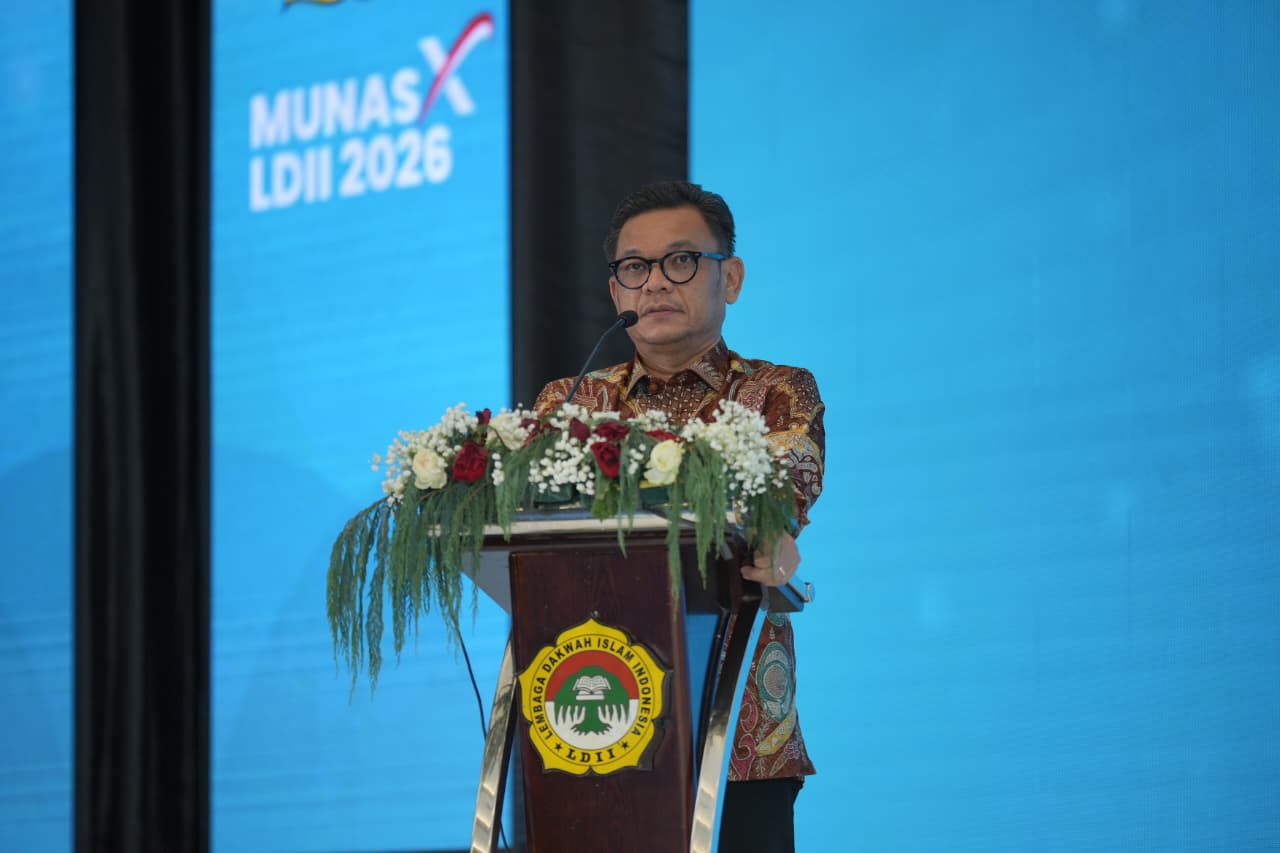
The Governor of Indonesia’s Lemhannas, TB Ace Hasan Syadzily, urged LDII’s young generation to enhance human resource quality in facing global uncertainties. He raised the discourse on human resources as capital for national independence during his briefing at the 10th National Congress (Munas) of the LDII Central Executive Board at the Grand Ballroom Minhajurrosyidin, Jakarta, on Wednesday evening (8/4/2026).
Through a statement received by Media Indonesia today, he emphasised that the young generation, especially Generation Z, plays a crucial role in determining the nation’s future. Therefore, improving academic capacity and skills is non-negotiable. He encouraged LDII’s successor generation to strengthen competencies in Science, Technology, Engineering, and Mathematics (STEM) to utilise Indonesia’s natural resource wealth.
“That is why I want to encourage, through LDII’s educational institutions, to strengthen professional academic abilities and STEM skills. Because our natural wealth can be explored with such expertise,” he continued.
Additionally, he reminded the importance of critical digital literacy. According to him, the young generation must not merely be social media users but should be able to think analytically and deeply. “Don’t just rely on social media. Young people must have deep thinking abilities, one of which is through reading and honing intellectual skills,” he asserted.
In his presentation, he also touched on the global geopolitical situation full of uncertainties, including conflicts in the Middle East that impact world economic stability. This situation, he said, should be a momentum for Indonesia to strengthen economic sovereignty.
He added that national resilience is not only the government’s responsibility but also that of all societal elements, including LDII. According to him, LDII has a strategic role in promoting community independence through various programmes it has run. He appreciated LDII’s initiatives in developing sorghum as an alternative food to replace rice, and utilising new renewable energy through the installation of Solar Power Plants (PLTS) in Islamic boarding schools and LDII organisation offices.
In response, LDII Central Executive Board General Chairman Chriswanto Santoso affirmed that strengthening human resources and national resilience aligns with the organisation’s primary priority, namely nationalism. He explained that national values form the foundation for running various LDII programmes, including in education, economy, and environment. “LDII’s first priority programme is nationalism. From there, other programmes will be easier to implement for Indonesia’s progress,” he said.
Meanwhile, Chairman of the Islamic Mass Organisation Friendship Agency (LPOI), KH Said Aqil Siradj, urged LDII to strengthen da’wah based on tsaqafah—that is, da’wah based on a nation’s culture, knowledge, or thought. Regarding this holistic da’wah, he asked all Islamic mass organisations, especially LDII, to prepare the young generation to face increasingly complex global geopolitical dynamics.
He emphasised that strengthening tsaqafah is an important foundation in building the quality of the ummah, both in terms of academic intelligence and forming life skills, expertise, and a mature perspective. “Tsaqafah shapes a generation that is knowledgeable, skilled, and has a good outlook in facing the challenges of the times,” he said.
He also encouraged LDII to strengthen youth development through comprehensive education covering aspects of knowledge, skills, and character building, so they can adapt to changes while contributing to society.
In his presentation, Said Aqil also affirmed that da’wah is the obligation of the entire Muslim ummah. However, da’wah must be carried out with a wise approach (with wisdom). This wise da’wah is an important lesson so that Indonesia does not get trapped in conflicts like those in the Middle East region. According to him, that situation is a reminder of the importance of maintaining stability and unity in Indonesia. “Alhamdulillah, Indonesia is relatively stable. Not like in the Middle East where conflicts easily occur. Here, differences between mass organisations do not reach the level of principled differences,” he said.
He assessed that differences in Indonesia are natural, as long as they remain within the framework of unity. Therefore, religious organisations like LDII have an important role in maintaining social harmony while strengthening the ummah’s contributions to national life.
In line with KH Aqil Siradj, LDII Central Executive Board Chairman Singgih Tri Sulistiyono viewed that strengthening tsaqafah aligns with LDII’s programmes that have so far focused on education, building noble character, and improving human resource quality. “What is encouraged is how Muslims can lead in community development, both in terms of morality, welfare, and creating peace,” he said.
According to him, in the current digital era context, the challenges faced by the young generation are increasingly complex. Therefore, besides having knowledge, the young generation is also demanded to have social empathy, critical thinking skills, and readiness to face changes. “If we lag in technology, we will certainly lose. Therefore, strengthening education, economy, and technology is an important part of LDII’s programmes,” he explained.
The 10th LDII National Congress was held from 7–9 April 2026 with the theme “Solidifying LDII’s Role in Building a Sovereign, Harmonious, and Civilised Indonesia for World Peace”.
KH Chriswanto also assessed that the current global situation demands Indonesia to strengthen economic independence and social solidarity.