
At Jayabaya University, Deddy Mizwar Highlights the Power of Culture and Film
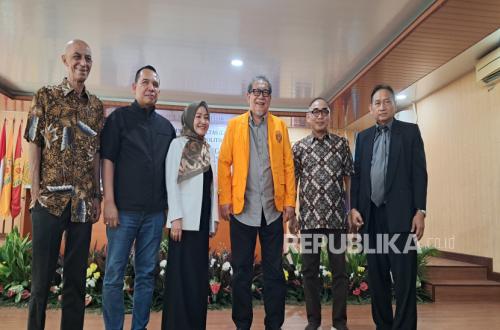
Senior actor and cultural expert Deddy Mizwar views film as more than mere entertainment; it is a powerful instrument of cultural diplomacy for building a nation’s image on the international stage.
He expressed this during a public discussion hosted by the Faculty of Social and Political Sciences at Jayabaya University, themed “State Management from a Cultural Perspective”.
Deddy believes Indonesia possesses extraordinary cultural strength, yet it has not been maximised as a strategy for international diplomacy and national economic reinforcement.
“If we talk about Indonesian cultural identity, it’s the diversity itself. Every 60 kilometres, we encounter different languages, customs, and values of life. That’s a richness no other country has,” said Deddy.
According to him, many countries have long utilised the film industry to disseminate culture while strengthening their national economies. He cited the United States through Hollywood and South Korea via dramas and popular music, which have successfully built cultural influence worldwide.
“In the past, we wore jeans because of American cowboy films. Now Korea is doing the same through its dramas and music. From skincare and lifestyles to electronic products, they enter through popular culture,” he said.
Deddy noted that films have a very strong penetrating power because they can influence viewers’ emotions and thought patterns over the long term.
“Sometimes dialogues from films 20 years ago are still remembered. But lessons from university are forgotten right after graduation. That means films have extraordinary power,” he stated.
He assessed that Indonesia should be able to become a global cultural force because it has thousands of stories, traditions, and local characters that have not been optimally explored.
“We will never run out of themes. Other countries are now remaking old films. Indonesia, on the other hand, has an endless source of stories,” said Deddy.
Furthermore, he highlighted the importance of the cultural industry as an opportunity for inclusive economic growth. According to him, the cultural sector does not always require high qualifications but emphasises creativity and works.
“The cultural industry is enormous. And in it, qualifications are rarely questioned. What matters is the work and creativity,” he remarked.
Deddy also shared his experience when once offered by Chinese parties to act in a film about the Asia-Africa Conference. However, he rejected the offer because he disagreed with the historical narrative constructed in the film.
“They wanted to show how important China was in the Asia-Africa Conference. All the shooting was done in China with unlimited budget. From there, I saw how films are used to build a nation’s perception in the eyes of the world,” he said.
He hopes the government will take cultural diplomacy through the film industry and digital media more seriously as part of a grand strategy to make Indonesia a world power by 2045.
“Film is like magic. It can make people laugh, cry, and gradually admire a nation and follow its lifestyle,” said Deddy Mizwar.
Meanwhile, Chairman of the Jayabaya University Foundation, Moestar Putra Jaya, affirmed that education and culture are two inseparable elements in building the nation’s future.
According to him, universities are not only tasked with producing academically excellent graduates but also those with character, cultural awareness, and national responsibility.
“Education without cultural roots will lose direction. Campuses must be spaces for birthing generations that master knowledge but still understand their own national identity,” said Moestar Putra Jaya.
He added that Indonesia’s cultural richness must be an important part of the education process so that the younger generation does not become detached from national values amid the currents of globalisation and digital technology developments.