
At Energy Symposium, DEN Mitigates Supply Risks Amid Geopolitics
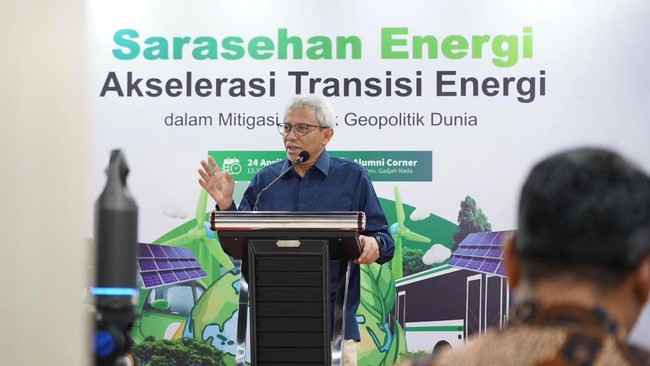
The National Energy Council (DEN) held the Energy Symposium as a strategic forum to strengthen understanding and cross-sectoral synergy in responding to increasingly complex energy dynamics. The event brought together government representatives, academics, business actors, and various other stakeholders.
The series of activities included keynote speeches, panel discussions, and interactive sessions that delved into crucial issues, ranging from the national energy situation, the effectiveness of targeted subsidies, to challenges in energy provision amid global geopolitical pressures. DEN member Saleh Abdurrahman emphasised the urgency of accelerating the energy transition as a response to global uncertainties.
According to him, accelerating the energy transition is key to strengthening national energy resilience and independence, especially amid the impacts of geopolitical conflicts that affect the stability of global energy supplies and prices. He also highlighted the importance of adaptive and sustainable energy policies.
These efforts include increasing the utilisation of new renewable energy (EBT), strengthening national energy reserves, and optimising transitional energy, in line with the direction of the National Energy Policy in Government Regulation Number 40 of 2025. Meanwhile, DEN member Mohamad Fadhil Hasan revealed that the national energy sector still faces several structural challenges.
Dependence on oil and gas imports, fluctuations in world oil prices, and pressures on energy subsidies are issues that need to be addressed comprehensively.
“The current global geopolitical dynamics are exerting real pressure on national energy provision. Therefore, a comprehensive strategy is needed from both the supply and demand sides to maintain energy resilience,” he stated in an official remark on Wednesday (27/4/2026).
An academic perspective further enriched the discussion, presented by Rachmawan Budiarto, Expert Staff at the Centre for People’s Economic Studies at UGM. In his presentation, he conveyed that energy price volatility due to geopolitical conflicts not only impacts the energy sector but also creates chain effects on industrial production costs and national economic competitiveness.
Energy efficiency and appropriate policies are seen as key factors in maintaining economic stability. From an operational perspective, Eko Ricky Susanto, Director of Marketing at PT Pertamina Patra Niaga, outlined the current state of national energy provision.
Currently, the global energy market is in a phase of supply disruption fears, where the risk of supply interruptions is increasing due to geopolitical factors. To anticipate this, Pertamina has prepared various strategic measures, including diversifying import sources, strengthening medium- and long-term contracts, and optimising domestic refinery production to ensure the sustainability of fuel oil (BBM) and LPG supplies.
In addition, strengthening the distribution system and managing targeted energy subsidies are also primary concerns to ensure that energy remains available fairly and sustainably for the public. Through this Energy Symposium, DEN hopes to gather constructive input from various parties to strengthen inclusive, adaptive, and sustainable national energy policies.
The dynamic discussions reflect high cross-sectoral attention to energy resilience issues amid global uncertainties. This forum also reaffirms DEN’s strategic role in formulating and overseeing national energy policies, as well as strengthening cross-sectoral coordination to achieve Indonesia’s energy sovereignty and independence. For information, the event was held on Friday (24/4/2026) at the Alumni Corner of the Faculty of Economics and Business, Universitas Gadjah Mada (FEB UGM), Yogyakarta.