
Asymmetrical Warfare: Iran's $20,000 Drone Countered by US's $4 Million Missile
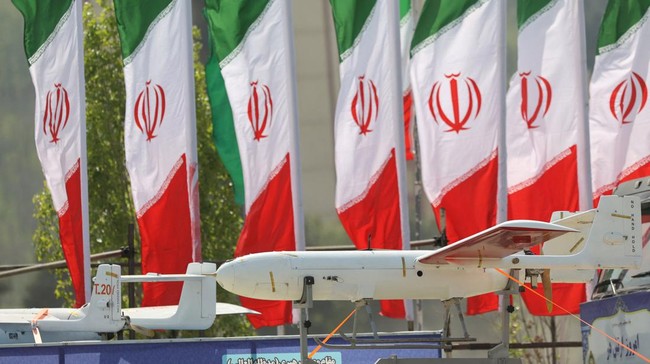
The war between the United States (US) and Israel against Iran has brought Iran’s drones back into the spotlight. Amid the escalating conflict that has intensified since 28 February 2026, Tehran is not only retaliating with missiles but also relying on large numbers of drones. Since the war broke out, Iran has reportedly fired hundreds of missiles and more than 1,000 drones at Israel and US-allied Gulf states. One of the most discussed is the Shahed-136, a one-way attack drone that flies to its target and explodes upon impact. This drone is not known for its most advanced technology but rather for being relatively cheap, mass-producible, and launchable in large quantities simultaneously. Iran’s strategy emphasises volume of attacks over precision, aiming to overwhelm the enemy’s air defences. One Shahed unit is estimated to cost around US$20,000 to US$50,000. In line with this, the US is now following Iran’s lead by using cheap drones in warfare. Washington has begun employing the FLM-136 LUCAS, a low-cost one-way attack drone whose shape and concept are considered similar to Iran’s Shahed. The presence of LUCAS shows that the US is also recognising the importance of affordable drones that can be produced quickly and used en masse, especially as modern warfare increasingly demands effective but cost-efficient weapons. A Major Threat to the US What makes Iran’s drones a serious threat to the US and its allies is not just their numbers but the cost imbalance between attack and defence. While Iran can launch cheap drones in large numbers, the US and its allies often have to counter with interception systems worth millions of dollars per shot. The clearest example is the US-made Patriot interceptor. The cost of one Patriot interceptor is estimated at around US$4 million. With that amount of funding, roughly 115 cheap drones could be made, assuming a drone price of around US$35,000 per unit. This means that, from a cost perspective alone, Iran is in a far more efficient position. Besides the Patriot, there is also the THAAD system used to counter aerial threats. The price of one THAAD interceptor is estimated at around US$13 million to US$15.5 million per unit. Not only are the missiles expensive, but a full Patriot or THAAD battery can also be worth more than US$1 billion, including launchers, radar, and command systems. The problem is that defence costs do not stop at missile prices. Every interception effort also requires warships or air bases, radar, fuel, maintenance, trained crews, intelligence systems, and command and control networks. In the Red Sea, the US Navy has reportedly spent around US$1 billion or more in ammunition since the end of 2023 to protect its ships from Iran’s cheap drones and missiles. This demonstrates that low-cost threats can force major powers to incur extremely high defence costs. It is this imbalance that makes the Shahed and similar drones a threat. As cheap drones can be continuously produced and deployed in large numbers, the opponent is forced to use expensive systems repeatedly. In the long term, this model makes defence far more burdensome economically. In the first week of the latest conflict, Iran reportedly launched more than 1,000 drones and is estimated to have the capacity to produce around 10,000 drones per month. Other Technologies to Counter Iranian Drones Because using conventional interceptor missiles is very expensive, many countries are now seeking cheaper ways to counter drones like the Shahed. The technologies being developed are varied, from lasers and signal jammers to interceptor drones. One of them is the HELIOS system built by Lockheed Martin, installed on US Navy warships. The value of this system is around US$150 million, but the cost per shot is only around US$1 to US$10. There is also the LOCUST from AeroVironment, valued at around US$10 million, with a shot cost of about US$3. Meanwhile, from Israel, there is the Iron Beam, a high-power laser system valued at tens of millions of US dollars and a cost per shot of around US$2 to US$3.5. In addition, there is the Drone Dome valued at around US$3.3 million, the DroneHunter at around US$100,000, and the Coyote Block 3 in the range of US$100,000 to US$200,000. Although they sound promising, these technologies are not yet fully mature and are not widely used. Some still have limitations in terms of range, power, weather, and scale of use on the battlefield. Therefore, many militaries to this day still rely on old air defence systems like the Patriot and THAAD to protect ships, bases, and cities from drone attacks. Ultimately, the biggest challenge for the US and its allies is not just shooting down Iranian drones but doing so at a reasonable cost. As long as cheap drones like the Shahed can be mass-produced, while their defences still depend on multi-million-dollar interceptors, the threat from Iranian drones will remain difficult to ignore.