
Astronomers Discover Giant Planet 18 Times the Mass of Jupiter and Rare Brown Dwarf
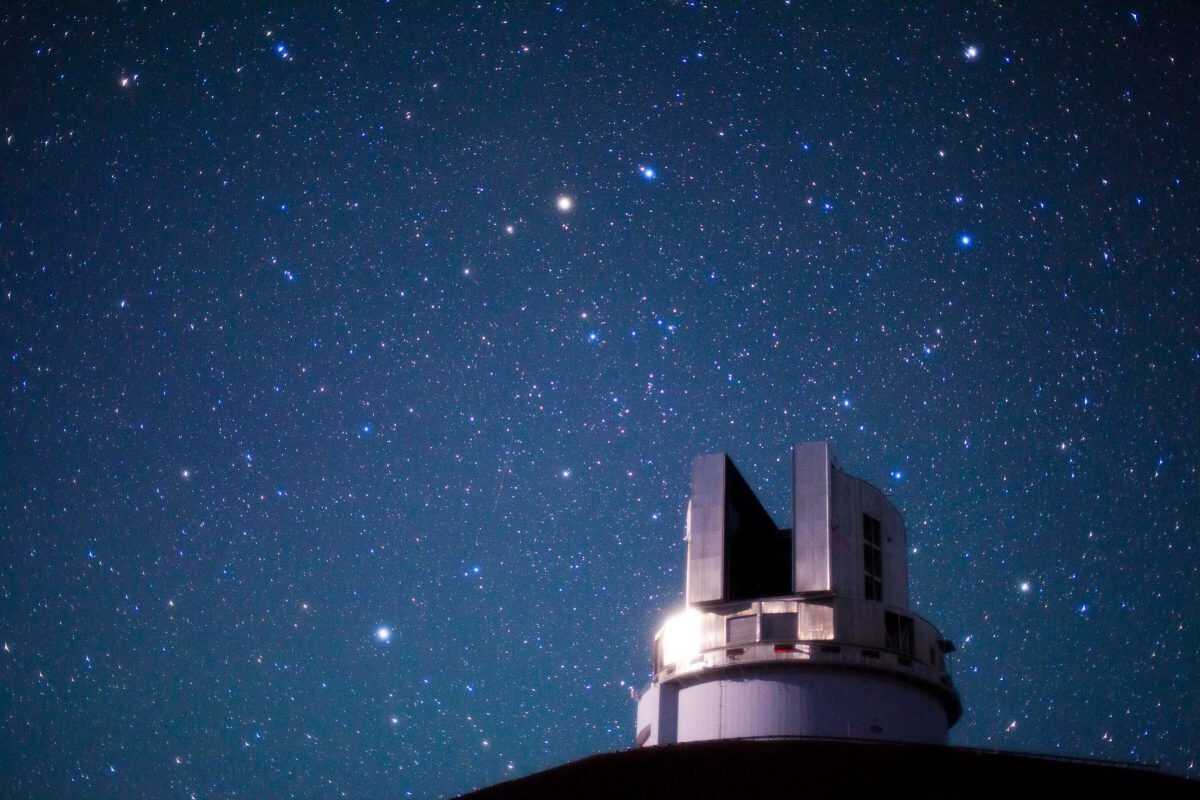
Using the Subaru Telescope in Hawaii, astronomers have discovered two distant companion objects: a giant planet and a brown dwarf, each orbiting its own star. This discovery is the first success of the OASIS (Observing Accelerators with SCExAO Imaging Survey) project, an initiative that combines precision data from space with the Subaru Telescope’s advanced imaging system.
In a study published in The Astronomical Journal on December 3, 2025, researchers explained the difficulty of finding these objects. To date, only about 1 percent of stars are known to have massive planets or brown dwarfs that can be directly imaged with existing telescopes. The light from these objects is often “drowned out” by the much brighter light of their host stars.
One of the main discoveries in this study is the giant planet HIP 54515 b, located in the constellation Leo, about 271 light-years from Earth. This planet has a mass almost 18 times that of Jupiter and an orbital distance similar to Neptune’s distance from the Sun.
Finding this planet is a remarkable achievement because, from Earth, the distance between the planet and its star is equivalent to viewing a baseball from a distance of 100 km. The success of the SCExAO system in separating the planet’s light from its star has allowed scientists to image this massive object very clearly.
In addition to this planet, researchers also discovered a rare brown dwarf named HIP 71618 B in the constellation Bootes, 169 light-years away. This object has a mass of about 60 times that of Jupiter and is often called a “failed star” because, although it formed like a star, it does not have enough mass to trigger nuclear fusion.
HIP 71618 B is particularly special because it was selected as an ideal test target for NASA’s Roman Space Telescope. This telescope is used to image very faint objects with an advanced coronagraph instrument, and this brown dwarf meets all the strict criteria required for testing this future technology.
The OASIS project, led by Thayne Currie and Masayuki Kuzuhara, overcomes the challenges of imaging by narrowing down targets through the analysis of stellar motion. The survey uses data from the ESA’s Hipparcos and Gaia missions to track small wobbles in stars caused by the gravitational pull of hidden objects around them.
Once a star shows signs of this “pull,” astronomers will point the Subaru Telescope at the target. With the help of the SCExAO (Subaru Coronagraphic Extreme Adaptive Optics) system, they are able to capture very sharp images, allowing them to directly image previously unseen worlds.
The success of the OASIS project proves that the Subaru Telescope will continue to play a leading role in astronomical discoveries, even as a new generation of more powerful telescopes comes into operation.
Source: ScienceDaily, SciTechDaily
Astronomers discovered a giant exoplanet and a brown dwarf using the Subaru Telescope in Hawaii. This discovery is the first result of the OASIS program.
A revolutionary ImageMM algorithm successfully removes atmospheric blur effects on the Subaru Telescope, resulting in sharper star images.