
Astronomers Discover a 'Ghost Galaxy' Containing 99% Dark Matter
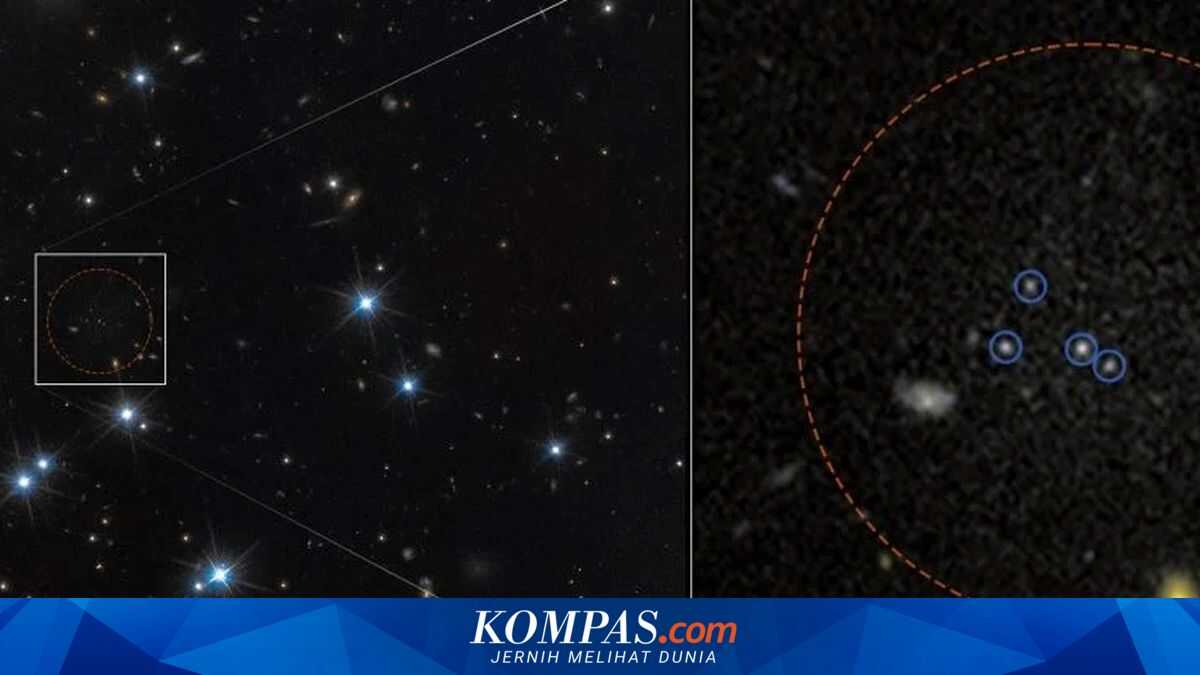
Astronomers have found a ‘ghost galaxy’ that is almost entirely composed of dark matter. The incredibly faint object lies about 300 million light-years from Earth, within the Perseus galaxy cluster.
The galaxy, named CDG-2, ranks among the most dark matter–dominated galaxies ever found. The discovery is reported in The Astrophysical Journal Letters.
Unlike most galaxies that shine brightly due to billions of stars, galaxies like CDG-2 are extremely dim and barely visible. This type of galaxy is known as a low-surface-brightness galaxy.
Such galaxies host relatively few stars, while most of their mass is thought to consist of dark matter—the mysterious substance that does not emit, absorb, or reflect light.
Instead of looking for light from the galaxy, researchers search for patterns of globular clusters.
A globular cluster is a densely packed, spherical collection of stars that typically orbits a large galaxy. The presence of such clusters can indicate an unseen galaxy in the vicinity.
Using sophisticated statistical methods, the Li team scanned astronomical data to search for groups of globular clusters that are unusually close together.
This approach successfully identified ten previously known, faint galaxies and two new galaxy candidates that are likely dark galaxies.
High-resolution images from the Hubble Space Telescope reveal four globular clusters clustered tightly within the Perseus cluster.
When data from Hubble, Euclid, and Subaru are combined, researchers detect extremely faint light extending around the cluster of globulars. This diffuse light provides evidence that a hidden galaxy lies beneath.
David Li explained the significance of the finding. ‘This is the first galaxy detected solely through its globular cluster population,’ Li said.
‘Conservatively, these four clusters are likely the entire globular cluster system of CDG-2.’