
Astronomer Explains Why Sub-Neptune Planets Struggle to Survive Around Red Dwarf Stars
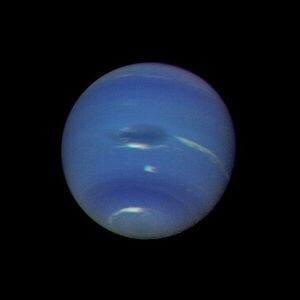
Sub-Neptune planets are one of the most common types of exoplanets found in the Milky Way. Their size is larger than Earth but smaller than Neptune, with a radius about two to four times Earth’s. While they are often found orbiting Sun-like stars, scientists observe an unusual pattern around small stars or red dwarfs: sub-Neptune planets are far rarer around these stars.
This phenomenon has attracted scientific attention because red dwarfs are the most numerous type of star in the galaxy. If planet formation occurs broadly across star systems, sub-Neptune planets should be plentiful there as well. However, observations from exoplanet-hunting telescopes such as Kepler and TESS show far fewer of them than expected.
Recent studies indicate that the strong radiation from red dwarfs is a major cause. In their early life, these small stars exhibit highly active magnetic activity and emit large amounts of ultraviolet radiation. This can erode the thick atmospheres of planets that are too close to their stars.
This process is known as atmospheric mass loss or atmospheric evaporation. Sub-Neptune planets that initially had thick gas envelopes gradually lose their atmospheres due to extreme radiation. Once the atmosphere is gone, the remaining planet cores may become rocky planets that are smaller and harder to identify as sub-Neptunes.
Astronomers have also identified a distinctive region called the ‘Neptunian Desert’, an area of orbits near a star that nearly lacks sub-Neptune planets. This region is thought to form because many planets cannot survive the high heat and radiation. One exception observed is NGTS-4b, which has managed to endure despite its location in the region. Scientists speculate that it has a very dense core or migrated in its orbit after the star’s radiation activity weakened.
Other studies of planetary systems around red dwarfs show that some surviving sub-Neptunes perhaps retain very thick atmospheres or an ice layer beneath their surface. These findings help scientists understand how the properties of the host star influence planetary evolution over long timescales.
Research into sub-Neptunes is also important for the search for potentially habitable planets in the future. By understanding how atmospheres survive or break down under stellar radiation, astronomers can assess which planetary systems are most likely to support life. (Astronomical Journal, Monthly Notices of the Royal Astronomical Society, Princeton University Research Publications/P-3)
Stars exhibit a variety of magnetic activity. When the intensity rises, a star can unleash stellar storms that eject hot plasma into space.
Astronomers have observed a powerful coronal mass ejection from a red dwarf about 130 light-years away. The finding is a significant breakthrough in the study of space weather.
Astronomers have also identified the quadruple star system UPM J1040-3551 AabBab, including a rare pair of brown dwarfs.