
Astra's Vocational Education Support Programme Boosts Technical Skills and Fosters Independence Among Young People
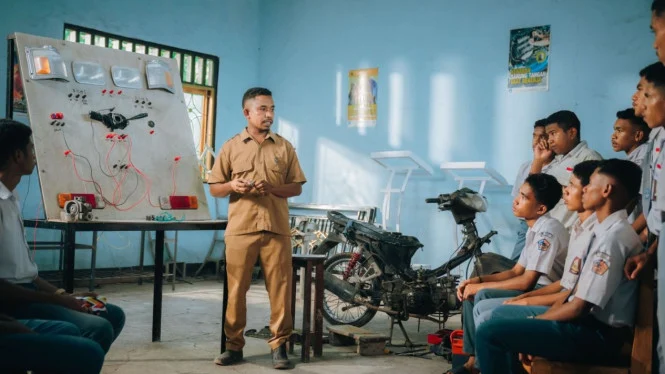
Astra’s Vocational Education Support Programme Boosts Technical Skills and Fosters Independence Among Young People
- Documentation from Astra.
Kupang, VIVA – Through the Astra Foundation, Astra is gradually implementing a vocational education support programme focused on strengthening teacher capacity, developing practice-based learning, and improving students’ readiness to enter the world of work and entrepreneurship. This programme is being implemented as a commitment to expanding access to quality vocational education to improve the skills of human resources (SDM) in various regions of Indonesia.
“For us, vocational education is not just about technical skills, but about building the confidence and independence of young people. Through the Astra Foundation and the Astra Michael D. Ruslim Education Foundation, we want to ensure that teachers are further empowered to support students, and that students have the practical skills they need to work or start their own businesses,” said Astra’s President Director, Djony Bunarto Tjondro, in a statement on Tuesday, 24 February 2026.
In the Takari sub-district, Kupang Regency, vocational schools offer hope to many families that their children can start working immediately after graduation. However, behind this enthusiasm, vocational education in rural areas still faces challenges in the form of limited practical facilities, access to learning, and the need to strengthen teacher capacity so that teaching methods are more aligned with industry needs. This situation affects the readiness of graduates to enter the workforce or start their own businesses independently.
“From regions like Takari, we believe that talents will emerge who can contribute to the nation,” he added.
SMK Negeri 1 Takari is one of the leading vocational schools in the area. The school serves students from several surrounding villages, such as Desa Oesusu, Desa Benu, Desa Takari, and other villages in the remote areas of Kupang Regency. Most students have to travel quite a distance each day to receive vocational education that is relevant to the needs of the world of work. In response to this challenge,
There are 322 students divided into five areas of expertise at the school, namely creative crafts in wood and rattan, creative crafts in batik and textiles, building information modelling design, light vehicle technology, and welding technology. About 80% of the students come from families with modest economic backgrounds and choose the SMK pathway in the hope of being able to start working immediately after graduation.