
Asteroid 'City Killer' Confirmed Not to Hit Earth or the Moon in 2032
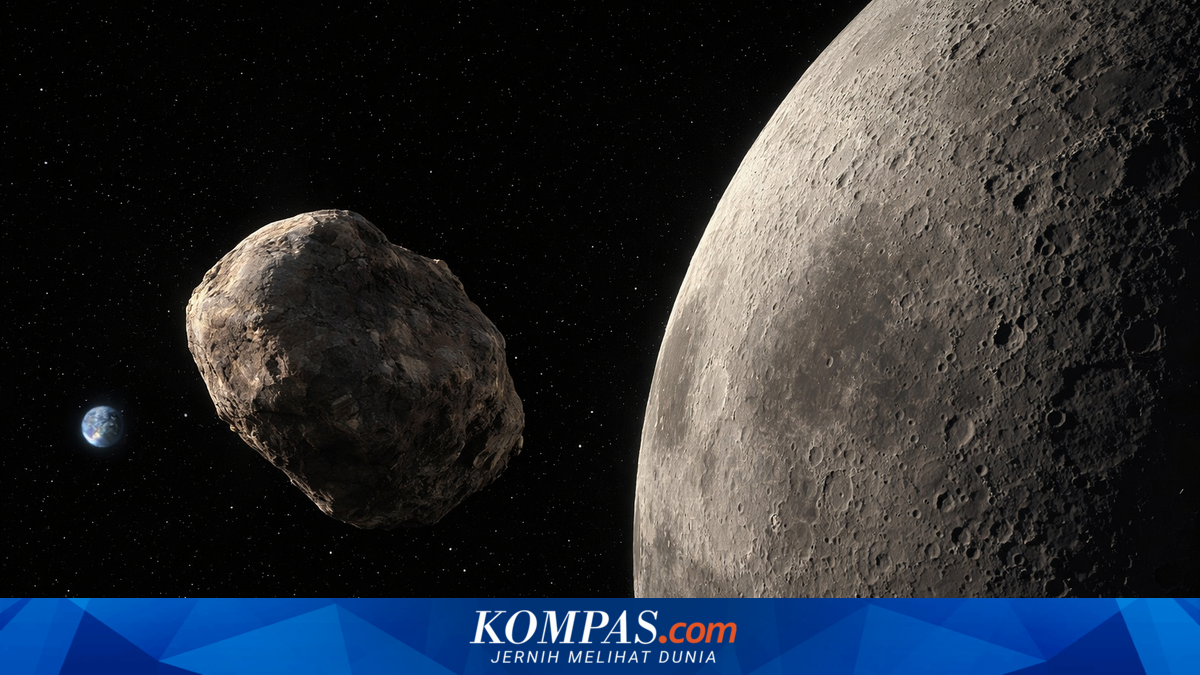
An asteroid nicknamed the ‘city killer’ has been confirmed not to hit the Moon or the Earth in 2032. The certainty came from the latest observations using the James Webb Space Telescope (JWST), which can refine the asteroid’s orbital calculations with far greater precision.
The finding brings relief to scientists and the public, after the asteroid, designated 2024 YR4, was previously considered one of the space objects with the highest risk ever monitored.
The result is surprising: the probability of the asteroid hitting the Moon, previously estimated at 4.3%, has fallen to zero. In other words, the asteroid will not strike the Moon as it passes in 2032.
However, its orbital distance remains extremely close in astronomical terms. The asteroid is expected to pass about 13,200 miles (21,200 kilometres) from the Moon’s surface. This distance is even closer than that of some artificial satellites in orbit around the Earth.
At the same time, the asteroid is also expected to pass by the Earth at a distance of several hundred thousand miles, posing no threat to our planet.
‘Since spring 2025, this asteroid could not be observed from Earth or from other space telescopes except with JWST,’ said a NASA official. In fact, the JWST images include the faintest asteroid observations ever made in history.
The European Space Agency (ESA), which helps manage the telescope along with NASA and the Canadian Space Agency, emphasised how challenging the mission was. ‘The challenge is enormous: to use one of the most complex machines ever built by humans to track an object that is almost invisible millions of kilometres away and then predict its position nearly seven years into the future with precision,’ said an ESA representative.
After discovery, further observations show that the asteroid is sizeable, with a diameter of around 53 to 67 metres.