
Asset Forfeiture Bill: Expert Warns on Unbalanced Asset Profiles
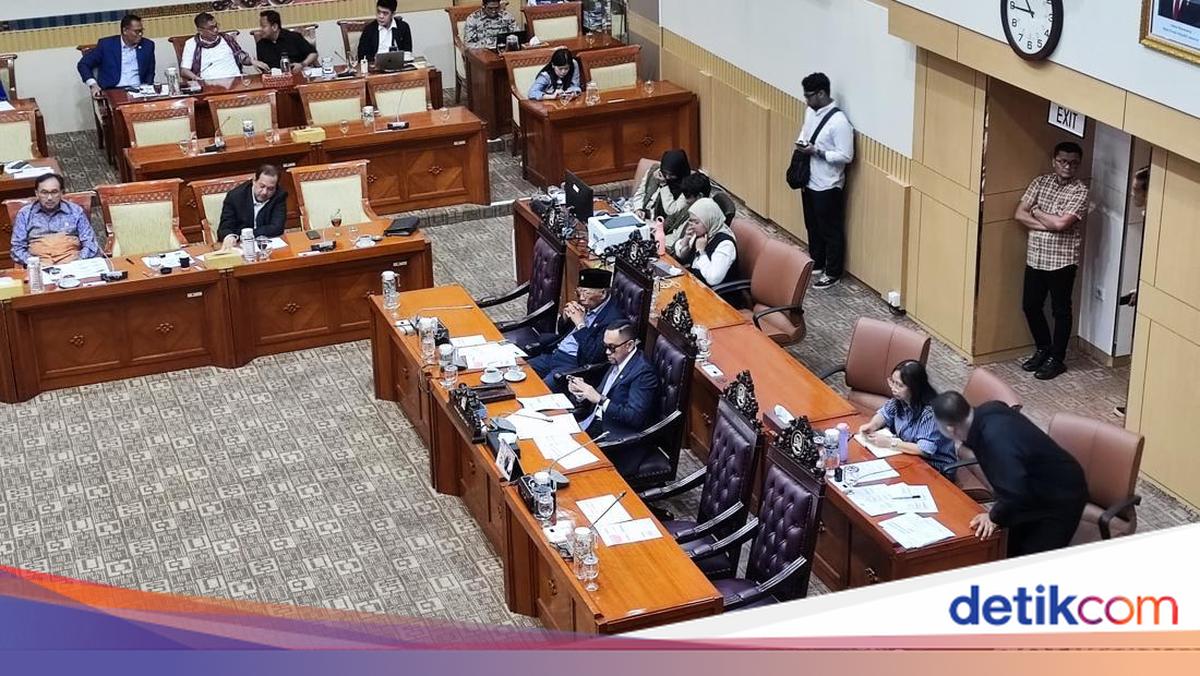
Commission III of the House of Representatives (DPR) has once again invited several experts to provide input on the Asset Forfeiture Bill. The commission was reminded of the issue of assets that do not match an individual’s profile if such a mechanism is to be included in the Asset Forfeiture Bill.
This was stated by criminal law expert from the Faculty of Law at Untar, Heri Firmansyah. He noted that the issue of wealth disproportionate to one’s profile becomes intriguing when incorporated into the Asset Forfeiture Bill.
“Then there are other assets as substitutes for those seized by the state, assets that are not balanced with the profile— this is interesting to discuss, perhaps there’s unexplained wealth that can be quantified in terms of riches, but the question is where it came from, the source of acquisition, which could become problematic, as if there’s an entry point for law enforcement there,” said Heri during his presentation to Commission III of the DPR RI in Jakarta on Monday (6/4/2026).
He believes there needs to be specific regulations regarding the mechanism for seizing assets that do not match a profile. According to him, if not regulated specifically, the mechanism will veer off the legal track.
“I think this needs to be addressed; with permission from the respected members of Commission III, clearer rules could be made because we’re talking about the concept of legality in criminal law—lex scripta, lex certa, and lex stricta—it must be firm and clear, and even the new Criminal Code states that analogies are not allowed. So, there must be no interpretations that cause the spirit of asset forfeiture enforcement to go off track,” he said.
Heri’s explanation was then further responded to by Deputy Chairman of Commission III of the DPR, Ahmad Sahroni. He also questioned what would happen if a poor person caught in major corruption were involved.
“Sorry, sorry before we continue, regarding what was said earlier about assets not matching the profile, unbalanced with the profile—this is just talk; if there’s a criminal act of corruption, the person’s profile is poor, but the corruption is large, say, and we want to seize their assets—well, this is my question, as input, I want to ask back, what’s the view on that?” asked Sahroni.
Heri then explained that the mechanism for seizing assets not matching a profile must indeed be a focus of discussion for Commission III of the DPR. He pointed out that the mechanism could expand if interpreted by law enforcers.
“So, speaking of point 4, I say this is an issue that can be paid more attention to and focused on by the Commission III leadership and other members; speaking of interpretation that could become broad. Should everything go through the PPATK mechanism in the future? So we can see if this is a suspicious transaction or not, or without needing PPATK analysis, can investigators conclude that this is an asset unbalanced with the profile?” he clarified.
Furthermore, Heri also reminded about who would have the authority to determine assets that do not match a profile. He assessed that several parties need to be involved in making that determination.
“This must go through a clear process mechanism, because in criminal matters, there are stages to go through; so who has the right to determine that this is unbalanced with the profile—whether it’s the investigator or using another mechanism, for example, in this case, collaborating with banking parties, but this will involve cross-institutional involvement so it’s not just the result of one party’s view that can declare that,” he stated.
“Because in many practices that I’ve found, things like this become problematic, leading to endless debates, because each side believes they have a basis regarding the assets owned or controlled, so they can be considered an innocent owner—that means they have ownership but no fault there. Because in criminal law, mens rea is important,” he added.