
Asset Forfeiture Bill Accelerated, Commission III Gathers Input from Legal Experts
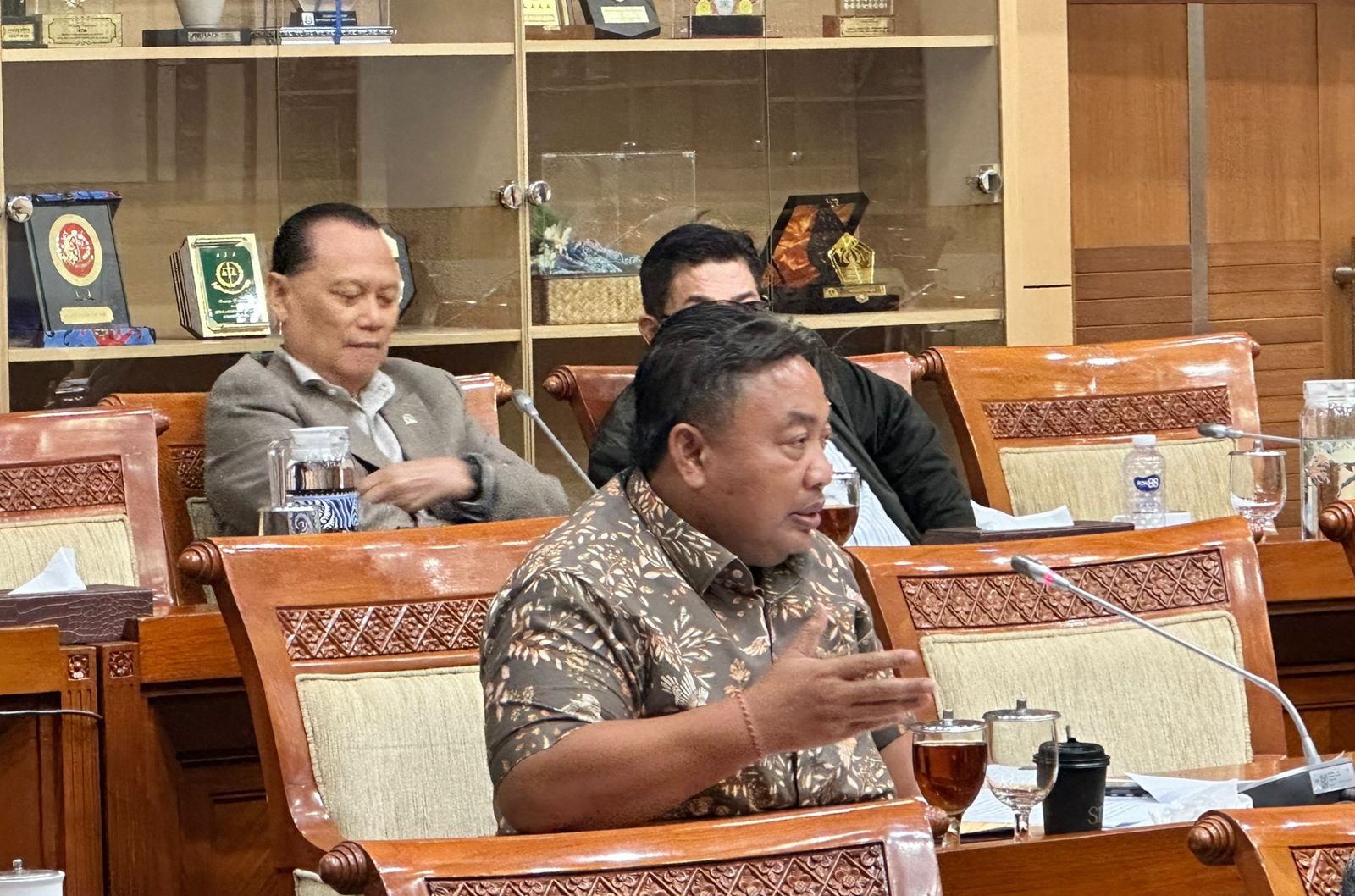
Indonesia’s House of Representatives (DPR RI) continues to deliberate on the Asset Forfeiture Bill to promptly enact it as law. This was stated by Nyoman Partha, a member of Commission III DPR RI from Bali, when confirmed in Denpasar on Tuesday (31/3). He confirmed that discussions on the Asset Forfeiture Bill are being accelerated.
“Commission III has conducted a Working Meeting for Legislative Preparation (RDPU) with Prof. Bayu Dwi Anggoro, Head of the DPR Expertise Agency, Maradona, Deputy Dean of the Faculty of Law at Airlangga University, and Prof. Hibnu Nugroho, Professor of Criminal Law at Jenderal Soedirman University. This was done to gather inputs for drafting the Criminal Asset Forfeiture Bill,” he said.
He assessed that the Criminal Corruption Asset Forfeiture Bill is currently very important in Indonesia, as criminal acts of corruption are shocking.
Data from Transparency International Indonesia indicates that Indonesia’s Corruption Perceptions Index (CPI) in 2025 experienced a decline in score to 34, placing Indonesia at rank 109 out of 180 countries. In 2024, Indonesia was at rank 99 out of 180 with a score of 37.
“The Criminal Asset Forfeiture Bill is a necessity in efforts to eradicate corruption and economic crimes in Indonesia. The high state losses resulting from various criminal acts have not been optimally recovered through the currently applicable legal mechanisms, which are still based on convicting the perpetrator (conviction-based),” he said.
The perpetrator-focused conviction approach often faces obstacles, such as difficulties in proving the case, the perpetrator fleeing, or passing away, thus preventing the seizure of crime proceeds. Therefore, this bill offers a new approach focused on crime proceeds (profit-oriented), through a Non-Conviction Based (NCB) Asset Forfeiture mechanism.
“Through this mechanism, the state can seize assets via civil channels with more flexible proof standards. The aim is to ensure that crimes do not benefit the perpetrators, accelerate state loss recovery, and disrupt crime funding flows,” he said.
Several crucial issues that could spark debate include, first, the application of NCB Asset Forfeiture (seizure without a criminal verdict), which is seen as potentially conflicting with the presumption of innocence principle.
Second, reverse proof, which could burden asset owners. Third, limits on law enforcement authorities. Fourth, potential abuse of law enforcement powers.
Fifth, protection of property rights and human rights, and sixth, management of seized assets. “There are two legal concepts: Conviction-Based (waiting for a criminal verdict before seizure) versus Non-Conviction Based (seizure possible without a criminal verdict),” he said.
He emphasised that Commission III will seek a middle ground between these two perspectives. This includes how to seize proceeds from money laundering crimes related to human trafficking, nominees, narcotics crimes, scams, and others.