
Assessing the Sole Authority for Calculating State Financial Losses Following the Constitutional Court Decision
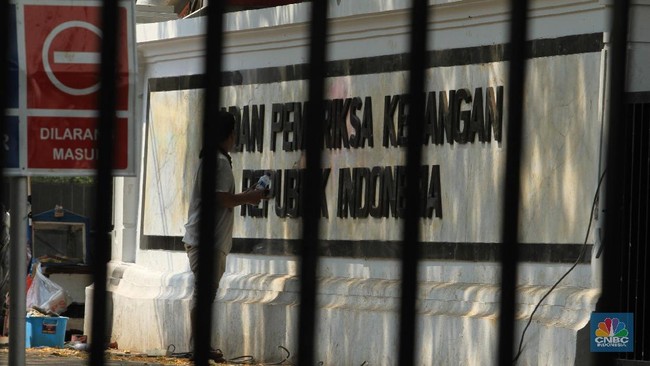
There is one interesting aspect in the Constitutional Court (MK) Decision Number 28/PUU-XXIV/2026 regarding the institution authorised to calculate state financial losses. In that decision, the MK opined that the Supreme Audit Agency (BPK) is the party authorised to calculate state financial losses as stipulated in Article 23E of the 1945 Constitution.
The petitioners, comprising a businessman and a prospective judge, challenged Articles 603 and 604 of Law Number 1 of 2023 on the Criminal Code. According to the petitioners, the element of state loss, which is a core part of Articles 603 and 604 of the Criminal Code, must be declared unconstitutional insofar as it is interpreted as “Proof of state financial loss is not exclusive and closed solely to the results of examinations by certain audit institutions, but must be proven based on valid legal evidence and independently assessed by judges in criminal proceedings.”
In its operative part, the MK rejected the petitioners’ application because it was difficult to find grounds for the constitutional invalidity of the norm between the norm of state financial loss and the constitutional loss suffered by the petitioners.
Additionally, the MK still holds the view that its establishment has not changed from several previous decisions related to state financial losses, one of which is in case 142/PUU-XXII/2024, particularly regarding state financial losses and the national economy, which must be compiled materially/actually, not potentially.
Although the MK rejected the petitioners’ application, in its legal considerations, the MK opined that the BPK has authoritative authority to carry out calculations for state financial losses. In addition, there is a note for the government and the DPR, particularly regarding attention in revising the Law on the Eradication of Criminal Acts of Corruption, which is a national legislative priority agenda.
Five of those notes are as follows: First, the lawmakers should immediately conduct a comprehensive review of the norms in the Articles regarding state financial losses and the national economy in the Anti-Corruption Law. Second, if the review results require revision or improvement to those norms, the lawmakers may position the aforementioned revision or improvement as a priority.
Third, if such revision or improvement is necessary, the lawmakers must carefully and thoroughly consider it so that the implications of the revision or improvement do not reduce the legal policy of eradicating criminal acts of corruption as an extraordinary crime.
Fourth, the substance related to criminal sanction norms should be formulated with greater legal certainty to reduce the potential for abuse of authority in eradicating criminal acts of corruption. Fifth, the aforementioned revision or improvement should involve participation from all concerned parties in the anti-corruption agenda by applying the principle of meaningful public participation.
Direction of Development of Corruption Offences
To date, since the enactment of Law Number 31 of 1999 on the Eradication of Corruption Offences, the construction of corruption has been more positioned as a formal delict. Through the phrase “may cause loss to state finances,” proof does not always require an actual loss to have occurred.
Sufficient with potential, the legal process can proceed. This approach indeed provides broad room for manoeuvre for law enforcers, but at the same time, it also opens debates regarding legal certainty and proof limitations.
Changes began to appear with the MK Decision Number 25/PUU-XIV/2016. In that decision, the Court emphasised that state financial losses can no longer be interpreted potentially, but must be actual or real.
Since then, corruption is no longer solely understood as a formal delict, but has shifted to a material delict that demands more concrete proof. From the perspective of law enforcement in trials, this also strengthens the position of law enforcers solely to facilitate the proof process.
This construction was then reinforced through the provisions in Chapter XXXV of Law Number 1 of 2023 on the Criminal Code. By incorporating corruption offences into the Criminal Code as external criminal law, the lawmakers sought to restructure criminal law standards in a more integrated manner. Within this framework, corruption is not only positioned as a serious crime but also as a delict that requires certainty in proof.
However, the inclusion of corruption into the Criminal Code does not automatically eliminate its special character as a regime standing outside the general framework. On one hand, it is drawn into the national criminal law system to unify principles and proof standards, but on the other hand, it retains its nature as an offence also regulated through sectoral laws.
This is what is meant by limited codification of law. It means that corruption is in a position that is not fully internal, but also not fully external. This choice shows that the lawmakers are not carrying out total unification, but rather trying to maintain a balance between the need for system consistency and the demands for effective corruption eradication.
This has implications for the relationship between the Criminal Code and special regimes such as the Anti-Corruption Law becoming increasingly important to read carefully. The Criminal Code provides a general framework, particularly regarding principles and criminal liability, while special rules continue to function as operational instruments in law enforcement practice, particularly those with certain modi operandi and requiring special institutions such as spe