
Assessing the Relevance of the TNI Territorial Commander Position Restored after 25 Years of Abolition
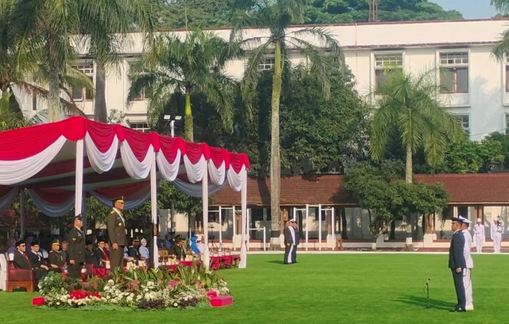
Indonesia’s defence establishment has marked a historic moment in 2026 with the reactivation of the Territorial Commander (Kaster) position of the Indonesian Armed Forces (TNI). This position was previously liquidated in 2001 as part of military reform efforts. However, after a quarter-century, evolving global security dynamics have compelled Indonesia to reconsider its territorial command structure.
The appointment of Lieutenant General Bambang Trisnohadi as the first Kaster TNI in this new era signals a fresh chapter in strengthening a modern, transparent, and responsive Total Defence doctrine adapted to contemporary challenges.
The decision to restore the Kaster TNI position stems from an urgent need to coordinate national potential in addressing non-traditional threats. The Kaster TNI position was first established in 1999 to separate operational and territorial functions. However, in 2001, it was abolished to streamline the structure and strengthen military professionalism. After 25 years of absence, the necessity for civil-military integration in national defence has made this position relevant once again in 2026.
Reactivating the Kaster TNI does not represent a return of the military to practical politics. The focus of the 2026 Kaster TNI is on Civil-Military Co-operation (CIMIC), which is designed to support national development without interfering in civilian democratic affairs. This aligns with the mandate of Law No. 34 of 2004 concerning the TNI, which emphasises the TNI’s role in supporting humanitarian tasks and territorial defence.
The primary responsibility of the position is to coordinate territorial development at the national level, manage TNI relations with civilian institutions, and prepare regional potential to become a formidable defence force. The change reflects evolving global threat landscapes, with current challenges requiring more centralised and strategic territorial coordination compared to previous decades.
The Kaster TNI will serve as a bridge between TNI Commander policy and operational implementation at the regional command level, ensuring synchronisation of territorial programmes nationally. The 2026 Kaster TNI position represents an instrument to realise modern Total Defence, in which the people and the military work synergistically to address food security and energy crises, rather than merely traditional military operations.