
Assessing Indonesia's Mediation Capacity
The end of February 2026 will be recorded in modern history as a new nadir in the Middle East geopolitical constellation. A massive air strike conducted by the United States (under President Donald Trump) and Israel (under Prime Minister Benjamin Netanyahu) not only destroyed military infrastructure but also claimed the life of Iran’s Supreme Leader, Ayatollah Seyyed Ali Khamenei. This event is both a military incident and a high-level political assassination that triggered exponential escalation of tensions in the Gulf region and sent shockwaves around the world. Amid the swirl of the global crisis, the response of the international community is split between anticipation of open war and diplomatic efforts that often meet the wall of reality. For the Islamic Republic of Iran, the passing of Khamenei leaves a vacuum at the apex of spiritual and political leadership. As an institutional mitigative step, the Iranian government moved quickly to form a transitional mechanism. President Masoud Pezeshkian, Chief Justice Gholamhossein Mohseni Ejei, along with representatives from the Guardian Council were appointed to oversee the machinery of government and ensure stability during the crisis. However, this domestic transition coincided with aggressive diplomatic and military retaliation steps. Through its formal letter to the United Nations Secretary-General and the UN Security Council on Monday, 2 March 2026, Iran’s Foreign Minister, Abbas Araghchi, issued a strong condemnation. Araghchi precisely invoked international law instruments to delegitimise the allied attack. He asserted that the assassination of a figure revered by tens of millions of Muslims constitutes a grave violation of Article 2(4) of the UN Charter. The attack is categorised as a cowardly act of terrorism that undermines the principles of equal sovereignty of states and the immunity of heads of state. Araghchi’s warning of ‘deep and broad consequences’ is not empty rhetoric but a signal of the start of a new phase of asymmetric confrontation.
The Strained Nerve of the Global Economy
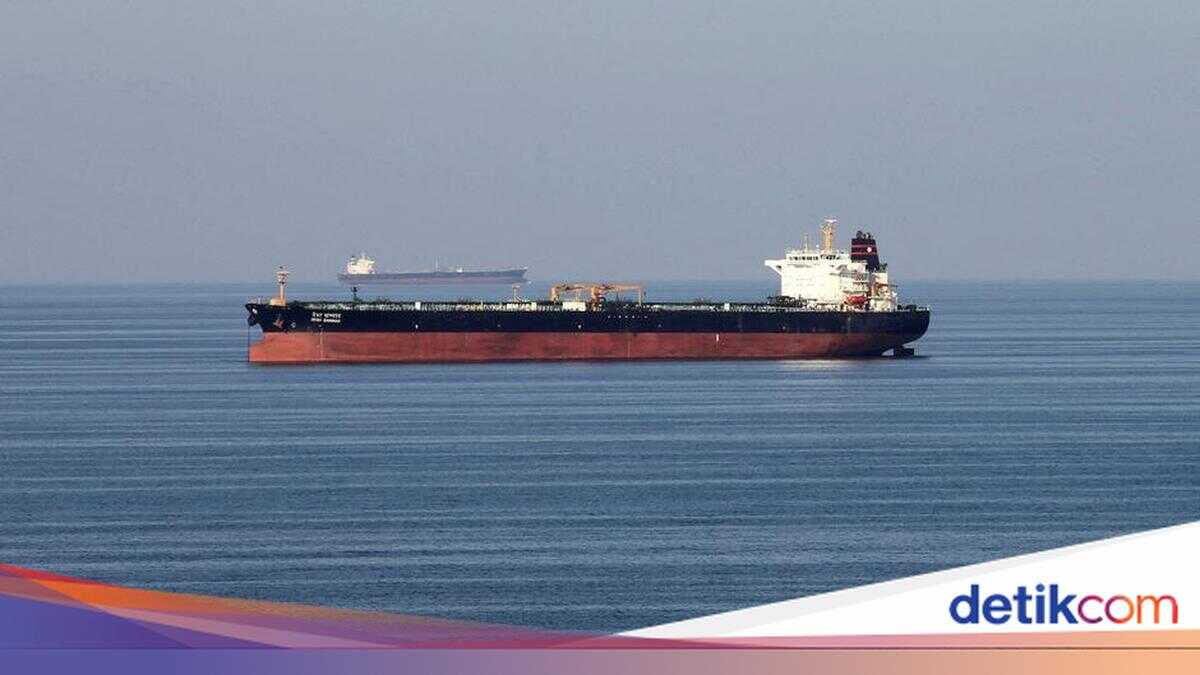
The first consequences of the threat were immediately felt in the strategic waters of the Strait of Hormuz. In response to the US-Israel aggression, Iran’s military authorities issued a stern warning to all merchant and military fleets that navigation around the strait is currently not permitted to pass. While international maritime authorities are still monitoring whether this constitutes a formal blockade or merely restrictions on armed navigation, the psychological and economic effects have already taken hold. The Strait of Hormuz is the most crucial chokepoint for global energy trade. Any disruption in these waters can trigger oil price spikes, disrupt global supply chains, and spark energy crises in industrialised countries. This move by Iran is a classic maneuver—using geography as a weapon to press the international community to intervene to stop the US and Israel aggression. On the other hand, Washington appears to have a very different calculus. President Donald Trump, in his characteristic style, projects a high degree of confidence. In an interview with the Daily Mail, Trump claimed that the military operation against Iran would be brief, lasting four weeks or less. The belief that the American war machine can subdue a country as large and as complex as Iran in under a month is an ambitious, if not highly risky, narrative. Many defence analysts are pessimistic about this claim, given the history of US interventions in the region (such as in Iraq and Afghanistan) which often ended in protracted war.
The Dilemma of an Independent and Active Foreign Policy: Good Intentions Hampered by Reality
Amid the threat of open war and the global energy crisis, Indonesia’s position is under scrutiny, not for its military might but for its controversial diplomatic manoeuvres. Precisely as the US-Israel strike occurred, the Indonesian Ministry of Foreign Affairs (Kemlu RI), via its official X account (formerly Twitter), announced the government’s readiness to facilitate dialogue. Specifically, Kemlu stated that President Prabowo Subianto is willing to travel to Tehran to mediate, provided it is agreed by both conflicting parties. From the perspective of idealism, this offer aligns with constitutional mandates and the principles of Indonesia’s Free and Active foreign policy, which require Indonesia to contribute to world order. However, from the viewpoint of international political realism, the idea has drawn sharp criticism from senior diplomacy experts and practitioners for being too premature and ahistorical. Former Indonesian Ambassador to the United States, Dino Patti Djalal, openly described the mediation idea as ‘very unrealistic’ and questioned the policy-filtering process within the government before it was announced publicly. Dino’s critique rests on three main arguments. First, the ego of the United States as a superpower is too large to accept mediation from a third-world country in a high-escalation conflict, especially mediation involving aggressive figures in the US cabinet such as Trump and Secretary of State Marco Rubio. Second, Indonesia’s diplomatic modality is insufficient. Jakarta-Tehran relations have not recently been at a close enough level to make Indonesia a peace broker trusted fully by Iran. Third, and most crucial, is the risk to domestic politics. If President Prabowo becomes the mediator, diplomacy protocol would require him to engage not only with the US and Iran but also likely with Israeli Prime Minister Benjamin Netanyahu. Given the very strong anti-Israel sentiment at the grassroots level in Indonesia due to the Palestinian crisis, a meeting with …