
Asked by Trump to Send Ships to the Strait of Hormuz, China's Unexpected Reaction
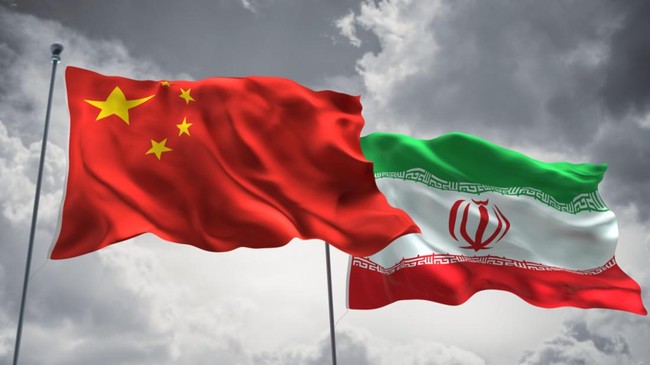
Jakarta, CNBC Indonesia - The Chinese government has firmly signalled that it will not assist the United States in reopening the Strait of Hormuz, which has been blocked due to military tensions. This decision comes after President Donald Trump requested Beijing’s help to secure this vital oil trade route, amid growing risks for the Land of Uncle Sam as it becomes increasingly embroiled in conflict in the Middle East on Wednesday (18/03/2026).
China’s Foreign Ministry gave an ambiguous response when asked if it would help reopen the strait, instead urging a halt to escalation. In its official statement, the ministry reiterated its call for all parties to immediately cease military operations, avoid further escalation of the tense situation, and prevent broader regional turmoil that could impact the global economy.
Sun Yun, director of the China programme at the Stimson Center, assessed that Trump’s request regarding Iran is no longer particularly urgent for Beijing to fulfil. According to Yun, Chinese diplomats are instead busy forging relations with other Middle Eastern countries and promising a constructive role in de-escalating tensions and restoring peace without following Washington’s wishes.
Senior researcher at the American Enterprise Institute, Zack Cooper, even believes that China feels advantaged by the current US position as it becomes re-entrenched in Middle East conflict. Cooper stated that he believes China is pleased to delay Trump’s state visit and reap benefits while the United States once again becomes trapped in the Middle East.
“I think most Chinese experts and officials believe that the United States is damaging itself, so they just need to get out of the way,” Cooper said, quoted by Arab News on Wednesday (18/3/2026).
This situation is developing as the war launched by Trump against Iran enters its third week, with pressure on Washington mounting due to the halt in global oil flows. Meanwhile, US allies have refused to intervene in securing the strait, raising concerns that China, as the US’s main geopolitical rival, will benefit from this war, which many view as unplanned.
Senior research and advocacy adviser for US-China relations at the International Crisis Group, Ali Wyne, opined that Trump’s request to postpone his summit with President Xi Jinping shows how much the president underestimates the impact of Operation Epic Fury. Wyne described the US show of force, initially intended to intimidate Beijing, as damaging the illusion of absolute US power.
“Because it cannot reopen the Strait of Hormuz on its own, Washington now needs its main strategic competitor to help manage the crisis it created itself,” Wyne said.
Despite heated relations, Beijing has signalled that the door remains open for communication by stating that both sides are still in talks to reschedule Trump’s delayed visit. China even helped clarify that the postponement of the visit originally scheduled for 31 March has no connection to their refusal to assist in the Strait of Hormuz.
President Donald Trump himself gave a statement on Tuesday local time that China has no issue with the delay. Trump claimed that he has a very good working relationship with China, even though the situation on the ground shows a deadlock in military support.
On the other hand, Beijing is demonstrating its influence in the Middle East through humanitarian channels by sending a US$200,000 emergency aid package to Iran on Sunday via the Red Cross. The aid is intended for families of victims of the bombing of the Shajarah Tayyebeh primary school building in Minab, where China’s ambassador to Iran openly condemned the attack as a form of diplomatic sympathy to Tehran.
Executive director in the China practice at The Asia Group, Brett Fetterly, assessed that this postponement of the state visit actually provides breathing room for both countries amid economic uncertainty. Fetterly considers the current political environment very challenging for the United States if it must undertake foreign travel while its commander-in-chief is managing a complex military operation.
“On China’s side, there’s no harm in delaying to better understand what President Trump really wants,” Fetterly said.
Fetterly also added that the latest trade talks in Paris between the two governments appear to have reached a deadlock in addressing structural differences in the technology and economic security sectors. According to him, both sides currently need more time to determine tangible outcomes that can be achieved in future agreements.
Final concerns arise regarding US strategy in Asia, where the massive redeployment of military assets from the Indo-Pacific to the Middle East is seen as potentially weakening Washington’s position vis-à-vis its allies. Cooper warned that the longer this war continues, the greater the concerns among Asian allies about US resource limitations, including the possibility of delays in arms sales to Taiwan, which has long been the most sensitive point in relations between the two countries.