
Asia's EVolution: Indonesia’s nickel powers global electric vehicle boom but at what cost to the country?
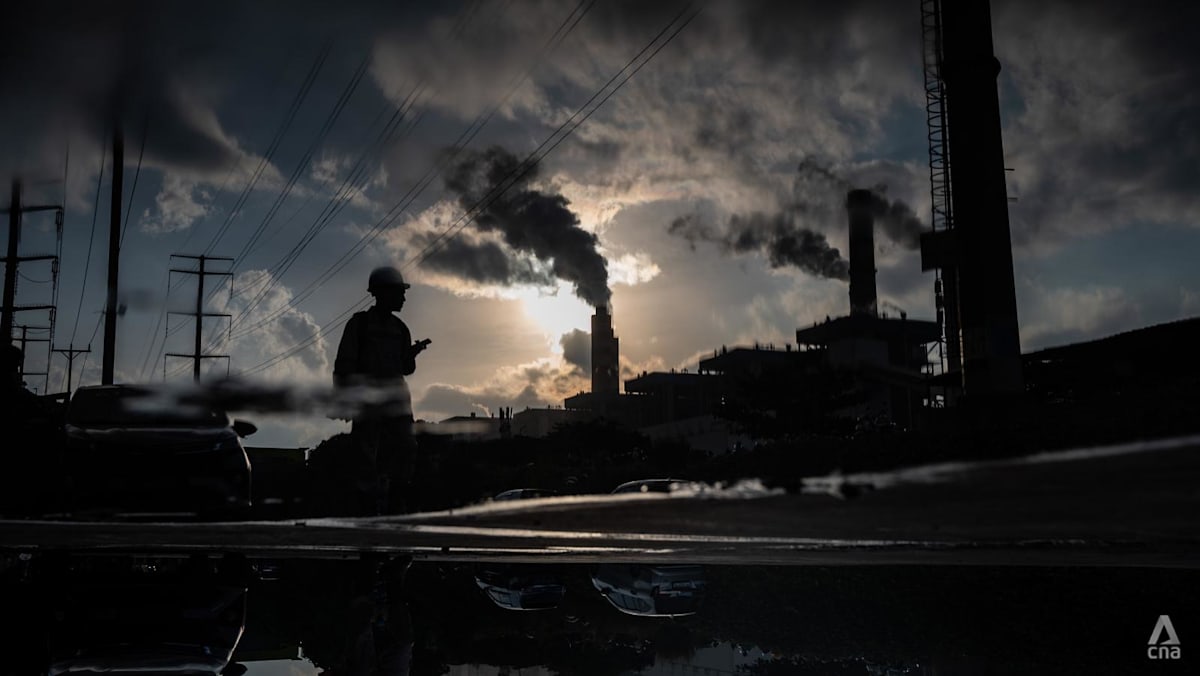
Asia’s EVolution: Indonesia’s nickel powers global electric vehicle boom but at what cost to the country?
As cities with high EV adoption cut emissions, the villages supplying the batteries bear the burden of environmental damage. CNA travels to Indonesia’s North Maluku province to find out more in this latest part of a series on EVs in Asia.
WEDA BAY, North Maluku: After decades of working on foreign fishing vessels, Abdullah Ambar returned home 10 years ago to Lelilef Sawai, a village in the remote Indonesian island of Halmahera, North Maluku hoping to settle into a quiet life.
He built a small fleet of three fishing boats, each capable of hauling up to half a tonne of skipjack tuna and mackerel for every 12-hour trip out at sea.
“You can find fish just 10m from shore,” said the 64-year-old. “If people were hungry, they could take a small canoe, go out for an hour or two, come back home, and eat. But now?”
That dream did not last.
In 2018, two years after Abdullah returned home, a nickel processing facility on the other side of Weda Bay began operating, powered by a six gigawatt coal-fired power plant nearby.
The once lush green hills were stripped bare, exposing red and orange clay that bleeds into the sea each time it rains.
The sea - once a peaceful sanctuary - had been overrun by large cargo ships which scared off the migratory fishes and whose anchors destroyed coral reefs where endemic fishes called home.
Some of these ships ferry coal to fuel the power plants of Weda Bay while others were there to transport tens of thousands of tonnes of nickel mined from the hills of Halmahera each day.
Over time, the facilities spread and encroached into the neighbouring villages of Kobe to the west as well as Gemaf and Sagea to the east, taking control over 11km of shorelines.
In Lelilef, Kobe, Gemaf and Sagea, once-quiet neighbourhoods and sleepy fishing villages had turned into boom towns of hostels and dormitories with roads becoming increasingly crowded with workers in overalls and hard hats.
Meanwhile, the stars disappeared, drowned out by industrial lights and hidden behind thick smoke that chokes the air.
Ironically, all of this change is driven by a global green push to cut emissions, replacing fossil-fuelled cars and motorcycles with electric vehicles (EV).
Nickel is one of the main components of an EV’s battery. It is also used in stainless steel – chosen for battery pack housings for its strength and resistance to heat.
“Nickel and other mega-projects are often launched under the banner of green development but leave behind a trail of social and environmental harm,” said Brad Adams, executive director at the United States-based environmental group, Climate Rights International.
Indonesia is the world’s largest supplier of nickel, producing about 2.2 million tonnes a year - or roughly 40 per cent - of global output. As more countries race towards net-zero targets, the International Energy Agency predicts global demand for nickel will double by 2050.
Melki Nahar of the environmental group Mining Advocacy Network (JATAM) said that places like Weda Bay – once a draw for divers and birdwatchers – had a small carbon footprint before surging demand for nickel turned lush forests and sleepy villages into mining concessions blanketed by choking haze from refineries and power plants.
“There is an exploitation of a massive scale (in Indonesia) … and yet the biggest beneficiaries are the industrialised nations and their corporations, not the (local) people,” he said.
Mineral-rich Indonesia
Nickel plays a crucial role in EV batteries. Since electrons move more freely through nickel than through many other materials, nickel-rich batteries typically store more energy, giving EVs greater driving range.
However, nickel is chemically unstable on its own. Overcharging or physical damage can trigger a chain reaction that may lead to combustion or explosion. Hence, battery-grade nickel is typically combined with other elements such as cobalt, aluminium and manganese to improve stability and safety.
Indonesia is the world’s second-largest producer of cobalt - a metal often found alongside nickel and mined together with it. The country produces about 28,000 tonnes of cobalt a year - roughly 7 per cent of global supply - although it still lags behind the Democratic Republic of Congo, which produces more than 170,000 tonnes annually.
Southeast Asia’s largest economy is also the world’s sixth-largest producer of bauxite, the ore used to make aluminium, with an annual output of about 20 million tonnes. By comparison, the top three producers - Australia, Guinea and China - each produce 98 million, 97 million and 93 million tonnes a year respectively.
Indonesia produces less than 5,000 tonnes of manganese a year, a negligible amount compared with major producers such as South Africa, Australia and Gabon, which turn out about 5.2 million, 3.3 million and 2.8 million tonnes annually, respectively.
INVESTORS FROM ABROAD
Realising the country’s importance in the EV supply chain, Indonesia began imposing a partial ban on raw nickel ore exports in 2014. Exceptions were granted to companies that committed to building refineries locally, ahead of a full export ban that came into force in 2020.
Irwandy Arif of the Indonesian Mining Institute said that before the ban, the country only had the technology to process nickel into stainless steel, which relies on high-temperature furnaces. At the time, Indonesia had little experience refining nickel into battery-grade materials, a process that depends on far more complex chemical techniques.
Investors from Europe and the US had expressed interest in building nickel refineries in Indonesia, but it was ultimately Chinese firms that brought the capital and technology Jakarta was looking for.
“(Chinese companies) offered to build refineries cheaper and faster. They had the technology and they had the funding, because they received huge incentives from the (Chinese) government,”