
Asia’s EVolution: As EV makers seek to cut reliance on rare earths, made-in-India solutions gain traction
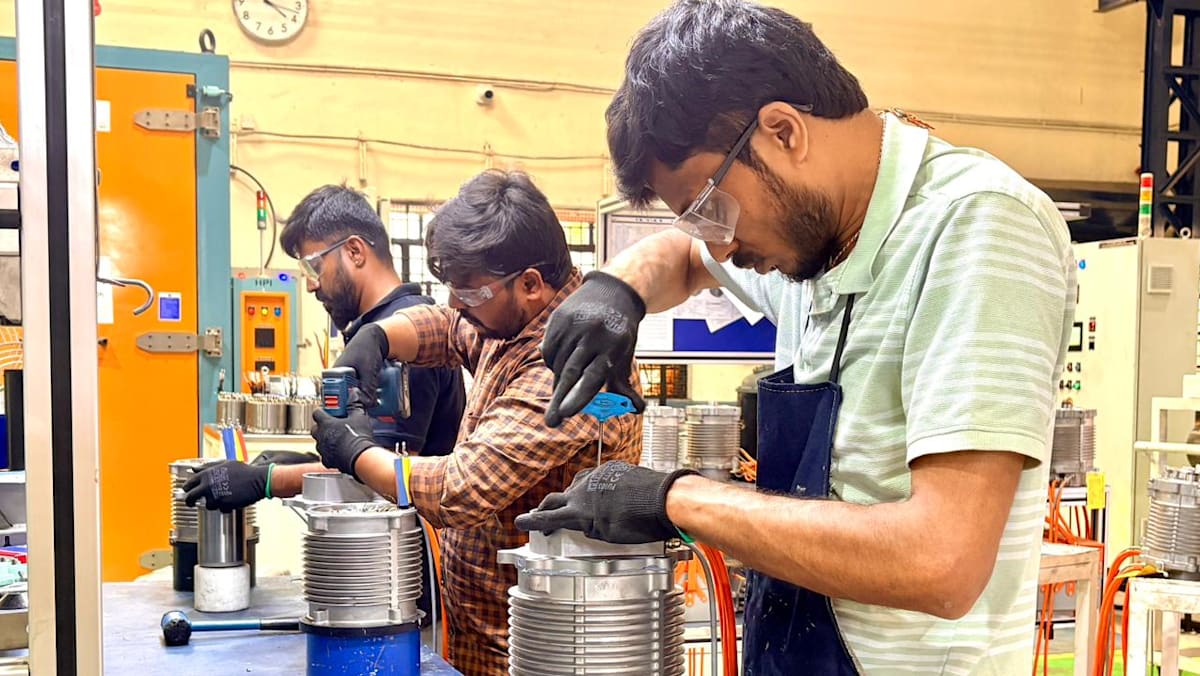
Asia’s EVolution: As EV makers seek to cut reliance on rare earths, made-in-India solutions gain traction
This instalment of CNA’s series on the forces powering electric vehicles (EVs) in Asia examines India’s growing presence in the development of rare-earth-free motors, and the speed bumps facing wider adoption.
SINGAPORE: Electric vehicle (EV) makers are accelerating efforts to cut their reliance on rare-earth magnets after recent supply shocks exposed vulnerabilities in the industry, say analysts.
The shift is driving a broader rethink of motor design, as companies explore alternatives that can lower costs and reduce geopolitical risk tied to concentrated supply chains.
Indian automakers and suppliers are making inroads in this space, with several firms telling CNA how they are already testing or deploying rare-earth-free motor solutions across different segments.
Still, experts say India’s edge lies less in technological breakthroughs and more in its market conditions - scale, cost-conscious consumers and a localisation push.
At the same time, industry watchers and players point out that the transition is likely to be gradual, as automakers weigh whether alternative designs can match conventional motors on cost, efficiency and reliability.
FAMILIAR TECH, NEW URGENCY
Rare-earth elements - a group of 17 metals - are primarily used in the permanent magnets that power most modern EV motors.
China dominates the supply of rare earths, accounting for about 60 per cent of global mining and 91 per cent of refining output, according to the International Energy Agency (IEA).
That bottleneck was acutely felt last year when China further tightened export controls on rare earths amid trade tensions with the United States, disrupting global supply chains.
Major automakers have already begun hedging against these risks by turning to alternative EV motor designs that reduce or eliminate reliance on rare earths.
Renault, BMW and Nissan are among those reportedly stepping up efforts. Renault and BMW had already deployed a rare-earth-free design in some models as early as 2011 and 2012, and are now looking to expand its use. Nissan’s Ariya model, unveiled in 2020, features a rare-earth-free motor design.
Even before the latest supply disruptions, some companies had signalled a shift. In March 2023, Tesla said it aims to develop next-generation motors that do not rely on rare earths, without providing a firm timeline for deployment.
The push is not only geopolitical - it is financial.
“In high-volume passenger cars, rare-earth magnets can represent a very significant proportion of the total motor cost,” said James Widmer, CEO and co-founder of Advanced Electric Machines (AEM), a UK-based EV motor maker.
“When you’re building millions of vehicles, that becomes a really important factor for OEMs (original equipment manufacturers),” he told CNA.
Rare earth elements account for an estimated 40 to 60 per cent of the active material cost of an electric motor, according to a research report published in the journal Sustainable Materials and Technologies in October 2025.
In comparison, industry estimates suggest that rare-earth-free motors could be 30 to 60 per cent cheaper to manufacture, according to an October 2025 report by India-based consultancy JMK Research & Analytics.
MADE-IN-INDIA SOLUTIONS
Alternative motor designs broadly fall into two categories - those that eliminate magnets, and those that replace rare earths with cheaper, more widely available materials.
Among the approaches gaining the most traction in India’s EV landscape are reluctance-based motors, which do not use magnets, and designs that substitute rare earths with ferrite - a low-cost material commonly used in applications such as refrigerator magnets.
These offer the closest compromise between supply security, cost and manufacturability, although they come with trade-offs in performance and efficiency, according to industry experts.
“Ferrite magnets are much cheaper and far more abundant compared to rare earth magnets,” said Sriram Gopal, the founder and CEO of Viridian Ingni Propulsion, an EV motor maker based in Chennai, Tamil Nadu.
Ferrite magnets can cost around 400 rupees (US$4.30) per kg compared with around 6,000 rupees per kg for their rare earth counterparts, according to the JMK Research & Analytics report.
India’s top EV two-wheeler manufacturers, such as TVS Motor and Ola Electric, began working on ferrite-magnet motors in July last year, according to local reports. Firms such as Conifer and Viridian Ingni Propulsion are also developing ferrite-magnet motors for various OEMs.
At the same time, other Indian EV motor makers are making inroads in magnet-free products.
For instance, Bengaluru-based Chara Technologies is developing synchronous reluctance motors, a reluctance-based design that generates motion without using magnets.
The technology has long been used in industrial applications but was rarely deployed in EVs due to controllability challenges, said Bhaktha Keshavachar, Chara Technologies’ co-founder and CEO.
“With better power electronics and control algorithms today, those problems can be solved,” he told CNA.
The technology is already appearing in India’s less glamorous segments such as industrial machinery, where buyers prioritise operating costs and durability.
Bengaluru-based Bullwork Mobility, which builds electrified farm and construction equipment, told CNA it uses Chara Technologies’ rare-earth-free motors in its EV tractors, loaders and agricultural sprayers since early 2025.
Vinay Raghuram, a co-founder of Bullwork Mobility, told CNA that the company aims to source “95 per cent” of its products locally and is “very conscious” of limiting supply chain risks from abroad.
MARKET OPPORTUNITY
Even as homegrown companies position themselves for a larger role, India currently accounts for a modest share of the global market for rare-earth-free motors.
Keshavachar from Chara Technologies estimates that the value o