
Asian Stock Rally Ends, Markets Return to Anxiety
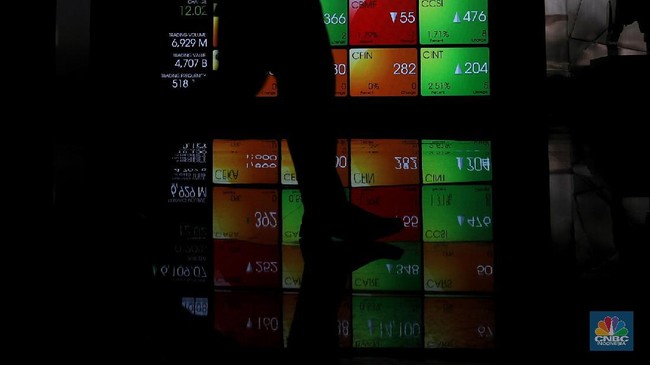
Asian stock markets opened weaker due to geopolitical sentiments in the Middle East on Friday (17 April 2026). Investors are focusing on the fragile ceasefire in the region. Market participants are tending to adopt a cautious approach towards the conflict between the United States (US) and Iran.
Japan’s Nikkei 225 index experienced profit-taking after reaching a record high on Thursday, falling 0.7%, while the Topix dropped 0.62%.
South Korea’s Kospi index fell 0.43%, while the Kosdaq index for small-cap stocks declined 0.35%.
Additionally, Australia’s S&P/ASX 200 index also dropped 0.28%.
Meanwhile, Hong Kong’s Hang Seng index futures were at 26,229, compared to the previous close of 26,394.26.
Citing CNBC Indonesia, US President Donald Trump confirmed that Israel and Lebanon have agreed to a 10-day ceasefire, starting at 5:00 p.m. local time.
Iran’s parliamentary speaker stated that halting Israel’s attacks on Lebanon is a key condition for negotiations between the US and Iran to begin.
The next round of face-to-face talks between the US and Iran will take place soon. “Perhaps, perhaps, next weekend,” Trump said, quoted on Friday (17 April 2026).
Trump signalled that the two-week ceasefire between the US and Iran will end on 21 April 2026. “The Iran war is very close to the end,” Trump said earlier this week.
Other sentiments affecting Asian markets include Japan’s export credit agency, the Japan Bank for International Cooperation, opening an investment window of up to 600 billion yen, equivalent to US$3.8 billion, to help Asian countries secure energy supplies.
Finance Minister Satsuki Katayama also mentioned that oil market volatility is affecting foreign exchange markets.
Investors are also digesting a statement from Bank of Japan Governor Kazuo Ueda last weekend, in which he said the central bank must consider Japan’s low real interest rates when setting policy.