
Asian stock markets slide as South Korea's Kospi plunges 12%
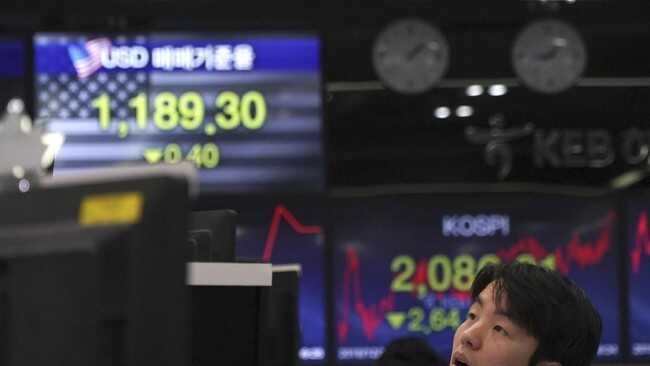
Markets in the Asia-Pacific region fell on trading Wednesday (4 March 2026), as geopolitical tensions in the Middle East intensified. The main South Korean index, the KOSPI, briefly fell more than 12% and was on track for its worst day in decades. The Korea Exchange even suspended trading of the KOSPI after the sharp drop. A circuit-breaker mechanism was also activated on the KOSDAQ, which slid about 13%. Citing CNBC.com, technology shares that had been the index’s main support came under pressure. Samsung Electronics, the chip giant, fell around 7%, while memory maker SK Hynix weakened about 5%. Previously, the South Korean stock market had enjoyed a strong rally. Over the past year, the KOSPI surged by more than 75% and hit a new high at the start of this year, driven by a rally in semiconductor shares amid soaring demand for memory chips. However, the rally is now correcting. Lorraine Tan, Morningstar’s Asia head of equity research, said the weakness in the KOSPI was partially triggered by concentration of large-cap stocks in the index. Morningstar data shows Samsung Electronics and SK Hynix account for almost 50% of the Kospi’s weight. This makes the index highly sensitive to moves in those two stocks. Tan noted that the decline in share prices was also influenced by profit-taking after the prolonged rally amid rising global risk-off sentiment among investors. In addition, there are concerns that the adoption of AI-based data centres could slow due to the much higher energy demands compared with conventional data centres. Geopolitically, the South Korean market is highly sensitive to movements in oil prices. Daniel Yoo, a global market strategist at Yuanta Securities, said that turmoil in the Middle East typically triggers short-term volatility in Korea’s stock market. As a major oil importer, South Korea’s manufacturing-based economy is highly vulnerable to energy price spikes. A rise in oil prices can weigh on the industrial sector and exports. Oil prices themselves continued to rise amid the widening conflict in the Middle East. West Texas Intermediate (WTI) crude rose about 0.5% to $74.90 a barrel, while Brent climbed almost 1% to around $82 a barrel. Tensions intensified after Iran was reported to be attempting to close the Strait of Hormuz, a vital conduit for global energy shipments. A senior commander of the Islamic Revolutionary Guard Corps even said the corridor had been closed and vessels attempting to transit would be targeted. President Donald Trump responded by saying that the US Navy stood ready to escort tankers transiting the strait to ensure global energy supplies keep flowing. The sharp correction in South Korea also occurred amid weakness in other Asian markets. Japan’s Nikkei 225 fell about 3.9%, while the Topix declined almost 4%. In Australia, the S&P/ASX 200 fell more than 2%. The Hang Seng in Hong Kong also fell about 2.7%, while the CSI 300 in mainland China was down around 1.6%. In Indonesia, the Jakarta Composite Index (IHSG) volatility was seen to slump by more than 4% before trimming the correction to -3%. All sectors were in the red. Several stocks that remained green were energy issuers.