
Asian Currencies Slide, Shekel Shines: Israel Laughs with Joy
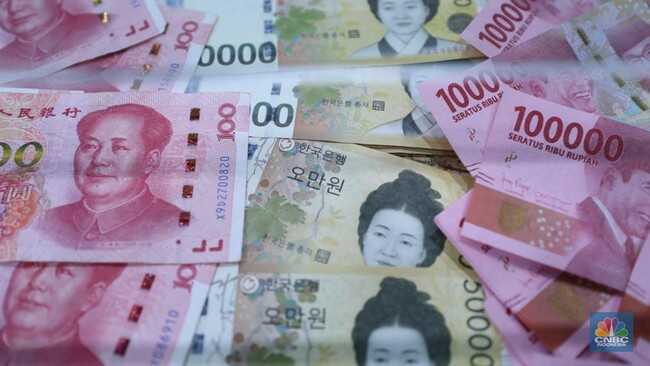
Asian currencies fell across the board as tensions in the Middle East heated up. The rupiah closed weaker against the US dollar in the last trading session of the week on Friday (6 March 2026), slipping 0.15% to Rp16,900 per US$1. For the week, the rupiah depreciated 0.83%, reversing a 0.6% gain a week earlier.
The rupiah was not alone in their decline. Regional Asian currencies came under pronounced strain. Notably, the Israeli shekel surged more than 1%.
The fall in Asian currencies is attributed to two main factors: first, the escalation of geopolitical conflict raises the risk of war and affects investor sentiment; second, differing monetary policy cycles among major central banks create fundamental shifts in currency valuations. Because of these factors, Asian currencies have shown varied responses depending on each economy’s vulnerability and strength.
MUFG analysts identified key drivers shaping current conditions: regional trade patterns shifting due to global supply chain changes, capital flows becoming more sensitive to security developments, and inflation dynamics that diverge sharply across Asian economies. The combined factors have produced a complex market environment requiring cautious navigation.
Risk of war affects not only the conflict area but regional stability more broadly. Security concerns influence forex markets through multiple channels, including flows into safe-haven currencies when tensions rise. Currencies of countries with higher conflict exposure come under greater pressure. Investor risk appetite also shifts quickly with geopolitics, leading to a notable increase in Asian foreign exchange volatility.
It should be noted that while the US-Israel war against Iran has pressured Asian currencies against the US dollar, the overall pace of depreciation in Asian currencies remains relatively limited, with the largest declines around 3%. This suggests markets expect the conflict to be short-lived, as well as disruptions to energy supplies and global markets to be limited for now.
However, if future war developments are worse than currently anticipated, market reactions could be far more negative, including for Asian currencies. In addition, with several Asian currencies trading near historical lows, shocks to the trade balance from higher energy prices could prompt some central banks in Asia to intervene in the forex market. This could include verbal interventions by Japanese and South Korean officials to curb a rapid yen (JPY) and won (KRW).
Overall, Asian currencies weakened against the US dollar this week, pressured by higher oil prices, a firmer dollar, and deteriorating risk sentiment. Currencies sensitive to oil prices, such as the South Korean won (KRW), Thai baht (THB), and Philippine peso (PHP), performed the worst due to their dependence on oil imports and exposure to disruption in the Hormuz Strait. The Thai baht was also under pressure due to concerns about disruptions to the tourism sector. Interestingly, the Malaysian ringgit did not benefit from Malaysia’s status as a net oil exporter; its weakness was more likely driven by global risk-off sentiment and the strength of the US dollar. The Japanese yen, despite Japan’s reliance on energy imports, fell sharply.
The Israeli shekel rose 1.3% against the US dollar, the strongest gain among major currencies over the past two months. According to Rafi Gozlan, chief economist at IBI Investment House, the rise was likely driven by domestic investors, including funds focusing on Israeli assets. Some investors appear to ignore the current turmoil and instead bet on a long-term view that Israel and the United States will eventually reduce geopolitical risk. “After this war, the country will improve its strategic and geopolitical position as the biggest threats weaken or possibly disappear,” said Yadin Antebi, CEO of Bank Hapoalim, in an interview with Bloomberg.
Geographically, Israel remains in Asia.
What Next?
The MUFG research team provides a detailed analysis of the impact on various currencies in the short and long term.
The Japanese yen shows its typical safe-haven behaviour as geopolitical pressure rises. However, Bank of Japan policy also creates opposing forces.
Meanwhile, the yuan faces a complex dynamic influenced by domestic factors and regional security risks.
ASEAN currencies show diverse responses depending on economic structure and geographic position.
The Singapore dollar benefits from stability reputation and strong fundamentals. Currencies with higher exposure to conflict face higher volatility
These differences create investment strategy opportunities, but also require tight risk management.