
Asian Currencies: Rupiah Falters as Malaysian Ringgit Strengthens Against US Dollar
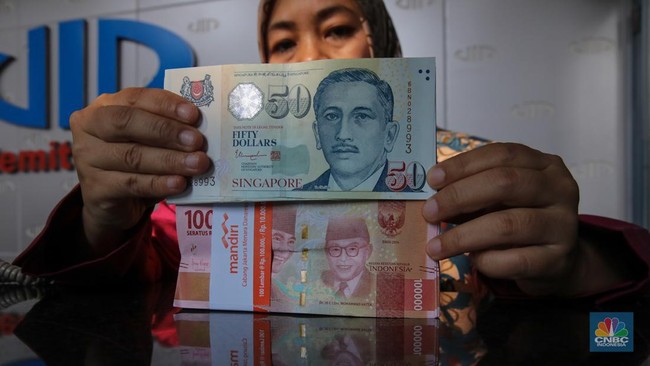
Jakarta — The value of the Indonesian rupiah against the US dollar weakened throughout this week, nearly touching Rp17,000 per USD. Not only the rupiah, but the majority of Asian currencies also experienced significant losses during the week. This weakness was driven by escalating global economic instability resulting from US military actions against Iran, which heightened geopolitical tensions in the Middle East.
According to Refinitiv data at Friday’s market close (13 March 2026), the rupiah traded at Rp16,935 per USD, weakening 0.3 per cent compared with the previous day. On a weekly basis, the Indonesian currency declined 0.21 per cent.
Thai baht became the worst-performing Asian currency, depreciating 2.08 per cent against the US dollar during the second week of March, falling to baht 32.42 per USD. This represented the lowest level since November 2025.
South Korean won also experienced severe weakness, collapsing 1.36 per cent against the US dollar throughout the week to won 1,501.41 per USD.
Japanese yen also stumbled, with depreciation against the US dollar reaching 1.22 per cent to yen 159.71 per USD. This represented the worst performance since June 2024.
Yen lost value against the dollar because oil prices surged following Israel and US attacks on Iran.
“Indeed, significant volatility has emerged in financial markets, including the foreign exchange market, following the situation in the Middle East,” Finance Minister Satsuki Katayama said on Saturday (14 March 2026).
“Given these large market fluctuations — particularly the surge in crude oil prices — we recognise the impact of exchange rate movements on daily life and are taking every possible step to ensure full preparedness at all times.”
Why Did the Rupiah Collapse?
At the start of this week on Monday (9 March 2026), the rupiah closed at a weak Rp16,935 per USD, losing 0.21 per cent against the dollar. This weakness represented the weakest closing level for the rupiah in seven weeks, or since 20 January 2026, marking the highest level since the Covid-19 pandemic crisis and significantly weaker than during the 1998 financial crisis.
Rupiah weakness on Monday was primarily influenced by US dollar strength in global markets.
The greenback strengthened as investor demand for safe-haven assets, including the US dollar, increased amid renewed global uncertainty stemming from Middle East conflicts. This situation reflected investors shifting their funds into dollar-denominated assets. Consequently, developing country currencies, including the rupiah, came under renewed pressure.
Market sentiment was also affected by Iran’s appointment of Mojtaba Khamenei, son of Supreme Leader Ayatollah Ali Khamenei, as successor to Iran’s highest leadership position. This development was seen as signalling that hardline factions still wielded significant control in Tehran, amid the conflict that had been ongoing for a week.
These concerns further strengthened the inflow of funds into the US dollar, which again benefited from its status as a safe asset.
Domestically, sentiment also tended to offer limited support to the rupiah. Bank Indonesia reported that the Consumer Confidence Index (IKK) in February 2026 fell to 125.2, lower than January 2026’s 127. This decline was primarily driven by a fall in the Consumer Expectations Index (IEK) from 138.8 to 134.4. Meanwhile, the Current Economic Conditions Index (IKE) actually rose slightly from 115.1 to 115.9.
This drop in consumer confidence indicated that the public was becoming more cautious about future economic prospects, including employment opportunities and income levels. This condition could signal that domestic consumption resilience potentially faces pressure.
For the financial market, this decline in consumer expectations represented an additional negative sentiment, reflecting caution on the domestic front amid substantial external pressures.
The rupiah temporarily strengthened the next day on Tuesday (10 March 2026). The Indonesian currency closed up 0.47 per cent or appreciated to Rp16,855 per USD.
Weakness in the US dollar in global markets was the main factor supporting the rupiah. The US dollar index, which measures the greenback’s strength against six major world currencies, corrected on this trading day, after jumping sharply the previous day due to market concerns about escalating conflict in the Middle East.
Pressure on the US dollar began to ease after US President Donald Trump stated in an interview with foreign media that the war against Iran was already “very complete”.
This statement somewhat eased investor concerns about prolonged conflict that could potentially disrupt global energy supplies and hamper world economic growth.
Previously, the US-Israeli war against Iran had shaken global financial markets and triggered surging oil prices. This situation had driven investors to seek safe assets, including the US dollar.
However, this strengthening did not last long as the rupiah weakened again against the US dollar, influenced by US dollar dynamics in global markets, amid persisting high geopolitical uncertainty, particularly regarding Middle East conflicts.
In global markets, the US dollar remained strong and stood to post weekly gains for the second time since the Iran conflict escalated. Market turbulence made the US dollar once again the primary safe asset pursued by investors. The US dollar index surged back to 100.36 at week’s end.
Rising oil prices also reinforced cautious sentiment in the market. At the same time, the US permitted the sale of some Russian oil products previously subject to sanctions related to the Ukraine conflict.
Meanwhile, Iran escalated attacks on oil facilities and transportation infrastructure in the Middle East, amid statements from the highest leadership.