
Asian Airlines Hit by US-Israel Versus Iran Conflict as Ticket Prices Surge 70%
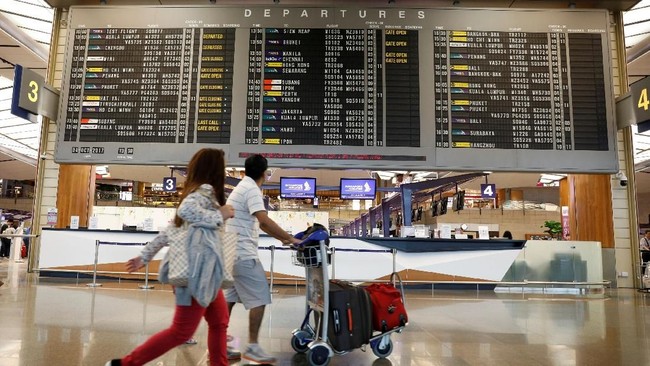
Airlines across Asia are now taking drastic measures by raising aircraft ticket prices and formulating emergency plans, including grounding their fleets. These steps are being taken as Middle East tensions escalate, threatening to trigger the worst oil price shock since the 1970s.
Indian airlines have reportedly raised ticket prices for long-haul routes by 15% and are considering further increases. Meanwhile, Vietnamese state media has warned that aircraft ticket prices could surge as much as 70% given the country’s dependence on imported jet fuel.
The situation is exacerbated by the fact that Asian airlines lack strong hedging protection against oil prices compared to their competitors in Europe or the United States. This makes them more vulnerable to sudden spikes in jet fuel costs, prompting low-cost carriers in Southeast Asia to simulate scenarios of operational shutdowns if fuel prices become unaffordable.
June Goh, senior oil market analyst at Sparta Commodities, revealed that the current situation has triggered panic throughout the aviation industry. According to her, airlines without strong hedging programmes are in an extremely vulnerable position.
“The panic button has been pressed everywhere. Asian airlines with weak hedging programmes are extremely exposed to current jet fuel prices if they sold tickets at lower prices from our current position,” Goh stated, quoted by The Straits Times on Tuesday (10 March 2026).
Concerns also stem from the potential bankruptcy of low-cost carriers with small profit margins if these conditions persist for more than three months. Deutsche Bank analyst Michael Linenberg noted in his report that airlines worldwide could be forced to ground thousands of aircraft due to this conflict.
“As a result of the war, airlines worldwide may be forced to ground thousands of aircraft, with weaker airlines halting operations,” Linenberg wrote.
Air New Zealand has formally suspended its profit guidance on 10 March due to extreme jet fuel price volatility. The airline stated that assumptions it made less than two weeks ago are no longer valid in the current situation.
“Due to this unprecedented volatility, the jet fuel price assumptions underpinning Air New Zealand’s guidance are no longer appropriate. This crisis is expected to significantly impact second-half revenue, and therefore the airline has suspended its 2026 financial year guidance until fuel markets and operational conditions stabilise,” Air New Zealand stated in an official announcement.
These signs of difficulty in the aviation industry underscore the widespread impact of the conflict, which shows no signs of abating after the United States and Israel attacked Iran. Although oil prices fell temporarily after US President Donald Trump signalled the war would soon end, uncertainty over supply continues to haunt the global aerospace industry.
However, some industry players are attempting to remain optimistic that the conflict will not last for years. Air Lease Corp Chief Executive John Plueger argues that the disruption will likely only be temporary.
“My personal view is this will be shorter-lived. The main point here is the world does not stop. This may only be delayed,” Plueger said.
Unlike Asian airlines, European carriers such as Lufthansa feel more confident as they have protection against price swings. Chief Executive of Deutsche Lufthansa, Carsten Spohr, stated that the German airline group possesses a competitive advantage amid this crisis.
“Lufthansa will enjoy relative benefits when competitors are forced to raise ticket prices due to this conflict because our company has hedged against price fluctuations. We are also expanding capacity on Asian and African routes, as our Middle Eastern competitors remain far from normal operations,” Spohr said.
Nevertheless, the stock market for Asian airlines is expected to remain volatile whilst this uncertainty continues. On 9 March, Asiana Airlines shares plummeted to their lowest level in 21 years, whilst the Asia-Pacific airline index touched its lowest point in the past five years as crude oil prices soared above US$100 per barrel.