
Asia Not United Against the US: Won and Rupee Rally, Rupiah Struggles the Most
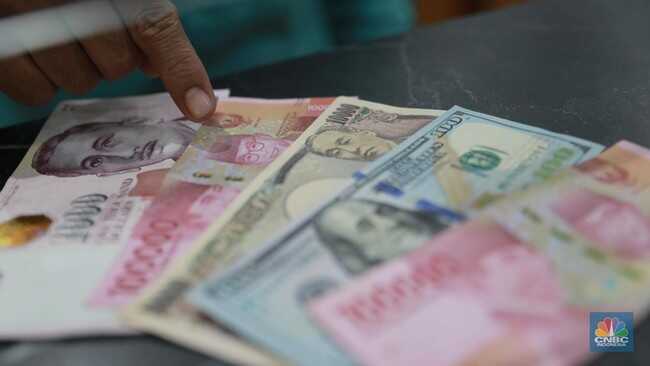
Jakarta, CNBC Indonesia - The movements of Asian currencies were mixed against the United States dollar in early trade on Friday (6 March 2026). Nevertheless, the rupiah remains in a weakening zone amid dynamics of the US dollar and Middle East geopolitical sentiment.
Using Refinitiv data, as of 09:15 WIB, of the eleven Asian currencies tracked, eight strengthened and three weakened against the greenback.
The biggest gain was led by the South Korean won, rising 0.28% to KRW 1,476.9 per US.TheSingaporedollarfollowedwitha0.19, while the Indian rupee rose 0.15% to INR 91.62 per US$.
The Vietnamese dong also firmed 0.11% to VND 26,180 per US, followedbythePhilippinepesowhichrose0.06. The Japanese yen firmed a touch 0.03% to JPY 157.51 per US, asdidtheTaiwandollar, up0.03.
On the other hand, the rupiah was the weakest Asian currency in early trade, pressured down 0.20% to Rp 16,908 per US.TheweaknesswasfollowedbytheMalaysianringgit, down0.18, and the Chinese yuan, down 0.18% to CNY 6.90 per US$.
Meanwhile, the Thai baht also remained in the red, slipping 0.03% to THB 31.75 per US$.
In the morning, Asian currency movements were in line with a weaker US dollar index (DXY), which actually declined. The DXY as of 09:15 WIB was down 0.37% at 98.952.
Despite the morning weakness, the US dollar remained on a week-to-date uptrend. The dollar index hovered around 99 and could rise by more than 1% this week, driven by demand for safe-haven assets amid a flare-up in Middle East tensions and surging oil prices rattling global financial markets.
The US-Israel conflict with Iran has entered its seventh day, with Tehran reportedly launching another wave of missile and drone attacks on the Gulf region.
US President Donald Trump also said he would like to play a role in determining Iran’s next leader, while dismissing Mojtaba Khamenei, the son of the late supreme leader, as a leading candidate.
Rising oil prices have sparked renewed concerns about global inflation, reinforcing speculation that the US Federal Reserve will delay interest-rate cuts.
Markets have begun shifting expectations for the next Fed rate cut to September or October, from the previous forecast of July.
This environment tends to support the US dollar and may weigh on oil-importing currencies, including several Asian currencies, though movements this morning remained mixed.