
Asia Cries Energy Crisis, China Refuses to Be the "Saviour"
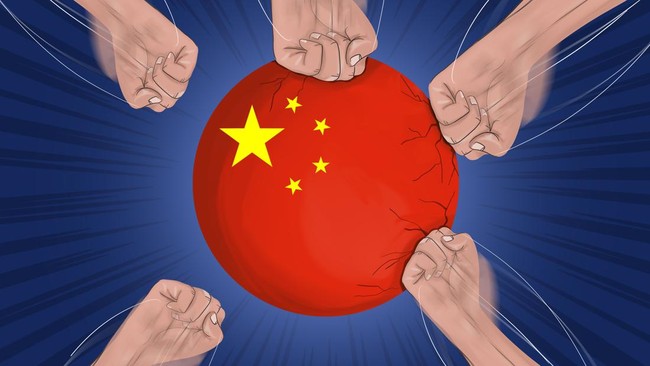
Southeast Asia is increasingly feeling the strain of energy pressures as supplies of fertiliser and fuel from China falter. Countries that have long relied on these imports are now facing distribution disruptions, while Beijing safeguards its domestic supplies amid global market volatility.
So far, China has issued only vague statements and has not openly acknowledged the export restrictions reported by Reuters and others, due to its focus on shielding its economy from the fallout of the Iran war.
Analysts do not anticipate changes in the near term, given the tensions between China’s ambitions to be a major regional player and the reality of policies aimed at maintaining economic growth above global levels.
China is the world’s second-largest fertiliser exporter and a primary fuel supplier. For many Asian countries such as Bangladesh, the Philippines, and even Australia, imports from China are a vital source of supply—now interrupted by these export curbs.
Bangladesh to the Philippines Cry Out for Help
The Bangladeshi government, in early March 2026, urged China to fulfil agreed fuel supply contracts. Thailand is preparing diplomatic channels to ensure fertiliser supplies continue. Malaysia has warned that these restrictions will worsen fertiliser distribution, including to its palm oil sector, which forms the backbone of its economy.
The Philippines has taken similar steps. On 17 March, the country’s agriculture minister visited the Chinese embassy in Manila to convey ongoing needs for fertiliser supplies.
However, Beijing’s official response has been limited to brief statements that discussions cover only the agricultural sector. At the same time, Australia has opened communications regarding jet fuel supplies, given that about a third of its imports come from China.
“China may offer symbolic aid, but it is highly unlikely—almost impossible—that it will share significant reserves of food, energy, or other resources with other countries,” Eric Olander from the China-Global South Project told Reuters.
Analysts view Chinese policymakers as likely considering the stockpiling strategy initiated in the early 2000s as a wise strategic decision. This policy may have seemed excessive during normal times, but it now proves relevant.
The People’s Daily, the Chinese Communist Party’s flagship newspaper, highlighted China’s energy resilience in an editorial earlier this month, stating that the country now holds the “pulse of energy” in its own hands.
Amid these pressures, China’s response remains restrained. The government has not publicly acknowledged the export restriction policies reported by various sources. The primary focus is on domestic economic stability, especially following the tightening of global energy markets due to the Iran conflict.
Analysts see this policy direction as unlikely to change soon. China is expected to maintain priorities on domestic needs over expanding regional support. Eric Olander’s statement from the China-Global South Project reinforces that the chances of China releasing energy or food reserves to other countries are very slim under current conditions.
This approach is supported by long-term strategies built beforehand. Since the early 2000s, China has actively stockpiled energy and critical resources. This policy was once seen as excessive during stable periods, but it now provides Beijing with room to secure domestic supplies during global shocks.
Government media releases emphasise that China controls the “lifeline” of energy through long-term planning. This underscores that domestic stability is the top priority in policymaking.
From the regional perspective, the consequences are becoming evident. Southeast Asian countries are exploring new options to secure supplies, including scouting alternative sources like Russia. This reflects a shift in regional energy policy, which was previously more centred on China.
Policy observers at the Tony Blair Institute for Global Change assess that China lacks the incentive to serve as a regional energy buffer during prolonged uncertainty. The policy pattern tends to be consistent: export restrictions are imposed first, then selectively reopened once domestic needs are deemed secure.
Historical factors also influence this approach. Experiences from the Mao Zedong era’s food crises have shaped high sensitivity to scarcity risks. In situations like the current one, policy preferences lean towards securing internal reserves.
The implications for partner countries are clear. Support from China will depend on individual transaction interests, rather than broad aid frameworks.
In a scenario of limited global supplies, the position of importing nations becomes more vulnerable.
This development also signals broader dynamics.
The Belt and Road Initiative has long symbolised China’s engagement in the region through infrastructure development and economic cooperation. However, in the current energy context, these relations are moving towards greater pragmatism, with increasingly limited room for aid.
“China does not want to create unfulfillable expectations. Beijing has no desire to be a regional energy buffer during a prolonged period of uncertainty,” said Ruby Osman from the Tony Blair Institute for Global Change.
As a note, Asian countries are severely impacted by the Iran war and now face an energy crisis.
Asian countries remain heavily dependent on Middle Eastern energy. India, China, Japan, and South Korea import most of their oil and LNG from the region, making them more vulnerable to supply disruptions.
In Southeast Asia, the situation is even more complex. In addition to b