
Ashes, Hunger, and a Burning Earth: A Reflection on Cross-Faith Ecological Repentance
On 18 February 2026, a significant moment for spiritual life in Indonesia marked the beginning of the Lenten season for Catholics, with the reception of ashes, whilst Muslims commenced fasting in the holy month of Ramadan 1447 AH. This convergence of two major religious observances is no mere calendar coincidence, but rather a “sign of the times” that compels us to reflect upon the essence of dust (mortality) and hunger (self-restraint) amid an increasingly afflicted earth.
The Lenten theme for the Archdiocese of Jakarta (KAJ) in 2026 is “Ecological Repentance”, which serves as a highly relevant theological and sociological foundation for understanding this moment. When ashes are applied to the forehead with the invocation, “You are dust and will return to dust”, we are reminded not merely of physical death, but of our material origins united with the earth. The question arises: if we are part of the earth, why do we so readily poison the “womb” from which we came and to which we shall return?
The Paradox of “Dominion”
In creation theology, a fatal misinterpretation often occurs regarding humanity’s divine mandate. Genesis 1:28, which commands humans to “subdue” and “have dominion” over the earth, is frequently interpreted as a licence for unlimited exploitation. However, the KAJ guidance document firmly corrects this interpretation, stating that such terms mean not exploitation, but rather a call to protect and nurture, as God cares for creation.
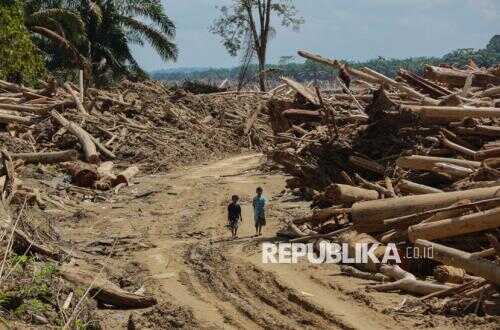
The environmental devastation we witness today—climate crisis, mountains of waste, and air pollution—mirrors humanity’s failure to fulfil this divine mandate. We have failed to be imago Dei (the image of God) as stewards and have become predators consuming our descendants’ future. As a Native American proverb cited in the guidance reminds us, “We do not inherit the earth from our ancestors, we borrow it from our children.” We are colonising the future of generations to come merely to satisfy present greed.
Fasting: From Ritual to Ecological Action
Here lies the urgency of fasting. In both Catholic and Islamic traditions, fasting is an exercise in restraint. Yet in an era of climate crisis, abstaining from food and drink alone is no longer sufficient. We require what Pope Francis calls in Laudato Si’ “Ecological Repentance”.
Ecological fasting demands we fast from the consumerist lifestyle that generates permanent residue for the earth. Evidence shows a single plastic bottle takes 450 years to decompose. Consider: the mineral water bottle we drink in five minutes to break our fast will remain as plastic waste for five centuries to come, bequeathing toxins to generations not yet born.
The greatest challenge often emerges during religious fasting periods and festivals, when food waste and plastic packaging production increases drastically. Thus, ecological repentance demands radical transformation. Fasting must be understood as “fasting from plastic waste”, “fasting from wasteful electricity”, and “fasting from food waste”. Bringing one’s own shopping bag, for instance, is not merely a lifestyle trend, but modern ascetic practice capable of reducing hundreds of pieces of plastic waste annually.