
ASEAN Youth Explore AI Innovation and Cooperation in Guangxi, China
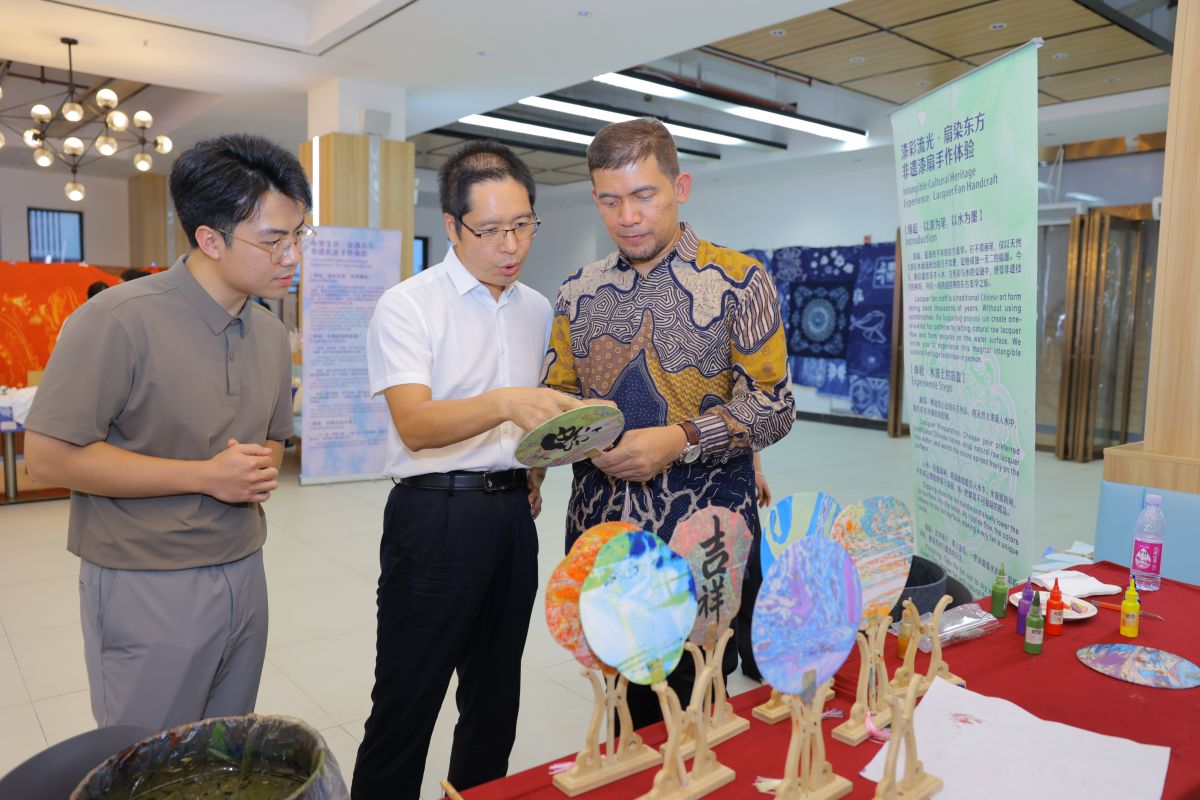
From 23 to 25 June, more than 20 youth representatives from seven sister cities in Cambodia, Indonesia, Malaysia, Myanmar, and the Philippines visited the cities of Nanning and Qinzhou at the invitation of Guangxi’s foreign affairs authorities. During the visit, they explored innovation centres, industrial projects, key infrastructure, and vocational education programmes, seeking new opportunities for practical cooperation with China.
An Indonesian proverb left a deep impression on La Ode Muhammad Faisal Wikra Kusuma Wardana during his visit to the Guangxi Zhuang Autonomous Region in southern China, where he witnessed China’s rapidly developing innovation ecosystem and saw first-hand how artificial intelligence is being applied in daily life. “The journey helped me better understand the meaning behind the proverb,” said Wardana, a cultural official from West Java province. “I was very impressed by China’s progress in technological innovation and AI.”
AI was a highlight of the trip. At the Guangxi-ASEAN Embodied AI Innovation Centre, delegates watched robots perform various tasks in banking, retail, and cultural settings, while a barista robot and interactive demonstrations drew enthusiastic participation. At the China-ASEAN AI Innovation Cooperation Centre, they were introduced to various AI-powered products, including traditional Chinese medicine diagnostic devices, translation glasses, and biomimetic robotic fish. “These experiences showed me the incredible potential of AI,” Wardana said. “I believe AI will play an increasingly important role in improving human life.”
The delegation also visited Guangxi Jingui Pulp & Paper Co., Ltd., a subsidiary of Indonesia’s Sinar Mas Group under Asia Pulp & Paper, where production lines were operating at full capacity. The company’s premium cardboard products are exported to ASEAN markets for use in packaging pharmaceuticals, cosmetics, consumer goods, and electronic products, reflecting the growing industrial cooperation between China and Indonesia.
Myanmar delegate Htet Htet Yi Nway Oo was particularly interested in AI applications in healthcare. She said she was impressed after watching another participant try an AI-powered health assessment device that analyses facial features and tongue images to evaluate a person’s health condition. “I believe AI has broad prospects in healthcare, including robots for elderly care,” she said.
Four educational institutions—Yangon University of Economics in Myanmar, Mariano Marcos State University in the Philippines, Guangxi Vocational and Technical College of Mechanical and Electrical Engineering, and Nanning No. 3 Vocational Secondary School—joined the Guangxi International Sister Cities Vocational Education Alliance during an exchange event on 25 June, bringing the alliance’s total membership to 77.
Wardana noted that Guangxi’s geographical proximity to ASEAN, along with its ports and transport networks, gives it distinct advantages for regional cooperation. He added that the construction of the Pinglu Canal is expected to further enhance logistics connectivity and create new opportunities for trade and industrial collaboration. The delegates also visited smart ports, industrial zones, and major infrastructure projects, gaining a better understanding of Guangxi’s role in strengthening China-ASEAN connectivity and economic cooperation.
The visit also yielded tangible results in vocational education. According to Guangxi’s foreign affairs authorities, the region has expanded cooperation with ASEAN partners in vocational education by jointly developing training programmes, practical training bases, and skills competitions in emerging fields such as AI and the digital economy to cultivate skilled talent for regional development.
Wardana said vocational education serves as an important bridge for shared development. After returning to West Java, he plans to share what he learned during the visit with local government departments and hopes both sides will expand cooperation in AI, vocational education, culture, and tourism. “This is no longer an era of competition, but an era of cooperation and shared development,” he said. “I hope this visit will help bring our communities closer together and create more opportunities for mutually beneficial cooperation.”