
ASEAN Summit in Cebu Amid Turbulence and Uncertainty
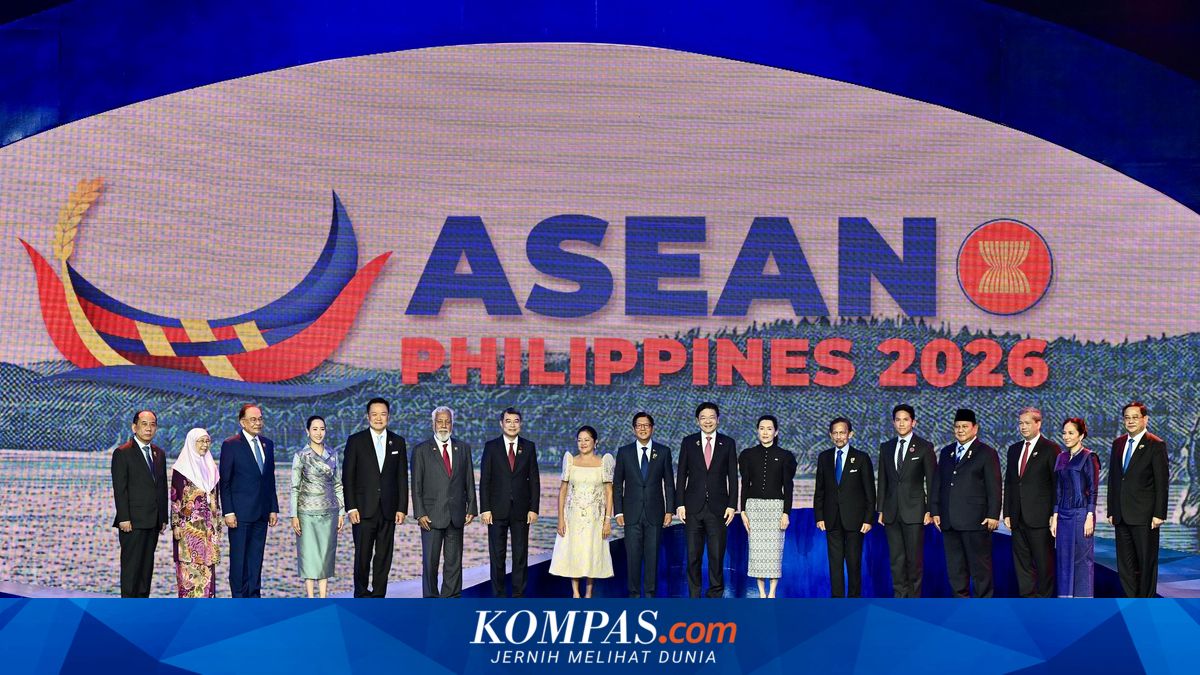
The hosting of the 48th ASEAN Summit in Cebu, Philippines, on 6-8 May 2026, is taking place under a clouded sky in the history of Southeast Asian diplomacy.
The world today is not merely facing ordinary uncertainty, but a “polycrisis” of interlocking challenges.
The open war in the Middle East involving Iran, the United States, and Israel since February 2026 has radically altered the global risk landscape.
Cebu, which had been preparing from the outset to welcome this diplomatic festival with full pomp, has now become a theatre for pragmatic regional emergency management.
President Ferdinand R. Marcos Jr’s leadership in ASEAN is truly being tested to navigate a fragmented regional bloc amid nearly existential external shocks.
Through Executive Order No. 110, Manila has declared a “National Energy Emergency” status, a move that has forced this summit to be scaled down to just three days in a “bare-bones” and “business-like” format.
There is no longer room for flowery diplomatic rhetoric; the primary focus has shifted significantly towards energy resilience, food security, and citizen safety in conflict zones.
The most unsettling backdrop to this meeting is Iran’s effective closure of the Strait of Hormuz in March 2026, in retaliation for the US Navy’s port blockade.
Given that the Strait of Hormuz is the artery for 20 per cent of global crude oil and liquefied natural gas (LNG) trade, Southeast Asia—which is highly dependent on supplies via the Gulf, alongside China, Japan, and South Korea—faces the threat of economic paralysis.
The Brent crude oil price rocketing past $100 per barrel has suddenly become a direct threat to fiscal stability and purchasing power in the region.
Meanwhile, in Cebu, ASEAN leaders are not only confronting external enemies but also cracks within their own household.
Southeast Asia is standing at a crossroads between efforts to maintain strategic autonomy through “ASEAN Centrality” or being drawn into the gravitational pull of increasingly aggressive great power competition.
The Philippines, which is drawing closer to the embrace of US security, must lead an organisation whose members have highly diverse economic and political interests towards Beijing and Washington.
The impact of the Strait of Hormuz blockade has spread nonlinearly throughout the region’s economic lifelines.
Southeast Asia, which imports around 60 per cent of its energy needs from the Middle East, is now in a phase of “calorie emergency” and “industrial emergency”.
The oil price surge has triggered a domino effect on urea and ammonia fertiliser prices, which have risen from $300 to $1,000 per tonne.
For agrarian countries like Thailand and Vietnam, this poses a threat to national food productivity that could trigger food inflation of up to 100 per cent.
In the industrial sector, helium shortages due to disruptions at gas facilities in Qatar have hit the semiconductor industries in Malaysia and Singapore, threatening the global microchip supply chain.
The fiscal responses of ASEAN countries show striking variations, but are equally under pressure.
Indonesia, as the member with the largest economy, faces an acute dilemma. Assuming oil prices above $100 and a depreciated Rupiah exchange rate of around Rp 17,400 per US dollar, the burden of energy subsidies has ballooned to over Rp 300 trillion.
Jakarta is forced to undertake radical budget reallocations, including delaying national strategic programmes, in order to keep the deficit below the legal limit of 3 per cent of GDP.