
ASEAN Manufacturing Strength Competition: Indonesia Lowest, Overtaken by Malaysia!
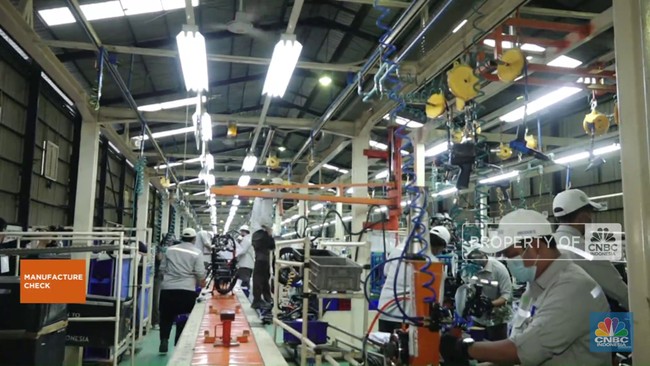
ASEAN manufacturing activity across countries remained in the expansion zone in March 2026. However, the pace is beginning to slow amid increasing price pressures and supply chain disruptions caused by the war in the Middle East.
According to the S&P Global report for the March 2026 period, the ASEAN Manufacturing PMI fell to 51.8 from 53.8 in February.
Although still above the 50 level indicating expansion, this figure marks the lowest in the past six months. S&P also noted that growth in output and new orders continued, but at a slower pace. Meanwhile, price pressures surged to the highest level since October 2022.
As a note, the manufacturing PMI is an indicator used to assess industrial activity conditions. Generally, a figure above 50 indicates that the manufacturing sector is developing or expanding, while below 50 means it is experiencing contraction.
Maryam Baluch, Economist at S&P Global Market Intelligence, said early signs of the impact of the Middle East war are starting to appear in various ASEAN countries. The effects are felt in demand, production, and business confidence. However, the most visible pressure comes from rising prices.
Thailand Remains the Strongest, Other Countries Start Losing Momentum
Among ASEAN countries, Thailand still records the strongest manufacturing activity. The White Elephant’s Manufacturing PMI rose to 54.1 in March from 53.5 in the previous month.
This increase was supported by faster growth in new orders and fairly strong production growth. Nevertheless, business confidence in Thailand experienced a sharp decline to the lowest level in four and a half years due to fears of the Middle East war’s impact.
In addition, Myanmar also continues to record expansion with a PMI of 51.5, unchanged from the previous month.
Meanwhile, the Philippines and Vietnam remain in the expansion zone, but both show quite sharp slowdowns. The Philippines’ manufacturing PMI fell to 51.3 in March from 54.6 in February. This slowdown was triggered by weakening customers, weakening export orders, as well as rising energy and raw material costs.
S&P assesses that the Middle East war is beginning to pressure demand and reduce the industrial cost burden in the Philippines.
Vietnam recorded a PMI of 51.2, down from 54.3 in February. Although still expanding, its growth pace became the weakest since September last year.
The main pressure comes from input price provisions, particularly due to rising transportation, fuel, and transport costs. Even the selling prices of Vietnam’s manufactured products rose at the fastest pace in nearly 15 years.
On the other hand, Malaysia managed to return to the expansion zone. Malaysia’s manufacturing PMI rose to 50.7 in March from 49.3 in February. This improvement was driven by output recovery and employment additions.
However, demand conditions remain weak as new orders declined again, while price pressures and supply disruptions began to increase due to the US-Iran war.
Indonesia’s PMI Lowest in ASEAN
For Indonesia, manufacturing activity remains in the expansion zone but nearly stagnant. Indonesia’s Manufacturing PMI dropped sharply to 50.1 in March 2026 from 53.8 in February.
This achievement shows that the national industry is still growing, but very thinly and much weaker than the previous month. In fact, this figure became the lowest since July 2025 or in the past eight months.
Compared to other ASEAN countries, Indonesia’s position is the lowest. Indonesia is below Thailand, Myanmar, the Philippines, Vietnam, and Malaysia. This means that, although not yet entering contraction territory, the pressure on Indonesia’s manufacturing sector appears greater than that of several neighbouring countries.
S&P Global noted that in March, there was a renewed decline in output and new orders in Indonesia. Production fell after previously growing for four consecutive months. New orders also weakened again for the first time in eight months.
Several companies mentioned supply disruptions of raw materials and rising material prices, partly triggered by the Middle East war, which pressured demand and production.
Usamah Bhatti, Economist at S&P Global Market Intelligence, said the weakening of Indonesia’s manufacturing in the end of Q1-2026 was mainly triggered by the outbreak of the Middle East war. According to him, the war exerts significant pressure on prices and raw material supplies, thereby disrupting production as well as demand.
He also assessed that March’s data shows Indonesia’s manufacturing sector is quite vulnerable to shocks from price and supply sides.