
ASDP Urges Travellers to Take Advantage of Return Journey Fare Discounts for 2026
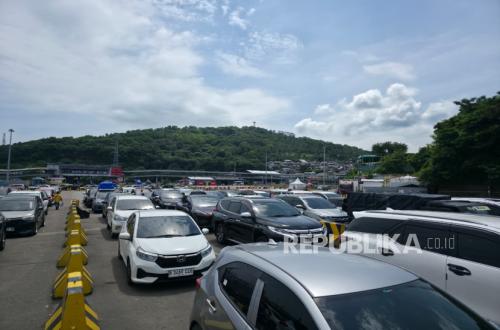
PT ASDP Indonesia Ferry (Persero) is urging the public to take advantage of the widely available stimulus programme for ferry crossing fare discounts, particularly for the 2026 Lebaran return journeys. As of now, the programme has been utilised by more than 1.06 million service users across various national ferry routes.
“The stimulus programme, in the form of discounts of up to 100% on port service fees or equivalent to around 21.9% of the total crossing fare, is part of ASDP’s support for government policies in providing more affordable and inclusive travel for the public,” said ASDP President Director Heru Widodo in a written statement in Jakarta on Saturday (21/3/2026).
Heru stated that the programme still has a substantial quota and can be optimally utilised by the public. He advised the public to plan their return journeys early and book tickets promptly via Ferizy.
“The quota for this programme is still widely available, giving the public the opportunity for more economical travel,” Heru added.
As of 18 March 2026 at 23:59 WIB, the realisation of stimulus absorption reached Rp10.5 billion, or about 29.58% of the target, with the number of service users at 44.43%. Heru explained that the difference in percentages is influenced by variations in vehicle types and routes utilising the stimulus programme.
The programme applies to seven routes and 14 ports, namely Merak–Bakauheni, Ketapang–Gilimanuk, Lembar–Padangbai, Kupang–Rote, Kupang–Kalabahi, Kupang–Hansisi, and Galala–Namlea. With this national coverage, the programme’s absorption continues to move dynamically following public movement patterns in each region.
“As public mobility increases, the distribution of mudik flows is also observed to be more even,” he continued.
On the Java–Sumatra route, based on data from the Merak Post (Merak Port, Ciwandan, and BBJ Bojonegara) during the H-1 Lebaran period (20 March 2026), 20,540 passengers crossed, a 33.5% decrease compared to the same period last year with 30,885 people. Meanwhile, the total vehicles recorded were 6,203 units, down 31.6% from last year’s 9,066 units.
“The decline in the H-1 period indicates that part of the public has undertaken their journeys earlier, allowing the mudik flow to be distributed evenly and not concentrated at a specific time,” Heru added.