
ASDP States Queue at Gilimanuk Port Successfully Controlled
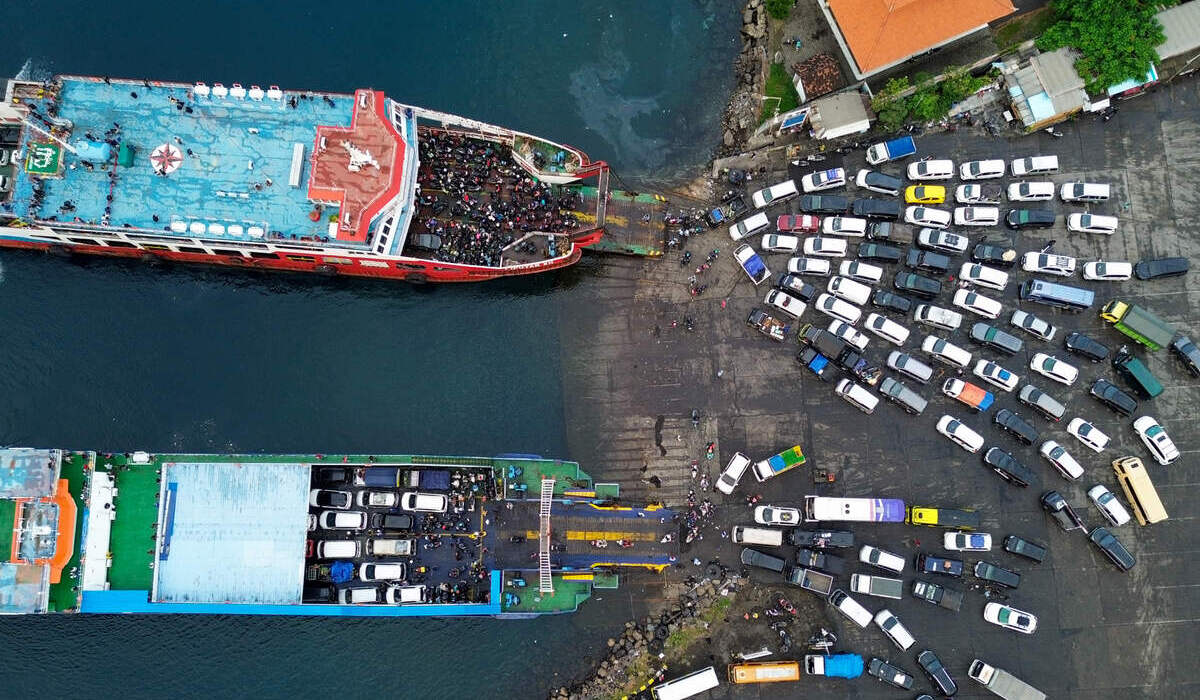
PT ASDP Indonesia Ferry (Persero) states that the management of vehicle flow at Gilimanuk Port has returned to stable and controlled conditions. This follows the successful clearance of the port queue to 0 km before the suspension of crossing operations for Nyepi Day and the 2026 Lebaran homecoming.
A key moment occurred on Wednesday (18/3) when the vehicle queue was reduced to 0 km right before the temporary halt of crossing operations. By 22:20 WITA, ASDP reported no vehicle queues remaining in the port’s tollgate area.
As a gesture of respect for Nyepi Day, crossing operations were temporarily suspended on several major routes. At Ketapang Port, operations ceased from 18 March at 17:00 WIB until 20 March at 06:00 WIB.
This was also implemented at Gilimanuk Port from 19 March at 05:00 WITA until 20 March at 06:00 WITA; at Lembar Port from 18 March at 21:00 WITA until 20 March at 01:30 WITA; and at Padangbai Port from 19 March at 04:00 WITA until 20 March at 11:30 WITA.
“The suspension of operations is a form of respect for the sacred moment, carried out with full solemnity. Thanks to close collaboration among all parties, the service suspension at several ports proceeded smoothly, orderly, and prioritised the safety and comfort of service users,” said Deputy Director General of PT ASDP Indonesia Ferry (Persero) Yossianis Marciano in a statement quoted on Friday (20/3).
He emphasised that this achievement resulted from collective cross-sectoral efforts that moved quickly and in coordination. The company expressed gratitude for the public’s patience and the synergy of all parties, which enabled the queue to be cleared to zero kilometres before the Nyepi closure.
ASDP also acknowledged that the previous density had caused some discomfort. “However, the rapid response on the ground was key in gradually restoring conditions to their current stable state,” he stated.
Several strategic measures were implemented simultaneously, from operational optimisation to intensive patterns with around 35 vessels in operation, the application of the Arrive–Unload–Depart (TBB) system with accelerated service durations, the addition of support vessels, traffic engineering, and maximum utilisation of buffer zones.
On the other hand, the surge in vehicle flow exceeding 40% ahead of the route closure during Nyepi Day added significant pressure to service capacity. Traffic dynamics outside the port area also contributed to the length of the Gilimanuk Port queue in the previous period.
Nevertheless, Yossianis noted that service performance demonstrated strong resilience. Data from the Gilimanuk Post during the 24-hour period of 18 March 2026 (H-3) recorded a total of 74,213 passengers, an increase of 65.2% compared to the previous year.
Two-wheeled vehicles numbered 14,659 units (+44.5%), four-wheeled vehicles 7,260 units (+87.7%), buses 585 units (+51.2%), and trucks 1,051 units (+139.4%). The total vehicles reached 23,555 units, up 58.8%.
Cumulatively from H-10 to H-3, the total passengers reached 457,611 people (+7.2%) and total vehicles 146,447 units (+8.8%). According to Yossianis, these figures affirm that the mobility surge could still be matched with adaptive capacity strengthening.
“Currently, crossing operations are running stably, orderly, and under control. All vehicles are well absorbed into the buffer zone system, making the service flow more measured,” he concluded. (H-3)