
ASDP Ketapang reminds returnees to avoid peak return traffic on 28-29 March
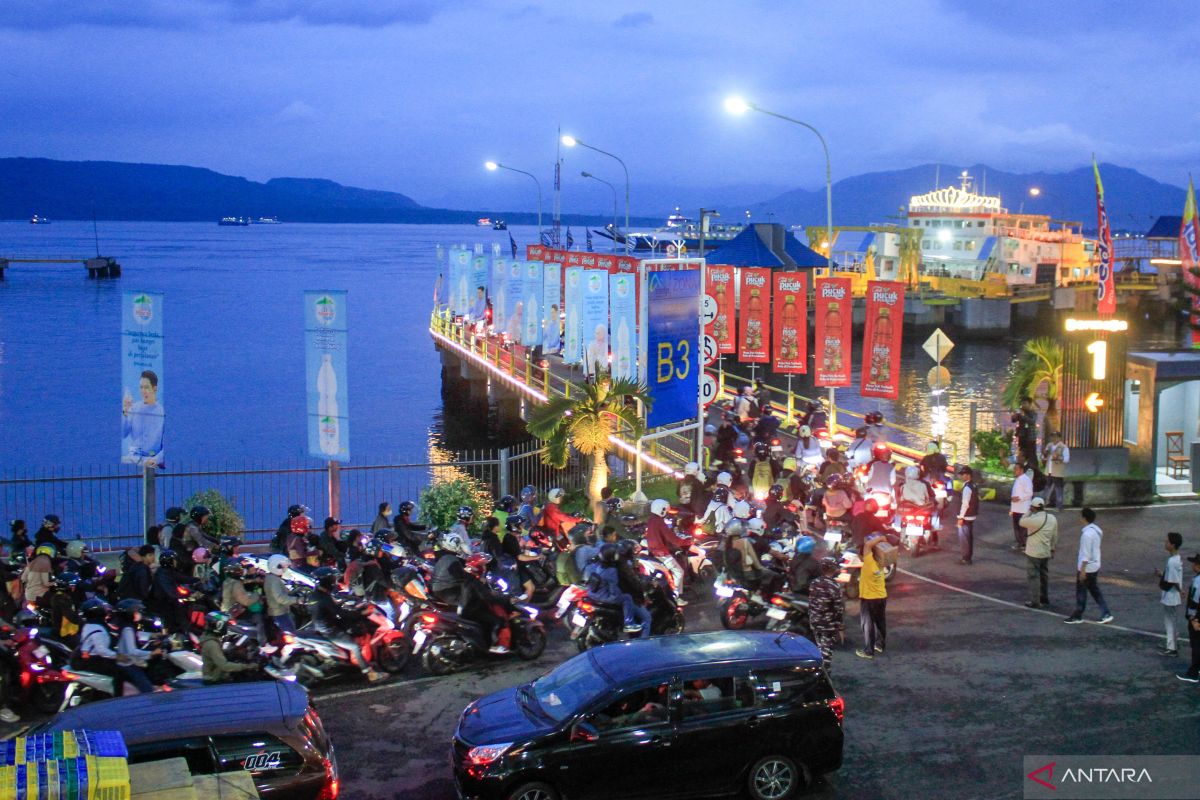
Deputy Director of PT ASDP Indonesia Ferry (Persero), Yossianis Marciano, in Banyuwangi on Thursday, stated that despite an increase in mobility following the Eid return flow on the Ketapang (Banyuwangi)-Gilimanuk (Bali) route, the movement remains controlled. “We ensure that services on the Ketapang-Gilimanuk route remain optimal in anticipating the return flow, and this gradual movement helps maintain stable operational rhythms,” he said. According to Yossi, the distribution of vehicles not concentrated at one time is key to keeping the Eid 2026 return flow smooth at the Ketapang-Gilimanuk crossing. He mentioned that vehicles returning from Java to Bali via Ketapang Port since H+1 to H+4 after Eid, or from Monday (23/3) to Thursday (26/3), have been increasing gradually, so crossing services continue to run smoothly without density. “Around 71 per cent or 117,367 vehicle units have yet to return to Bali. This figure confirms that the return flow is taking place gradually, providing room for the service system to work optimally without excessive pressure,” he said. Meanwhile, the General Manager of PT ASDP Indonesia Ferry’s Ketapang Branch, Arief Eko, added that vehicle entry to the port is managed disciplinedly with support from buffer zones and strengthened traffic management. “All operational schemes are run adaptively, including the optimisation of buffer zones so that vehicle flow remains flowing without accumulation,” he said. Data from the Ketapang Eid Transport Post on 25 March 2026 (H+3) recorded 223 ship trips serving the Java-Bali route, with the number of passengers reaching 44,898 people, an increase of 6.6 per cent compared to the same period last year. A significant increase occurred in two-wheeled vehicles reaching 8,691 units or growing 24.1 per cent, while logistics vehicles in the form of trucks also rose to 921 units or an increase of 18.7 per cent.