
ASDP Eyes Mid-2027 Launch for Batam–Johor RoRo Service to Boost Cross-Border Logistics
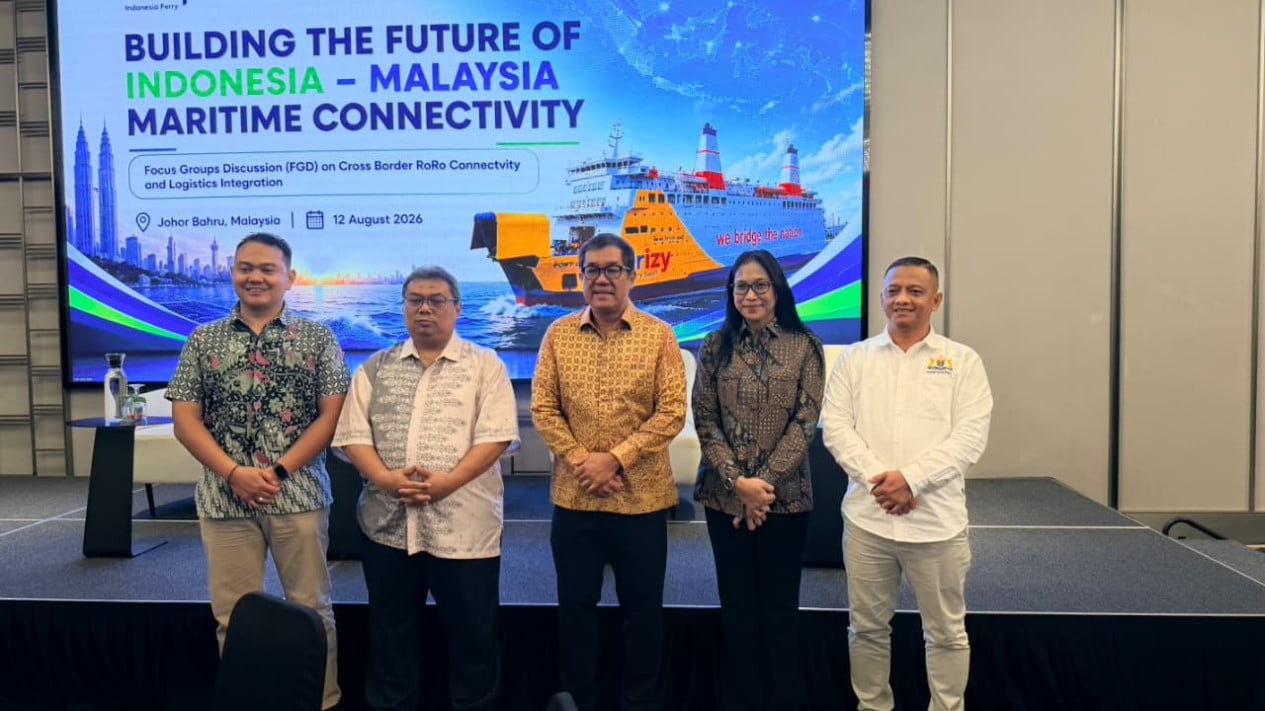
State-owned ferry operator PT ASDP Indonesia Ferry is exploring strategic opportunities to strengthen connectivity between Indonesia and Malaysia through the geographical proximity of Batam and Johor. The initiative focuses on developing a Roll-on/Roll-off (RoRo) service linking Bintang 99 Persada Port in Batam with Tanjung Belungkor Ferry Terminal in Johor, a corridor spanning approximately 27 nautical miles. This route is strategically positioned to support more integrated movement of passengers, vehicles, and cargo.
ASDP Director of Operations and Transformation, Rio Lasse, stated that preparations and coordination with stakeholders are ongoing. The service is targeted to commence operations by mid-2027, subject to infrastructure readiness, regulatory compliance, and approval from both the Indonesian and Malaysian governments. ‘We hope the Batam–Johor RoRo service can begin operations by the middle of next year. However, its realisation requires readiness and collaboration from all parties, particularly regarding regulations, infrastructure, and the alignment of cross-border processes between the two countries,’ he said.
While port facilities at Bintang 99 Persada in Batam are already available, the terminal in Tanjung Belungkor still requires upgrades to support the planned RoRo operations. The RoRo model offers a more straightforward logistics process, as vehicles and their cargo can drive directly onto the vessel, be transported by sea, and then drive off at the destination port. This approach has the potential to reduce cargo handling, shorten service times, and improve the efficiency of cross-border supply chains.
ASDP noted that the Batam–Johor corridor is supported by high mobility between the two areas, with data recording around 193,000 Malaysian tourists visiting Batam throughout 2024. Batam also holds potential for various export commodities, including animal and vegetable products, cocoa, and chemicals. Initial assessments suggest that cargo volumes in the early stages may remain below 50 trucks, prompting a phased development of capacity and service patterns aligned with market demand growth, while also considering balanced cargo loads on both legs of the journey to ensure operational and economic sustainability.